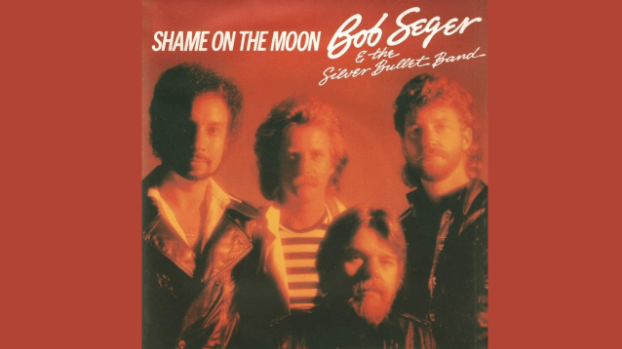
“Oh, blame it on midnight / Ooh, shame on the moon”
- Reached #2: February 26th, 1983
- Number of Weeks at #2: Three Weeks
- #1 Song At the Time: “Baby, Come To Me” – Patti Austin and James Ingram (One Week) and “Billie Jean” – Michael Jackson (Three Weeks)
As I’ve been slowly completing this project, I’ve learned a number of things. For one thing, I’ve learned that I knew surprisingly little about the impact that the 1980 film Urban Cowboy had on the charts. I never thought much about how country music enjoyed mainstream success on the Hot 100 before retreating into its own isolated world. I’ve learned that a surprising number of eighties songs that peaked at number two have been cover songs. I’ve learned that somehow, Bob Seger, of all fucking people, somehow had one of his biggest hits around the exact same time Michael Jackson was beginning to transform the world of pop music and bend it to his whim. When “Billie Jean” was enjoying its spot at the top of the summit of the Billboard Hot 100, this song was somehow right behind it. It leaves my mind boggled. The biggest hits of 1983–the number ones especially–are all sonic achievements. They all sound like songs that came from another dimension. “Billie Jean.” David Bowie’s “Let’s Dance.” Eurhythmics “Sweet Dreams (Are Made of This).” Michael Sambello’s “Maniac.” In the midst of things like that… how the fuck am I writing about a Bob Seger song in early 1983? Bob Seger’s “Shame On The Moon,” the sixth cover song we’ve encountered on You Got The Silver, somehow earned the silver medal at the strangest time possible. There’s a chance it earned the silver at the last possible moment it could have. A song that got big without a music video at a time when MTV had just established itself as a cultural juggernaut. A song that channeled the sound of a genre slowly retreating into isolation and leaving the mainstream behind. A song from a man who could not have been farther from the idea of what a star looked and sounded like. “Shame On The Moon” sounds like the last gasps of a dying world.
Robert Clark Seger. Born in Detroit, Michigan on May 6th, 1945, two days before Nazi Germany surrendered in World War II. Raised in Ann Arbor. The son of a medical technician for Ford. His father was a multi-instrumentalist. He could play guitar, piano, and clarinet because he loved Benny Goodman. He was also a singer in a barbershop quartet. Watching his dad do all this is how the young Seger first got exposed to music. His parents fought a lot, to the point where they would often wake up the neighborhood at night. If Seger’s father could scream and wail the way Seger can in songs, I don’t want to imagine what those fights sounded like. Seger’s old man split town and moved out to California when he was ten, abandoning him, his brother George, and his mother, Charlotte. They fell on hard times and the Seger brothers struggled to help their mom make ends meet. In an oral history about Seger’s early years, Seger recalls winding up in a one-bedroom Ann Arbor flat with a single hot plate for cooking. Poor kid.
In his teens, Seger found comfort through the radio and playing guitar. He credits Little Richard and Elvis Presley as early musical inspirations. The first record Seger ever bought was the Del-Vikings’ “Come Go With Me.” In the early sixties, Seger started playing in local bands around the Detroit area. He became friends with another Detroit musician who would eventually become a star in his own right, Eagles member Glenn Frey (Frey will eventually appear in this project). Seger cited James Brown’s Live at the Apollo album as one of his favorite records at the time and was also one of many musicians who got their mind blown when the Beatles showed up on American shores in 1964. He and Frey both had a love of sixties pop and rock radio. They loved hook-driven hits and songs you would want to hear again and again and again. Seger recalled him and Frey holding true to the belief that “You’re nobody if you can’t get on the radio.” It would take time, but Seger and Frey would both eventually get on the radio.
Seger spent most of the sixties in a whole slew of bands local to the Detroit area that never really went anywhere, but did grant Seger a local reputation. Seger eventually scored a record deal with Capitol Records at the end of the decade and started recording with a short lived band called The Bob Seger System (Hmm… not a great name. Maybe he’ll come up with a better one at some point.) That band didn’t end up going places, but it did give Seger his first national hit with the song “Ramblin’ Gamblin’ Man,” which peaked at #17 on the Hot 100. If any of Seger’s early stuff is remembered at all, it’s this song. Solid track.
The Bob Seger System broke up in 1971, a split from Capitol happened, and Seger attempted to be a solo act for a while. It didn’t work. For the first half of the seventies, Seger couldn’t get arrested. His early work is so unwanted that even now, it remains out of print. None of the three Bob Seger System albums and none of the albums Seger made between 1971 and 1974 are on streaming services or available to purchase commercially. I assume you have to pay a hefty sum if you’re looking to complete the Seger discography. Admittedly, when studying Seger’s work in preparation for this, I purposely chose not to focus on any of that early stuff. I figure if it pretty much only exists on YouTube these days and has never been reprinted, Seger isn’t too concerned with whether I listen to it or not. Besides, we’re not interested in Seger as a solo artist for this. There’s a whole band behind him that he relied on for most of his time as a hitmaker, and we need to talk about those players. We need to introduce the Silver Bullet Band (which is a hell of a name. Kudos, sir.)
In 1974, Bob Seger formed the Silver Bullet Band, the backing band that would stick with him for the bulk of his career. That original band included Drew Abbott (guitarist), Charlie Allen Martin (drummer and backing vocalist), Rick Manasa (keyboards/backing vocals), Chris Campbell (bass), and saxophonist Alto Reed, which is an incredible stage name for a sax player to have. Kudos. (Note: the names in bold are the Silver Bullet members that were still present when “Shame On The Moon” happened. Alto Reed was still a member, but there’s no sax on that song, so he doesn’t appear.) Seger had already been touring and performing for years, enjoying regional success, but scoring nothing in terms of national. When he decided that the backing band he had put together was gonna be the one that stuck around for a while, he gave them the opportunity to choose their name. To hear Seger himself tell it, he recalls that the band kept arguing about what the name should be and came up with no clear answer. Eventually, Seger’s manager, Edward “Punch” Andrews, got tired of waiting for them to choose a name and picked for them. He sent them paychecks written out to “Bob Seger & the Silver Bullet Band.” The name stuck. It’s a hell of a good name.
The first album to feature the Silver Bullet Band members was the 1974 album Seven. Made with that band and an assortment of other backing musicians, it was not a successful album, but the tour promoting it ended up being really successful for them. They became the opening act for KISS for a couple of shows and after being blown away by Seger and the Bullets, they offered them a spot on the whole damn tour. It provided much-needed recognition for them. Seven, like a lot of Seger’s early work, remains out of print, but it’s become a fan favorite over time despite the rarity. It’s possible to find bootlegs of it under the name Seven Worlds. It’s a solid album and it fits in neatly with where Seger and his band would take things. He’s not a hitmaker yet, but the bullets were about to start firing from the chamber at a good speed.
In April 1975, Seger returned to Capitol Records and put out the album Beautiful Loser. On streaming services, this is the earliest Seger work available. I imagine this is the first one available because the album has gone double platinum over the years, the songs on it have become more well-known over the years that Seger has been a star, and because it’s the first album that really features the sound Seger became a star with. Beautiful Loser’s songs are made up of that easily recognizable scratchy-voiced, midwest Detroit soul, and heartland rock that Seger would become synonymous with. It didn’t garner much in the ways of hits, but “Katmandu” saw Seger hit #43 on the Hot 100, the closest he had come to matching with “Ramblin’ Gamblin’ Man.” “Katmandu” is a solid barnstormer, the kind of yuppie-masquerading-as-soul-man rock song that you would see two slightly buzzed, leather-clad boomers dancing to in a dive bar on a Tuesday night in July.
The first time an album ever had the name “Bob Seger & the Silver Bullet Band” was on April 12th, 1976, when Seger released the live album ‘Live’ Bullet. Recorded at Cobo Hall in Detroit on September 4th and 5th 1975, the album captures Seger the way I think he’s meant to be heard. He’s an incredible presence in a live environment and the Bullets are tight as hell. Seger sounds like a hometown hero and you can really hear the way he gives his all to the audience that gave him a career for a decade. He’s electrifying and there’s no question that he and Detroit loved each other. That album blew me away. It was the first time I felt like I truly understood the appeal of Seger. That album, along with Night Moves, released in October 1976, ended up being the two records that gave Seger his breakthrough. Several of the songs from ‘Live’ Bullet became beloved on Detroit rock radio, namely “Nutbush City Limits” and the back-to-back “Travelin’ Man/Beautiful Loser.” On a national scale, it was the version of “Turn the Page” that became the signature song. “Turn the Page” had originally been released in 1972. It was not a hit at all and I don’t think the original studio cut is worth your time. The version on ‘Live’ Bullet has a certain magic to it that’s undeniable. The production is better, Alto Reed’s saxophone rings clearer and sets the tone of the song immediately, and Seger’s live vocals convey the “weary road warrior” a lot better. The first time I ever heard this song was through its inclusion on Guitar Hero: Metallica. They used the live version. Until writing this, I didn’t even know Seger recorded a studio version of it. It’s probably Seger’s strongest song. I wonder if Kenny Rogers ever kicked himself that he didn’t write this song. The live version of “Turn the Page” eventually became so well known that Seger made a music video for it in the nineties, long after it was recorded.
When Night Moves came out, it was the first studio album credited to Seger and the Silver Bullet Band. It was also the first Seger album that did serious business, eventually going sextuple platinum. The title track ended up peaking at #4, the highest charting song of Seger’s career up to that point. He also scored a Top 40 hit with “Mainstreet.” “Rock And Roll Never Forgets” and “The Fire Down Below” are also well remembered songs. It was when I got through all of Night Moves that I came to the realization that I consider Seger to be a great singles artist; a full studio album is unnecessary. I didn’t hate anything on Night Moves, but it all eventually fused into one kind of bluesy rock sound for me that made me consider going out and buying a truck. Go to any dive bar in your local area that is populated by people who are roughly the same age as your parents and put any song from Night Moves on the TouchTunes. Any white man with an overbite in the joint will give you the nod of approval. They don’t care if you actually like “Night Moves” or not, they’re just happy somebody put on something they know.
Bob Seger was thirty-one years old when Night Moves came out. He sounded older than that, mostly because every single Bob Seger hit is either about being old, being world weary, or trying (and failing, depending on the song) to pick up a woman who only exists as a fantasy. Seger’s body of work is never looking forward, it is always looking in the rearview. I am of the firm belief that Seger has been spiritually forty-seven years old for his entire life. As I moved through the hitmaking years of Seger and the Silver Bullets, I was reminded of my opinions on ol’ Bobbo: I am mostly “meh” towards his music at best. It never bothers me when it’s on, but I don’t actively seek it out. “Night Moves” doesn’t even register as a song to me anymore. I have heard it used in enough commercials across my life that when I hear it, all it makes me want to do is think that, yes, I should consider going out and buying a pick-up truck.
I can say the exact same thing about “Old Time Rock & Roll,” the final single from his 1978 album Stranger In Town and one of his most recognizable hits. It’s fine, but I don’t have much use for it. I have heard it used in so many films, television shows, and commercials that I don’t even think of it as a real song anymore. If you hear the song and only think of the scene of Tom Cruise dancing in his underwear from Risky Business, that’s okay. A lot of people do that. I also hear the song and think that. I also think that, once again, I should consider going out and buying a pick-up truck. I hear qualified lessees can now get an ultra-low mileage lease on a 2025 Chevy Equinox for around $299 per month for thirty-six months. Sounds like a good deal if I’ve ever heard one.
Stranger In Town continued Seger and the Silver Bullet Band’s upward climb. If I had to tell you what the best Seger/Silver Bullet album is, I’d tell you it’s Stranger In Town, though I think that’s because I think I like the singles from that one the most. “Still the Same” peaked at #4 and that one’s a solid track. I had forgotten that I like “Hollywood Nights” a lot, which peaked at #12. That one rocks. Good highway driving song. The only one I don’t have anything nice to say about is “We’ve Got Tonite,” which peaked at #13. I will say this right now: Seger is at his worst when the lights go down low and he’s playing balladeer. Maybe it would hit me harder if I was depressed in a bar and piss-drunk during last call. Regardless, Seger had officially hit his stride. The man had arrived.
He followed up Stranger In Town in 1980 with Against the Wind. If you liked Night Moves and Stranger In Town, you’ll probably like Against the Wind too. It offers more-or-less the same Seger experience, though Against the Wind is unique in the way that it sees Seger playing with more of an acoustic, country-tinged heartland rock sound, ala Bruce Springsteen or John ThunderCougarFalconBird Mellencamp (the Boss will show up in this project eventually, Mellencamp has already appeared and will eventually return). You can hear that sound the most in singles “You’ll Accomp’ny Me” and “Fire Lake,” which peaked at #14 and #6 respectively. The backing vocals to “Fire Lake” feature the instantly recognizable Eagles members Glenn Frey, Don Henley, and Timothy B. Schmit. Frey will be the lone Eagle that appears on “Shame On the Moon.” The biggest hit off of Against the Wind is the title track, which dares to ask the question, “What if you did ‘Runnin’ On Empty’ by Jackson Browne, but it sucks?” Everything I find exhausting and boring about Seger’s work is present in “Against the Wind” and I don’t have many nice things to say about it, so I will move on.
In 1981, Seger and the Silver Bullet Band put out Nine Tonight, their second live album, which captured them doing material that had been released between 1976-1980. Like ‘Live’ Bullet, I really loved this and I have found that I enjoy live Seger a lot more than I enjoy studio Seger. The man just becomes a different animal on stage and I found that a lot of his hitmaking run takes on a whole new sound and energy when played live. He even scored the rare live hit on the Hot 100, when his cover of the old Otis Clay song, “Tryin’ To Live My Life Without You,” peaked at #5. If nothing else, I am telling you to listen to ‘Live’ Bullet and Nine Tonight. Incredibly solid records that I will be returning to. I’m genuinely surprised that there aren’t more official live Seger albums out there. That’s a crime. Dude was a consummate showman.
By 1982, Seger and the Silver Bullet Band had been superstars for about six years. In that time, they had racked up five multi-platinum albums (everything from Night Moves through Against the Wind, including the two live albums). They had ten Top 40 hits, five of those being Top 5 hits. Seger had gone from a Detroit underdog to a heartland hero. He cut his hair and adopted the mature haircut of a middle-aged father. The Silver Bullets only had three in the chamber now (Alto Reed on sax, Craig Frost on keys, and bassist Chris Campbell). Nevertheless, Seger and the band kept the train rolling and recorded The Distance, the fourth studio album to bear the name “Bob Seger & The Silver Bullet Band.” The album’s first two singles–”Even Now” and “Roll Me Away”–were two more Top 40 hits on the Hot 100, but the biggest hit was the silver medalist, “Shame On The Moon.”
The origin story of “Shame On The Moon” doesn’t begin with Seger, surprisingly. It begins with country singer Rodney Crowell, who may remember from the entry on Juice Newton’s “Queen of Hearts.” He was one of the guys who recorded the song before Juice made the definitive version. Crowell came up as a member of Emmylou Harris’ backing band, eventually striking out on his own in the early eighties. “Shame On The Moon” was a song that Crowell wrote and recorded for his self-titled album in 1981. In Crowell’s hands it is… not a compelling song and I don’t like it at all. The production sounds cheap and weak, Crowell doesn’t have a voice that captures much of anything, and there’s no moments of any kind that really stick with the listener when the song is over. Even the song’s big vocal harmony moments (🎶Oh, blame it on midnight / Ooh, shame on the moon🎶) fall flat. The whole song sounds unfinished. There’s too much open space and it fades into the background too easily. I don’t think Seger’s version is amazing by any means. I think the song is complete ass by design, but listening to that original take against Bob’s reveals why he became and remained a hitmaker for a long time.
There are Eagles that are responsible for this. Don Henley was the one who introduced Seger to Crowell’s music. Seger bought Crowell’s self-titled album and fell in love with “Shame On The Moon.” He played it for the band and they all liked the idea of recording a version of it. Producer Jimmy Iovine wasn’t sold on the idea until he heard the harmony vocals Seger and Glenn Frey had recorded. If there’s one thing that instantly improves “Shame On The Moon,” it’s having Seger, Frey, famous Motown vocalist Stoney, and two members of the sixties girl group Honey Ltd. (Laura Creamer and Joan Sliwan) doing harmony vocals together. It sounds lovely and it gives that moment the punch it needs to really land. Crowell’s original sounds cheap and empty. It sounds more like a demo than a finished song. Seger, by contrast, gives the song a lot more polish and knew exactly who to assemble to turn this nothing of a song into an undeniable evening radio track. Seger’s version shines a lot brighter. Beyond the guest vocalists, he’s also got Little Feat’s Bill Payne providing some very nice piano on this song that fits right into his wheelhouse. That, along with Seger’s vocals, provides a warmth and comfort that Crowell’s song is sadly missing. It’s more country-western than anything Seger had ever done prior, but he manages to pull off that sound and it fits naturally into his catalog. It feels like a natural progression from some of the moments found on Against The Wind that you’d be forgiven for thinking it’s a Seger original. In a 1983 interview with Creem, Seger talked about the song and expressed gratitude to Crowell:
It’s more like a western song – a cowboy song – than it is a country & western song. And the track is flawless, the best and tightest track on the album. We cut it in like two hours, and everyone decided it was the miracle track. But then we had to decide whether to use it or not because The Distance was going to be a real rock album. I purposely didn’t write any medium-tempo songs for this one because I wanted it to be hard rocking with a few ballads for pacing. But we figured we’d throw it on and see what happened. The next thing we know, the Capitol guys are saying, ‘That’s the single!’ (laughs) Fine! Whatever it takes! So thank you, Rodney. It’s a great song, and I’m beholden to the lad for writing it.
Most artists who score a big hit with a cover song don’t publicly thank the guy who wrote the original. Seger’s a solid guy for that one. I’m happy he thinks it’s a great song. It’s a shame (heh heh) that I don’t.
“Shame On The Moon” is… fine, but I already expressed dislike for Seger as a balladeer. I really don’t like early eighties tears-in-my-beer country songs like this one. I prefer Seger when he’s playing the howling wild man cranking out rock bangers. This one doesn’t really do anything for me. I mostly think the song is boring as hell, which makes it hard to write about. At least with entries like Dan Fogelberg’s “Longer” or Air Supply’s “All Out of Love,” those have the courtesy of being both boring and lame, so I can at least devote paragraphs to making fun of them. This one isn’t lame, it’s just boring. It just feels like the song never moves or goes anywhere interesting. That piano solo is nice! But it’s also just Bill Payne playing the vocal melody of the song… which I’ve already heard. One nice thing I can say is this: I like what the organ is doing for most of the song (I should have said it in the “Hurts So Good” entry, but the organ really needs to become a mainstream instrument again). Another mean thing I can say is this: I would love to know how easy this song is to learn on guitar, because it sounds like it must be a breeze to play… and also sounds like it gets old pretty damn fast. I will also complain about the song’s length. This somehow goes on for five minutes, which is ridiculous, because this song fucking draaaaags. It feels its length and I’m exhausted by the time it’s over. Maybe this song is another one that would hit me harder if I was depressed in a bar and piss-drunk during last call.
Despite all my complaints, I get why others would like it. Seger has a fatherly warmth to him in this song and he sounds almost like a kind of wise sage, the kind that you only meet in some dive bar in a small town in the heart of the midwest. When he delivers lines like “Once inside a woman’s heart / A man must keep his head” or “Heaven opens up the door where angels fear to tread,” that sounds like advice you can only get from a guy who has seen more than you have and has lived to talk about it. I hear the lines, “Some men go crazy / some men go slow / some men go just where they want / some men never go” and it makes Seger sound like a battle-hardened cowboy spitting the realest shit you’ve ever heard. If somebody told me this was their favorite Seger song, I wouldn’t give them any weird looks.
I do have one other thing I can say about this song. I am telling you now that what I’m about to talk about is the truth, the whole truth, and nothing but the truth. I listened to this song for the first time while driving in my car so I could prepare to write this. The song begins and eventually Seger starts singing. The first lines of the song go like this: “Until you’ve been beside a man / You don’t know what he wants.” This is how I heard the first line on my very first listen: “Until you’ve been inside a man / You don’t know what he wants.” I don’t know if I was just tired when I listened to it or what, but I knew deep down in my heart that was absolutely not what he said. Nevertheless, once I thought of that line, it was game over. I couldn’t stop thinking about it. I thought about it so much that I came to a conclusion: “Shame On The Moon” would be a better and more interesting song if it was about masculine vulnerability and the way it manifests and reveals itself at night… and also having sex with a man. I picture the same kind of masculine vulnerability that was seen with Bill in “Long Long Time” in The Last of Us television series.
It would be really easy to rewrite it. All you’d have to do is change “beside” to “inside” and rewrite the second verse to remove any mention of a woman. Change “Once inside a woman’s heart / A man must keep his head” to “Once inside a man’s heart / You must keep your head” and you’re golden. If you want to do the wildest cover of “Shame On The Moon,” use these suggestions. You don’t even have to credit me!
My mind had to wander to that idea because otherwise, I couldn’t give a rip about the words to this song. I can’t remember much of it when it’s over. It fades into the background. I picture sitting in a bar and talking with a friend with this playing and that’s the only location I can imagine hearing this in. Even then, it’s playing in a place where I don’t need to pay attention to it. It’s background noise, that’s all it will be for me. I’ve been doing my best to be nice because this isn’t a song I hate by any means, though I did discover while doing research for this that Crowell himself has never been that big of a fan of it. In a 2014 interview with American Songwriter, he had this to say about the track:
Crowell is right that Seger’s “Shame On The Moon” charted behind a Michael Jackson track, but it wasn’t “Beat It.” It was “Billie Jean.” Honestly, it’s insane that Seger even scored a number two hit at the time he did, considering he wasn’t using the playbook that Michael was. Michael Jackson was making MTV his bitch and completely changing the rules on how that channel operated. He was transforming the concept of the music video from a small promotional clip into something mirroring a short film. Sonically, “Billie Jean” sounds like it’s from another dimension compared to Seger, which is insane when you consider that “Shame On The Moon” and The Distance arrived barely a month after Thriller came out. Even crazier is that Seger didn’t make music videos. He made one for the single “Roll Me Away,” but that was after “Shame” had already been a hit. Seger scored his hit the old fashioned way: radio still had the power to push and make something successful. The success of “Shame” is also indicative of the way baby boomers were trying to fight back against a changing world. Their generation had nostalgia and yearned for a return to a placid past. They voted to elect a president (Ronald Reagan) who ran an entire campaign on the idea of returning America to the way things used to be. “Shame On The Moon” (and Seger himself, to an extent) was simple. It was grassroots and free of those newfangled synthesizers and other silly toys. It was a song they probably felt had a lot of soul and something to say instead of a weird song about paranoia and denying that a woman’s kid is yours. If Seger (old, world-weary, a man who grew up with music made before most of the moment’s hottest stars were barely even born) represented the past, then Jackson (young, inventive, effortlessly cool, boundary breaking) represented the future that was quickly swallowing the world Seger and his generation grew up in. Seger stood no chance and in a short time, the world would become unrecognizable to his kind.
In fact, “Shame On The Moon” was blocked from the number one spot entirely because of Michael Jackson. Everybody who was involved in the making of “Baby, Come To Me,” the smooth as butter Patti Austin and James Ingram quiet storm duet that hit number one and blocked Seger for a week before “Billie Jean,” had some connection to Jackson. For starters, Patti Austin duetted with Michael on the Off the Wall deep-cut “It’s The Falling In Love.” James Ingram co-wrote the Thriller track “P.Y.T (Pretty Young Thing)” with Quincy Jones. Quincy Jones produced “Baby, Come To Me” and both singers appeared on Jones’ 1981 album The Dude. “Baby, Come To Me” was written by Rod Temperton, the former Heatwave keyboardist who wrote several Jackson tracks, such as “Rock With You,” “Thriller,” “Baby Be Mine,” and “The Lady In My Life.” Several of the players on that song were people who played on Thriller: Steve Lukather, Greg Phillinganes, David Foster, Rod Temperton. The song was engineered and mixed by Bruce Swedien, who worked on the Jackson albums Thriller, Bad, Dangerous, and HIStory. Michael wasn’t involved in the making of that song, but everybody in the room had some kind of connection to him and was in his orbit. In a way, “Baby, Come To Me” almost feels like the opening act, the thing that signaled change and got people properly warmed up before Jackson came out swinging and took Thriller to the summit of success. “Shame On The Moon” found success on the Hot 100, the Country Chart, and became a number one single on the Adult Contemporary Chart in the moment, but songs like “Shame” were a dying breed on the Hot 100. We will not be hearing anything that resembles “Shame On The Moon” in this project again. Songs like that one retreated to an isolated world and were no longer concerned with the Hot 100. That said, Seger stuck around longer than you might think.
After The Distance, Seger’s music started popping up in movies. A new generation of people got exposed to “Old Time Rock and Roll” through a certain Tom Cruise scene we’ve already discussed. In 1984, Seger and the Silver Bullet Band recorded “Understanding,” a song for a movie called Teachers, which I’ve never seen or heard of, but it does star a bunch of people I’ve seen and like (Judd Hirsch, Nick Nolte, JoBeth Williams, Ralph Macchio a few months after The Karate Kid came out).
In 1986, Seger and the Silver Bullets released Like a Rock. I ended up liking that album more than I expected to. “American Storm” peaked at #13 and I really dig that track. It sounds like what would play as I boldly go into a fight that I’m absolutely going to lose, but the people will say I had heart and gave it my all. Seger also kinda looks like Jonathan Frakes from Fact or Fiction in the video and that amused me. The other hit from the album was the title track, which is another song where Seger reflects about being young and laments being old, which I don’t believe because he’s been a dinosaur since birth in my eyes. Shout out to Rick Vito for the guitar solo on the song. That shit will be soundtracking a future drive on the highway at night for me, a drive I will be taking in my brand new dependable and long-lasting Chevrolet truck. Look! It’s not my fault he made music that fits truck commercials and now that’s all I think of when I hear them! I didn’t fucking do this!
This wasn’t a hit, but I would be remiss if I did not mention “Miami,” the song that ended up in the Miami Vice episode “Cuba Libre.” We’ll eventually cover Miami Vice in great detail in this project and that’ll be a lot of fun. The album ends with a live cover of “Fortunate Son,” which ain’t half bad. If you can’t get Fogerty, Seger is a worthy replacement. It also features former Grand Funk Railroad drummer Don Brewer behind the kit. Good shit.
In 1987, Seger finally scored a number one hit. It was “Shakedown,” a song from the Beverly Hills Cop II soundtrack. I am well aware of its reputation as a song that Seger fans don’t particularly like. Can I be honest? I kind of fuck with it. It’s a fun piece of slick soundtrack-rock and I find the synths in the song pretty pleasing to the ear. I dig the electro-beats in a way that I know I probably shouldn’t, but I do. I blame it on watching too much Miami Vice. I learned that originally Glenn Frey was going to do this song until he caught laryngitis a week before having to record it. Seger got offered the gig instead, rewrote the lyrics (enough that he got a songwriting credit) and did the song. I like to think the check he got for it was nice. It would probably be a better song and more well-liked if Frey had done the song (it just kinda suits his style better), but I read that he didn’t care for it too much, so maybe things played out exactly how they were supposed to. Seger didn’t seem to have much love for the song after it was a hit. Maybe because he thought it looked like a shameless play to score a late career smash. Whatever the reason, I think I’m a “Shakedown” defender (or maybe the word is “apologist”).
The last time Seger and the Silver Bullet Band hit the Hot 100 was in 1991, when they released “The Real Love,” the second single from The Fire Inside. The only thing I can say about The Fire Inside is that it was considered a commercial success, but I found it boring as hell. It’s worth noting that it came out less than a month before Nirvana’s Nevermind hit the streets and killed most albums that sound like The Fire Inside. The world Seger had known had moved on and Seger wasn’t very interested in keeping up.
In 1994, Seger finally released a Greatest Hits album. It went diamond and became the best selling album of his entire career. I guarantee you that if you know any blue collar man who listens exclusively to CDs and is somewhere around the age of sixty-two, he has a copy of that album. I’m pretty sure my father had the album (because I remember his CD book and distinctly remember that album cover) and I don’t even remember him being a big Seger guy, I think it was just something a union carpenter working in Philadelphia was just expected to have on hand or in his truck (my dad drove a red 2005 Ford Ranger for most of his career, which goes against the Chevys that Seger’s songs helped sell) at any given time. If you have to listen to any Seger album, just listen to that Greatest Hits album. You really don’t need anything else besides that.
There was one more Silver Bullet Band album, It’s a Mystery, released in 1995. I listened to it once and can’t remember a single goddamn thing about it. I didn’t even know there were Bob Seger albums in the nineties, but lo and behold, there are. So it is no longer a mystery to me. After that, Seger walked away from music for eleven years to focus on being a family man and spending time with his wife. That’s never a bad choice to make. Lord knows the dude hustled and earned it.
Seger got inducted into the Rock and Roll Hall of Fame in 2004 (the Silver Bullet Band did not). He appeared on the 3 Doors Down song “Landing In London” in 2005, a collaboration that happened because Seger was recording at the same studio and liked the song enough to hop on it. He returned to music in 2006 with Face the Promise (which just recently got an expanded re-release for its twentieth anniversary) and made one more album, Ride Out, in 2014. Pine Knob Music Theatre in Clarkston, MI made their address 33 Bob Seger Dr. in 2019, making Seger the second guy in You Got The Silver history to have a street named after him (the first one was Fogelberg Parkway). Seger spent most of the 2000s and 2010s doing miscellaneous stuff and going on tour here and there. He embarked on his final tour, the Travelin’ Man tour, in 2018-2019. Seger’s final show was at the Xfinity Mobile Arena in Philadelphia on November 1st, 2019 and then entered into blissful retirement. Except for a one-off performance of Patty Loveless’ “She Drew a Broken Heart” at her induction into the Country Music Hall of Fame in 2023, Seger has remained retired. Honestly? Good on him. With all the elder abuse that’s currently happening in the music world, Seger knew when to walk away. I hope he’s doing well.
Bob Seger will not return in this project, but that’s fine. He pulled off the impossible and somehow scored a silver medal with a country-western track at a time when the music world was changing and taking on a whole new identity. Seger’s whole story is a story of resilience. His greatest songs were built from asphalt and heartbreak. His is the music of the working man, the dreamer stuck in the same small town, the rebel who knows that freedom comes at a price. If Seger offers worthwhile wisdom, it’s the kind of wisdom earned only from enduring a lifetime of bad experiences. Seger had his share of bad experiences growing up and found comfort through the songs on the radio, which I imagine bestowed wisdom upon him that he later gave to others. I mentioned the belief that he and Glenn Frey shared as youths: “You’re nobody if you can’t get on the radio.” I don’t know how true that is in 2026, but sixty years ago, that meant something to Seger and Frey. They ended up getting exactly what they wanted. Seger got on the radio. He’s still on the radio and his songs will continue playing on the radio longer after he’s dead and his dust is blowing against the wind. In that way, classic rock radio offers a form of immortality that only the lucky few get. But Seger always knew that. After all, it was Seger that said rock and roll never forgets.
Bonus Silver
The same year Seger recorded his version of the song, country singer Tanya Tucker recorded a version of it. This recording came out just before Seger’s version came out. Give it some love here.
In 2018. Original writer Rodney Crowell did a redux version of the song, completely changing the lyrics. Your mileage may vary on whether you think he did it better than his first attempt. Give it a listen here.
In 2025, Willie Nelson recorded a version of the song for the album Oh What A Beautiful World.


Leave a Reply