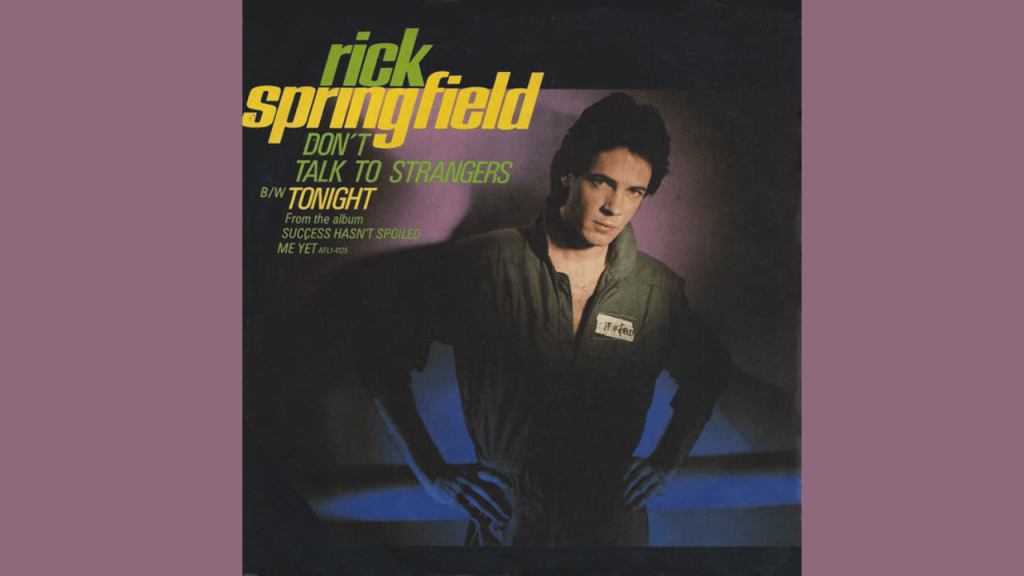
(“And every man’s an actor, every girl is pretty / I don’t like what’s getting back to me”)
- Reached #2: May 22nd, 1982
- Number of Weeks at #2: Four Weeks
- #1 Song At the Time: “Ebony and Ivory” – Paul McCartney (Feat. Stevie Wonder)
On May 25th, 1979, six year old boy Etan Patz was walking to the school bus stop in SoHo in Lower Manhattan and then disappeared, never to be seen again. His parents, Julie and Stanley, immediately called the police when their son never came home. An investigation was launched and a search went on for several weeks, attracting a great deal of media attention. Stanley, a professional photographer, had several photos of his son that ended up being used for missing-child posters, displayed on billboards in Times Square, and milk cartons. The last one is significant, as Patz was one of the first missing children to ever have their photo printed on a milk carton. He would be far from the last. Patz’s body was never found and he was declared legally dead on June 19th, 2001. In 2017, Pedro Hernandez was found guilty of the kidnapping and murder of Patz, receiving a sentence of twenty-five years to life in prison. In 2025, his conviction was overturned and a retrial was ordered, but the conviction was reinstated in June of this year. Patz’s disappearance is widely credited with helping to create the National Center for Missing and Exploited Children as well as the catalyst for promoting parents teaching the concept of “stranger danger.” “Stranger danger” was a kind of moral panic, similar to the panic that youths enjoying things like rock and heavy metal music or Dungeons & Dragons were leading them into Satanic worship. There were also fears like the rise in street crime, violent video games, and the War on Drugs.
“Stranger danger” was built on teaching children that any adult that is not already known to them is not to be trusted and should be treated as a possible threat. “Stranger danger” campaigns were mostly concerned with the threat of child sexual abuse, despite evidence supporting that child sexual abuse is usually committed by somebody the child already knows, namely family members. These days, people look back on statistics such as “last year, 50,000 children have disappeared” from old PSAs and recognize them as greatly exaggerated, due to most disappearances being teenage runaways (who were normally found within seventy-two hours) or children kidnapped by someone they already know (for example, a non-custodial father in a custody dispute). It is the one moral panic that has lived beyond the eighties. The echoes of “stranger danger” have lasted into the modern day, which you can learn more about by reading this piece for Salon or this piece for Jezebel, both of which I recommend.
“Stranger danger” was just beginning to take hold by 1982, after the Patz case and the July 1981 disappearance and murder of six year old Adam Walsh gripped the nation’s headlines. If you’re my age, you most likely recognize Adam through his father, John Walsh, whose advocacy led to the creation of the Missing Children Act of 1982 and the guy who created and hosted America’s Most Wanted. In the wake of cultural events such as these, sometimes the top of the Billboard Hot 100 provides a song that speaks to that moment, or at least ties in with it. As “stranger danger” and the paranoia of kidnappings was beginning to take hold, Australian-American rockstar Rick Springfield was experiencing a paranoia of his own when it came to strangers and his girlfriend. He just so happened to have a song that spoke to what was going on in the world around him. Through a three minute pop-rock tune, he scored a silver medal and reminded people of the new golden rule: “Don’t talk to strangers.”
The story of Rick Springfield is one of patience and perseverance. It took about a decade of working small-time gigs before Springfield mania started to take hold. He almost hung it up at one point and if it hadn’t been for being an actor and landing a surprisingly lucrative television role, we probably wouldn’t be talking about him right now. His rise was slow and took a lot of work, but once he arrived, he stuck around for a lot longer than I think people realize.
Rick Springfield, born Richard Springthorpe, comes to us by way of Australia. Here’s the humble beginnings: He first learned how to play the guitar at thirteen and played in various bands during his teenage years. His dad was an officer in the Australian army, so he moved around a lot, spending time in both Australia and England. Managed to see the Beatles in Melbourne during the only time they performed there in 1964 (making him cooler than most of us).
One significant event in his early story is that he attempted suicide at age 17 via hanging. He has been very open about that event and his struggles with depression throughout his career, as well as suicidal ideation. He considered it in 2017, in the wake of Robin Williams, Chris Cornell, and Chester Bennington each taking their own lives. I am happy to report that he is still with us (and on tour at the time of this writing).
Springfield started getting serious about a life in music in the late sixties. He had gotten a short-lived gig touring Vietnam and entertaining Australian troops. After that, he returned home to Australia and formed a band called Wickedy Wak, a name so fucking stupid it almost wraps back around to being really good. That band never went anywhere, but their single “Billie’s Bikie Boys” is still floating around online. It sounds like what would’ve happened if the Monkees tried making music for Easy Rider.
In the early seventies, Springfield joined a band called Zoot. I assume naming your band something that sounds like a cartoon sound effect was just the norm for Australians back then. Regardless, this is the band where Springfield’s earliest pieces of songwriting can be found, such as “Hey Pinky” and “The Freak.” The band didn’t last and broke up in May 1971, but Springfield would eventually become a star as well as bassist Beeb Birtles, who would eventually go on to be one of the founding members of Little River Band. Zoot isn’t too bad if you like early seventies hard rock.
After Zoot broke up, Springfield decided to fly solo. His debut solo single, “Speak To the Sky,” ended up peaking at #6 in Australia and crossed over to America, peaking at #14. It’s a little cheesy and a lot more bubblegum pop sounding than the power-pop rock songs he would become well-known for. He scored a second Top 20 hit in Australia with the song “Hooky Jo,” a song with a melody that I swear to God I could turn into the Duloc song from Shrek if given enough time and resources. After those two singles, Springfield couldn’t seem to get arrested much after that. He moved to the U.S. in 1972 and put out two more albums, 1973’s Comic Book Heroes and 1976’s Wait For Night (which would get reissued in 1982, after Springfield had become a star), but neither of those albums really made a splash. In late 1973, he scored his first television role with the animated program Mission Magic!, a spinoff of The Brady Kids that ran for sixteen episodes where he played himself. The show was basically The Magic School Bus if Ms. Frizzle had magic instead of the bus. The kids would go on adventures to strange worlds by going through Miss. Tickle’s blackboard. Rick Springfield is usually involved in the adventures by speaking to them through a magic gramophone, either telling them, “Dude! You gotta come check out this wacky place with me” or “I’m in trouble! Send help!” The show is available to watch on Youtube if you’re curious about it. If nothing else, the theme song goes pretty hard.
By the mid-seventies, Springfield had more or less walked away from the music industry and pivoted into television acting. He spent the second half of the seventies doing guest star roles on all kinds of popular shows, such as The Six Million Dollar Man, Battlestar Galactica, The Rockford Files, CHiPS, The Incredible Hulk, and Wonder Woman. A damn fine list of shows to be appearing on. Springfield’s biggest television role would come in March 1981, when he first appeared as Dr. Noah Drake on General Hospital, the longest running American soap opera of all time (it’s still going at the time of this writing). Springfield joined the show at the perfect moment, as the summer of ‘81 is one of the show’s peak moments of popularity, pulling in fourteen million viewers daily.
Though Springfield had pivoted into television acting, he had never fully given up wanting to pursue a career in music. He scored a deal with RCA Records in 1980 and worked on songs for a new album. That album was Working Class Dog, released in January 1981, and its lead single, “Jessie’s Girl,” entered the number one spot of the Hot 100 the day MTV launched on August 1st. Everyone knows MTV’s grand statement of having “Video Killed the Radio Star” be the first music video they played, but the top song in the country coming from a guy who was only really known through television (to the point where the single sleeve advertises that he’s the guy from General Hospital) feels like a warning that someone could have only seen when it was too late. The video stars had arrived and Springfield was arguably one of the first guys to really take advantage of the new medium. Springfield himself has said that his role on General Hospital probably did more to fuel his popularity than his videos for MTV did, but I’d be willing to argue that both things probably helped an equal amount. Springfield was (and still is!) a very good looking guy and that helped when he started making music again in a world that was beginning to embrace image in music more and more. Consider: He was younger and easier on the eyes than the guys in the Rolling Stones and Rod Stewart. He was more fit and had better hair than Christopher Cross. He looked less goofy than someone like Leo Sayer or the guys in Journey did. Springfield’s cover of the Sammy Hagar tune “I’ve Done Everything For You” is a tight, well done power pop version of the song that holds up well without any image attached, but in 1981, it probably helped that he looked really good standing on a wall with good lighting, strumming away on a guitar and looking directly at you while singing. The man understood the power of image and how to use it effectively. The heartthrob had arrived.
Springfield took the success of “Jessie’s Girl,” Working Class Dog, and his role on General Hospital and produced a follow-up album, Success Hasn’t Spoiled Me Yet (fun title), released on March 23rd, 1982. “Don’t Talk To Strangers” was the lead single and the album’s biggest hit. It is also a good deal darker in its subject matter than the hits on Working Class Dog and a better album overall. It takes everything that made Working Class Dog work, but I find Success refines it.
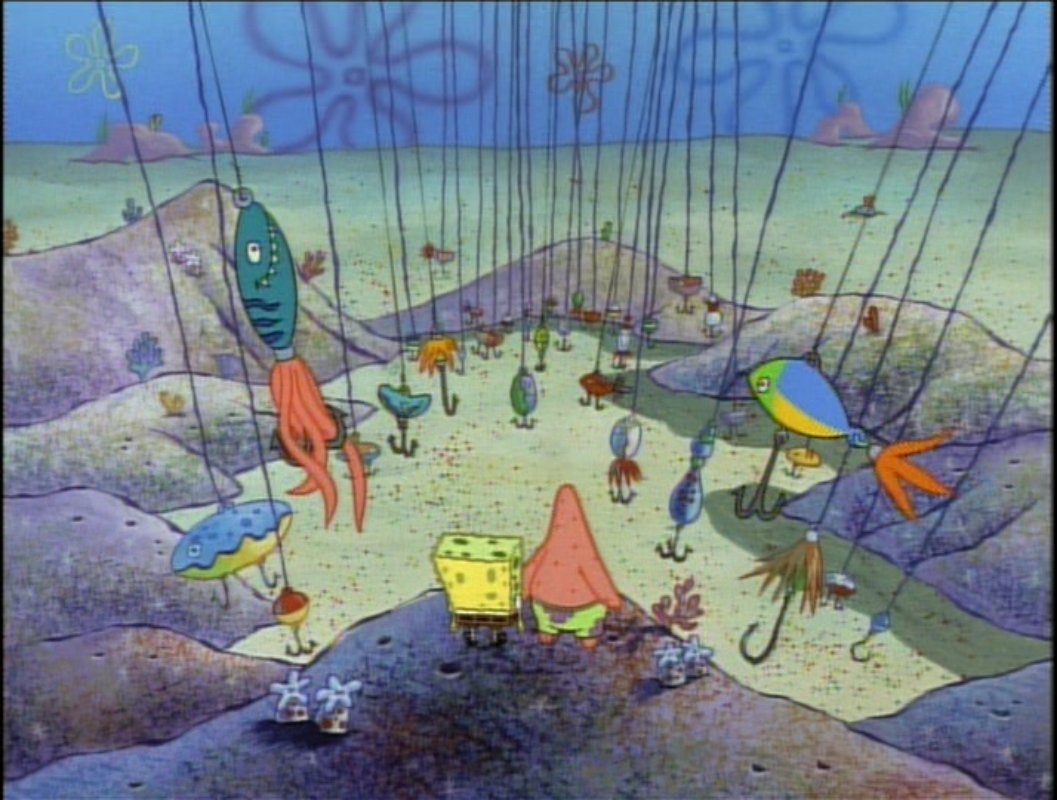
This thing’s got more hooks than the carnival in Spongebob. The main riff of the song alone just grabs and never lets go. It’s the kind of riff that sounds like it would be fun to just play repeatedly in a jam session or while you’re strumming on your couch and watching TV. The combination of a guitar and keyboard both doing it in unison makes for a really smooth sound that’s easy on the ears and never a bore. The vocal melody is another hook, as well as the chorus, which is a catchy earworm without ever getting annoying. That descending guitar riff when Rick sings the line “You know he’ll only use you up” during the chorus is another little moment that grabs. The way the song stops for a moment after the verses and then picks up again is a classic trick that works on this the same way it does in a lot of songs. Springfield found his fame during the early days of the video generation, but he knew what worked in the radio generation enough to craft a three minute song that people wouldn’t get sick of after the third or fourth listen. I know this for a fact because I spent a year working in a Weis Markets and heard this song more often than you’d think (to the point where this is the song I think of when Springfield comes up, not “Jessie’s Girl”). I never got sick of hearing it. Musically, it’s nothing mindblowing, but it is a well crafted pop-rock song that achieves the goal of being a solid three minute banger that doesn’t waste my time. The years that Springfield had walked away from the music business were to his benefit. As a songwriter, he had matured and honed his craft. There’s a big difference and a lot of growth that happened between this and something like “Speak To the Sky” or “Hooky Jo.”
The real intrigue of the song is in the lyrics and what it reveals about Springfield as a guy. “Don’t Talk To Strangers” is a song about infidelity, but it’s mostly a song about an insecure man’s paranoia that his girlfriend is being unfaithful to him. Springfield has been hearing stories about his girlfriend sneaking around. He doesn’t think that’s cool. He’s hearing that she’s been seeing some slick continental dude while also seeing him. This woman lives in the big city and there are actors and untrustworthy men everywhere trying to sink their claws into her. Springfield’s warning to her is the mantra that “stranger danger” was built on: “don’t talk to strangers.” Springfield is giving this warning and singing all this based on hearsay. “I’m hearing stories, I don’t think that’s cool.” “Cause you’re my girl, some say it’s no longer true.” “I don’t like what’s getting back to me.” “Now who’s this don juan I’ve been hearing of?” He doesn’t have any tangible proof that his girl is cheating on him, but paranoia is irrational and resistant to reason.
Springfield was not the only man in the early eighties with his guard up and writing about infidelity and paranoia. REO Speedwagon had the same fears two years before with “Take It On the Run,” a song where the accusations are fueled by a guy who “heard it from a friend, who heard it from a friend, who heard it from another” that his partner has been messing around. Hall & Oates hired private eyes, watching to see if infidelity was occurring just a year before this. The difference with Springfield is that unlike REO and H&O, who were making songs that were purely fictional, Springfield’s song was fueled by actual paranoia. Here’s Rick in an interview with Songfacts about the song’s origins:
The logic in that leaves me scratching my head, but it also makes sense in a weird “do I say, not as I do” kind of way. If you’re curious, he’s still married to the woman he wrote the song about and there’s no evidence that she’s ever cheated on him. Do what you will with that information. Now, “screwing around” on the road and cheating on your partner is unfortunately classic rockstar behavior, but worrying that the person waiting for you at home is also doing that is something unique. Rockstars, even if it’s purely performative, are normally very secure guys when it comes to cheating. They’re not really worried about the consequences because they often don’t consider them to begin with (Consider: Willie Dixon proudly singing about being a “Back Door Man” or Robert Palmer sneakin’ through the alley with Sally and being surprised at getting caught). Springfield’s paranoia adds a fascinating insecurity and dimension to “Don’t Talk To Strangers” that would end up being a distinctly eighties phenomenon, with Springfield appearing as a very different kind of rockstar than those of the generation before; a rockstar painfully insecure and fearful that another man has swooped in on his girl.
It’s a rather melodramatic song lyrically, so it’s perfect that Springfield had already established himself as a soap opera actor by the time the song was made. “Did you fall at first sight or did you need a shove” sounds like the kind of clever sting a General Hospital character would deliver. Springfield hams it up just enough that it never derails and veers into silliness. The man knew how to sell a song like this and how to bring the appropriate amount of drama. Even if it wasn’t coming from a real-life worry that his girlfriend was cheating on him while he’s out on the road, Springfield sells the melodrama of a fearful guy worried that his girl is chatting up some slick continental dude while he’s not with her.
There’s a unique moment in the song that happens during the bridge that cleverly reveals more of the song’s paranoia. On the bridge, Springfield and the backing vocalists suddenly start singing in French, delivering these lines: “Fais l’amour avec moi” (“Make love to me”), “Viens dormir, mon amour” (“Come to sleep my love”), “Je t’aime donne moi ton coeur ce soir” (“I like you to give me your heart this night”). The obvious reason he picked French is because it’s known as “the language of love,” which fits the song’s themes, but it goes a little deeper than that. After each of those lines, Rick interrupts with a line I find fascinating: “What’s he saying, baby?” That interjection opens up the floor to the question of whether Springfield is actually hearing a guy speaking French to his girl or if he’s simply imagining that and freaking out that he doesn’t know what’s being said. However you want to interpret it, there’s cleverness in asking “What’s he saying, baby?” after hearing a line of French delivered. An insecure guy like Springfield wouldn’t want to be denied information and he’d be incredibly terrified about what “Fais l’amour avec moi” could possibly mean. It’s brilliant. I think the only song more paranoid about romantic relationships than this one would be Dr. Hook’s “When You’re In Love With a Beautiful Woman,” a song that is the epitome of being absolutely terrified that the beautiful woman you’re with will stab you in the back and cheat on you, to the point where it isn’t just about being worried that every man is looking and wants to steal her away, but that you need to watch her as well. That’s a level of distrust I haven’t reached yet and hopefully never will. At the end of the day, the paranoia and command of “don’t talk to strangers” is where the song’s darkness oozes out. It would all be deeply concerning in real life. This kind of paranoia and the need to control who a person can and cannot talk to under the guise of “protecting them” is textbook abuse.
The suspicions of Springfield’s girl being unfaithful to him is the last thing that makes “Don’t Talk To Strangers” a fascinating song. Once you start digging into the lyrics and really sit with them, the most interesting part becomes Springfield’s unfounded fears that he’s being cheated on. This also makes the music video an interesting watch, as Springfield’s facial expressions really sell the fearfulness he has. The video is mostly Springfield in the shadows, following his girlfriend around town as she’s going on dates and chatting up some slick continental dude (can you tell I really like that line?) He’s shown under the table while they’re on a date and looking into her bedroom window while she’s chatting with the unknown man. There’s a really good shot of the city skyline with a transparent Rick over it looking down, like he’s a satellite spying and keeping watch on her. This is all interspersed with footage of the band playing on a soundstage surrounded by police cars with the lights flashing. I can’t tell if that’s supposed to represent Rick catching her in the act red-handed or if it’s just an early MTV idea where they just thought it was something that would look really cool on camera? Regardless, I think Rick looks great in it and plays to the camera well. Next to Mick Jagger, Springfield is the first artist we’ve covered in this project who feels like he understood music video and how to take advantage of it. You can also see the quick evolution of music videos within Springfield’s early eighties work. The videos for “Jessie’s Girl” and “I’ve Done Everything For You” are simplistic, clearly shot and made for cheap. “Don’t Talk To Strangers,” by contrast, has more of a “storyline” and the shot composition and overall storyboarding feels like there was already more thought being put into videos and, most importantly, more money thrown at them. The shots and flow of the video are already an improvement from when MTV initially launched. The shadows and angles when Springfield is following his girlfriend have the look and feel of a cheap TV movie, but that’s more than what MTV could offer at launch. The shot of Rick lighting the match and the cut to his girlfriend’s phone catching fire is cool as hell. The slightly gritty, dark neon reds lighting Springfield and the background as he peers into his girl’s window are well done. There’s still the whole “show the band miming the song on a stage of some kind” approach in parts, but here, Springfield and his band are on a stage with more props and design than a lot of the first videos. It’s a really well done video. Speaking from a purely technical standpoint, this is probably the best, most professional video that’s been seen in the project so far. There will be videos later on that will make this one look quaint. Regardless, in the early days of MTV, Springfield was a star and his television-ready look helped him become a rockstar for a new era. He was boyishly handsome, soft-spoken, charming, and had the talent to craft really solid pop-rock tunes that would keep people excited… but the insecurities found on “Don’t Talk To Strangers” extends to the entirety of Success Hasn’t Spoiled Me Yet and I found that more captivating than all those other things. Of all of Springfield’s work, Success is the one that I think unintentionally reveals the most.
There were two other singles from the album that became Top 40 hits: “What Kind Of Fool Am I” (really good one) and “I Get Excited.” On their own, they’re solid songs that continued to deliver what Springfield had already been finding success with. In the context of Success as a whole, they become songs that reveal Springfield as a rockstar who is unlucky in love (“What Kind Of Fool Am I,” “Black Is Black,” “Still Crazy For You”), gets no bitches, and is strangely clueless when it comes to knowing how to get girls. It’s mostly strange because you don’t exactly expect a charming guy who looks like Springfield and has his level of success in music and television to write an entire song asking how you talk to girls. If he doesn’t know how, then what insight could I–a jackass in his early thirties living in rural Pennsylvania–possibly provide him? Even stranger is that I know his fanbase was–and still is–primarily women. Plus, he’s admitted to having been a serial cheater on the road, so he obviously didn’t have problems attracting women in real life.
You can imagine me being puzzled when you listen to songs like “I Get Excited” and “Kristina” and hear him practically begging for love like he’s the dog on the album’s cover (which was his actual dog, Ronnie). At worst, he writes and sounds like a lame high school boy (despite being in his early thirties when this album was made) but the more I sat with the album, the more I got a picture of the type of guy who is insecure, but earnest and honest, possibly to the point where he accidentally reveals more than he maybe wanted. “Don’t Talk To Strangers” is where the insecurities are at their most visible, and it’s easily the album’s darkest track lyrically, but I saw shades of it throughout the entire album and I couldn’t help but find it interesting. Every documentary and major interview with the guy reveals he battled depression, doubt, and insecurity for most of his career and I fear I’m making Success Hasn’t Spoiled Me Yet out to be something sinister. It’s not. When Springfield sings about confusion and not knowing what to do when trying to approach and chat with girls on “How Do You Talk To Girls,” he sounds like he genuinely doesn’t have a clue, but wants to learn how. He doesn’t blame women for being difficult, he mostly beats on himself. Moments like those make Success Hasn’t Spoiled Me Yet closer to an early Weezer album than something made by rockstars of the seventies. It presents Springfield as someone who looks like a rockstar and sings like one, but ultimately doesn’t live up to the rockstar myth. This is all to say that I think Success Hasn’t Spoiled Me Yet is an interesting album. Go listen to it.
Springfield was blocked from the top spot by the Paul McCartney and Stevie Wonder collab “Ebony and Ivory,” their song about black and white keys working together as a metaphor for racial harmony which spent seven weeks at the top. McCartney and Wonder had long been legends and dominators by 1982 and still had the juice to top the charts, so Springfield shouldn’t feel too bad about losing to them. I get the feeling Springfield was blocked simply because those two on a song together probably felt like an event. I imagine it spent so long at the top because people were looking for an uplifting song at the time and those two specialized in that. People tend to not like “Ebony and Ivory” because of its corny “why can’t we all just get along?” message, but McCartney and Wonder were the kinds of guys who were lovable and sincere enough that even if you think it’s stupid, they didn’t, and that sincerity prevents me from ever hating it. Springfield was up against two legends with a heartfelt message about racial harmony. I don’t think your paranoia-fueled infidelity song could’ve beaten it.
If you know Springfield purely as “the ‘Jessie’s Girl’ guy,” then it might surprise you to learn that his run as a hitmaker lasted for quite a while. In 1983, Springfield released Living In Oz, scoring a Top 10 hit with “Affair Of the Heart,” which peaked at #9. “Human Touch” was also a Top 20 hit, peaking at #18. Listening to “Human Touch” now in the wake of Tyga releasing an entirely eighties-sounding AI-generated album, a human touch has never been more necessary. In that sense, Springfield was ahead of time. I also learned that the song was Springfield’s only Top 40 single in the U.K., so those blokes across the pond would know him for being “The ‘Human Touch’ guy” rather than knowing “Jessie’s Girl.” A truly strange country.
In 1984, Springfield brought his acting and music careers together for his feature film debut, a musical romantic drama called Hard To Hold. In it, Springfield plays rockstar James Roberts (he might as well be playing himself) who falls in love with a child psychologist who doesn’t like rock music and isn’t interested in him or his fame. The film’s plot is then Springfield trying to win her heart and also find the perfect inspiration for his next album. It’s not a terribly great film, but I think Springfield is fine in it and there are good ideas that would benefit from better execution. Considering that this project eventually has to talk about Madonna’s film career (Madonna will appear in this project a few times), Hard To Hold is hardly the worst film a musician has made. Springfield has a history of making fun of this film, but his fans seem to have affection for it and so do I. It’s a good curiosity watch.
That said, the soundtrack–which is mostly made up of new Springfield tunes–is incredibly solid. It’s a really fun listen. Next to Success Hasn’t Spoiled Me Yet, Hard To Hold is my favorite Springfield album. “Don’t Walk Away” and “Bop Til You Drop” gave Springfield two more Top 40 hits (#26 and #20) and I like those songs a good deal. I also recommend giving a listen to “Taxi Dancing” and “The Great Lost Art Of Conversation.” Most of my favorite Springfield songs come from Hard To Hold. The soundtrack gave Springfield his final Top 5 hit on the Hot 100, “Love Somebody.”
Springfield notched three more Top 40 singles during the eighties: “Celebrate Youth” (#26) and “State Of The Heart” (#22) in 1985 and “Rock Of Life” (#22) in 1988. After that, he walked away from music again for ten years, choosing to focus on his career in television acting during that time. He starred in a few made-for-TV films, but spent a good chunk of the decade starring in a show called High Tide, which I have never seen. It was created by Jeff Franklin (the guy who made Full House) and, just based on the intro, it looks like the kind of usual mid-afternoon syndicated schlock you’d find on cable. It also looks like if Miami Vice and Hawaii Five-O had a weird baby. It ran for three seasons, so I guess people liked it. If there are any High Tide fans reading this, please leave a comment and tell me if the show is any good.
Anyway, I think Springfield walked away from music at a perfect time. The nineties weren’t exactly kind to eighties pop-rock stars like him, so moving away into the acting world again and sitting out the nineties was a smart move. During the eighties, he had racked up a solid string of sixteen Top 40 hits over a decade. A respectable collection. When he returned to music with Karma in 1999, he had settled in comfortably as a pop elder statesman who could deliver the hits on tour again and again (he’s actually touring now, at the time of this writing). Springfield has continued to put out albums in the twenty-first century at a steady-ish pace (eight of them between 2004 and 2023) and seems to be doing just fine for himself. He’s continued acting in the modern day as well. He reprised his role on General Hospital a few times. Once from 2005 until 2008 and another time in 2012-2013. He’s also shown up on season two of True Detective, Supernatural, played a pastor on American Horror Story: Cult, and played opposite Meryl Streep in the 2015 Diablo Cody-penned film Ricki and the Flash. Springfield has done just fine for himself.
Springfield has stuck around and is still an eighties icon, but the concept of “stranger danger” really hasn’t. We decided it was ultimately ineffective, caused more problems than it solved, and is typically seen today as nothing more than fear-mongering. In the modern day, we’ve shifted focus and have developed other, more understanding ways of teaching kids about safety and knowing how to spot when someone is posing a legitimate threat to them. Kids still learn that there are possible threats out in the world and they should be careful, but the idea that every single person you don’t know is out to get you and you should trust nobody is an outdated concept now and shouldn’t be taught. “Don’t talk to strangers” is an outdated warning fueled by paranoia, but at least the song is good.
Rick Springfield will not return in this project, but he’ll never be a stranger.
Bonus Silver
There aren’t really any notable covers of “Don’t Talk To Strangers,” so this segment is gonna be different this time. This Bonus Silver is dedicated to songs that directly reference Springfield and other notable appearances in things. Let’s go!
In 1985, the WWE made an album of songs (for some odd reason) and wrestler Jimmy Hart provided vocals to a song called “Eat Your Heart Out, Rick Springfield.” In it, Hart is jealous that his girlfriend is obsessed with and attracted to Rick Springfield, so he decides he’s gonna take up singing as well so Rick can’t steal her away. The premise and song sounds like a Weird Al song that never happened. Springfield was asked in a 2014 AMA if he had ever heard the song, he replied that he had met Hart and had heard the title, but never the song. You can listen to that here.
In 1998, alt-rock band the Szuters recorded a song called “The Rick Springfield Song.” It most likely has that title because it truly does sound like something Springfield would’ve written and recorded in the eighties. Check it out here.
In 2011, music comedian Jonathan Coulton recorded “Je Suis Rick Springfield,” a hilarious song where he fails to pick up a woman he meets in France after trying to convince her that he’s Rick Springfield. The fact that he sings the entire song in French is also incredible. Listen to that one here if you’ve never heard it.
Here’s Springfield’s appearance on The Eric Andre Show, where they decide to just beat the shit out of him.
In the Youtube Originals series Sideswiped, a mother matches with Springfield on Tinder. Her daughter (who doesn’t know who Springfield is) is adamant that she’s getting catfished.
 You Got The Silver

Leave a comment