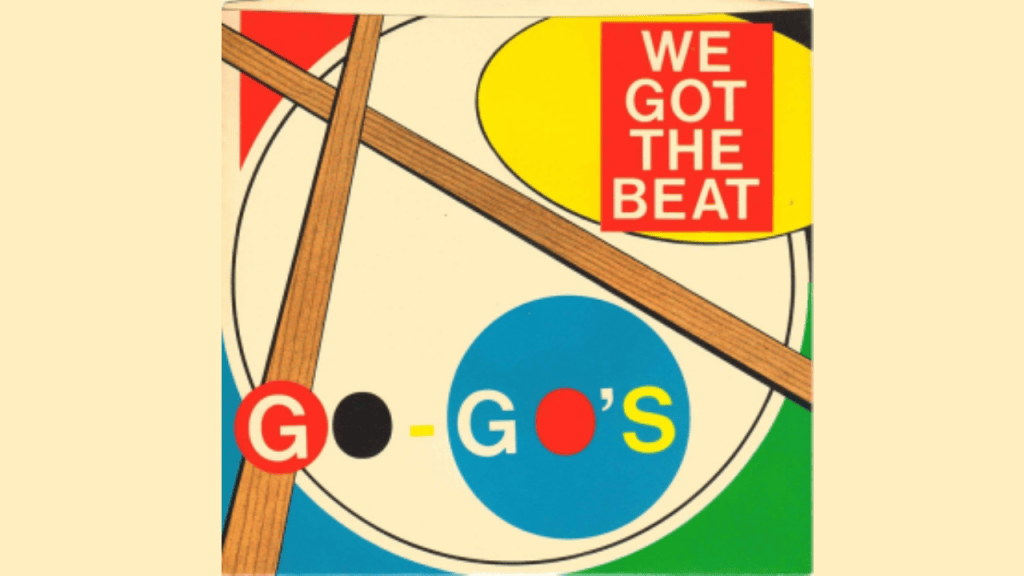
“See the people walking down the street / Fall in line just watching all their feet / They don’t know where they wanna go / But they’re walking in time”
- Reached #2: April 10th, 1982
- Number of Weeks at #2: Six Weeks
- #1 Song At the Time: “I Love Rock N’ Roll” – Joan Jett and The Blackhearts
My friend, Feeney (go ahead, say it like Eric from Boy Meets World, everyone does) once had this to say regarding folk music made in the modern day: “ I believe every folk singer must give a part of their soul to Bob Dylan to produce folk music, and in return, they must occasionally sing with his cadence.” We’ve affectionately called this “Paying the Dylan Tax.” Sometimes, an artist or a group comes along and completely changes everything, opening new opportunities for people and providing a blueprint for every person who sees them and says, “I want to be just like them.” Every dude that wants to make folk music owes something to Dylan and every woman since 1981 who has ever wanted to be in a successful rock band with their fellow ladies owes something to The Go-Go’s. Do you like the Bangles (who will eventually appear in this project a few times)? Are you a big fan of Sleater-Kinney? You rockin’ with Haim? Bikini Kill? Is Hayley Williams of Paramore your hero? Any Riot Grrl bands make you want to get a guitar and torture the neighborhood? If so, the Go-Go’s are an essential group to know, because all of those women owe something to them. There were plenty of women fighting for their right to rock before them, but the Go-Go’s were the ones that finally busted the doors down and proved women could be taken seriously in the male-dominated rock establishment. When they appeared on the mainstream scene in 1981 with their landmark debut album, Beauty and the Beat, nobody was prepared for it. They had the energy of a punk band, the positivity and fun of a power-pop band, and a kind of surf rock for a new age California long after the Beach Boys built the original dream. The five Go-Go’s–Charlotte, Gina, Jane, Kathy, Belinda–boldly led us into a brave new world, showing us new possibilities of what could be and nabbed a silver medal. Now, Gina, if you would, give me the fucking beat!
It’s important to understand that the Go-Go’s are not the first of their kind. There were plenty of women in rock prior to their arrival. The earliest example of an all-woman rock band would be Goldie & the Gingerbreads, who were active in the sixties. Franny are notable for being the first all-woman rock band to release an album on a major label in 1970. Through the seventies, there were plenty of women in rock bands alongside men. Christine McVie and Stevie Nicks were the ladies of Fleetwood Mac. Ann and Nancy Wilson were major forces in Heart. Debbie Harry was the centerpiece in Blondie. Donna Jean Godcheaux was a member of the Grateful Dead for most of the decade. Suzi Quatro found success in Europe as well as the Runaways, who were an all-woman band. The Go-Go’s, however, get special distinction above all of them due to being an all-woman rock band where every woman played their own instrument, all the material was written by the women in the band (Franny couldn’t claim that), and they were more successful commercially than Goldie, Franny, and the Runaways had ever been. Many women paved the way for the Go-Go’s, but they were the ones who proved that all-women rock bands were worth the investment. Their commercial success is the big reason why a lot of women owe something to them now. Beauty and the Beat hit number one on the Billboard 200 Album Chart in March 1982 and went double platinum. No all-woman band had done that before. Beauty and the Beat is such an important record that the National Recording Preservation Board decided to put it in the Library of Congress this year. It cannot be overstated how important they were and it’s only in this decade that we’ve started really paying them their due. They deserve every accolade. They really were that good.
The story of the Go-Go’s and the birth of the beat is a story of five women who were inexperienced, but determined to do the damn thing regardless. Their story begins in Los Angeles in 1978, during the first wave of punk. Generally, when first wave punk gets discussed, most tend to focus on the scene in the U.K. and the scene in New York, but L.A. had several thriving scenes. The ladies of the Go-Go’s all found each other through the Hollywood punk scene, which was populated with bands like the Germs, X, and the Dead Kennedys and gathered at clubs like the Masque and the Whiskey a Go Go. In the band’s 2020 documentary The Go-Go’s, there’s a hilarious bit where rhythm guitarist Jane Wiedlin talks about seeing the Sex Pistols at their final concert at Winterland Ballroom on January 14th, 1978 and coming away from it with this review: “I was like, aw, man, these guys were our heroes and they kinda suck,” which is how most people look at the Pistols now. Also in that documentary, she cites feeling like the first wave punk was dying off, believing it was the chance for someone like her to start a band and offer something new… like maybe a punk rock band that only had women in it. Is that a crazy idea?
Anyway, the Hollywood punk scene was small, small enough that Jane knew of some women in the scene she could round up to start a band with. Wiedlin played guitar, Elissa Barrio was the drummer, Margot Olavarria played bass, and Belinda Carlisle was the vocalist. They kicked around the name the Misfits for a minute, which they thought of because of the recently released Kinks album of the same name. There was already a punk band using the name anyway, so it’s probably for the best that they found something else. They settled on the Go-Go’s and the rest is history. They were ready to get started. There was just one problem… They didn’t know how to play instruments.
Luckily for them, you’re allowed to suck and not really know what you’re doing when playing punk music. Just the act of saying “fuck it” and doing the damn thing is enough to get started. You could do whatever the hell you wanted and you’d probably be accepted for it. For a group of women in the late seventies, the punk scene allowed them to be their authentic selves without fear of being judged or scrutinized the way they would be if they had gotten their start anywhere else. They would eventually shift and morph into a different kind of beast by the time they released their debut album, but those beginnings as a punk band are very important to their story.
They started rehearsing and doing gigs at the Masque and the Whisky a Go Go and quickly realized they had something special between them. They also realized that it would probably help if they found someone who actually had experience and knew what they were doing. That’s where Charlotte Caffey comes in, a young woman in the punk scene who had been playing piano since age four, went to college to study music, and knew how to play bass. She jokes in the band’s documentary that the first advice she offered was, “Let’s try plugging the amps into the wall first.” Prior to joining the band, Caffey had played with a group called the Eyes, which Olavarria and Carlisle had seen on stage. Backstage after a show, they asked her if she had any interest in joining this all-girl band they were starting. Her answer was yes. They asked her if she played lead guitar. She lied and said yes (she was primarily a bass player, but she figured it out). They were very serious about being a great band and making it, but their drummer wasn’t really as dedicated, so they needed to find someone new. Luckily, punk bands go through drummers like children go through Halloween candy, so there’s always a drummer out there somewhere looking for a gig. The ladies met Gina Schock at a party, asked her to come down and audition for them, and she became their drummer. She’s a super important aspect of their sound and we’ll talk about her plenty when we talk about “We Got The Beat” in full.
They ended up being the house band at the Whisky, so they opened for any and all bands that came through. Two bands that liked what they heard were ska greats the Specials and Madness, both of which wanted to bring them on tour in the U.K. The band obviously said yes and opened for them on tour for a good chunk of 1980. They were not loved by British audiences, partially for not being a ska band but also for just about every misogynistic reason you can imagine (booing at them, spitting at them, yelling at them to show their tits, etc). They remained positive and strong despite the hardships and the Specials and Madness both treated them very well. Meanwhile, British label Stiff Records (known for releasing work by the Damned, Elvis Costello, Devo, and Madness) agreed to release a single for them, the original version of “We Got The Beat,” which became a minor U.K. hit and became something that people in L.A. could buy, which helped spread the gospel of the Go-Go’s. It’s a rough, more garage-rock style take that, structurally, isn’t too different from the version that would appear on their debut album, but still different enough to make it an interesting curiosity.
Despite the growing hype, the band was having trouble securing a record deal, but they remained determined. They kept working on the songs that would eventually become Beauty and the Beat. As the songs developed, their sound was beginning to shift away from the hard edged punk rock they began with and was becoming a hybrid of those punk beginnings mixed with a more melodic pop sound. Olavarria didn’t like this shift in direction. She fell ill in December, 1980 shortly before some shows around New Year’s Eve and the band needed to find somebody to fill in on bass. They found Kathy Valentine, who had played in bands like Girlschool and the Textones, and asked if she would fill in. Valentine said yes, despite having never played bass. Fuck it! On the job training is still training! Valentine ended up being the final missing piece for them to really get to the next stage. All they needed now was somebody to believe in them and give them a damn deal. They ended up having one champion: Miles Copeland, father of Police drummer Stewart Copeland and the founder of I.R.S. Records, which would go on to sign the likes of R.E.M. and Fine Young Cannibals. Miles Copeland knew they were a good live band, had material worth recording, and were a fresh, unique band that people could get excited about. He signed them and with the help of producer Richard Gottehrer, the band quickly got to work on Beauty and the Beat. They released the first single, “Our Lips Are Sealed,” in June 1981 and it peaked at #20 on the Hot 100. I consider it one of the greatest pop songs of the early eighties. If you can have a bad time while this song is blasting, that’s your own problem and you need to get that sorted out.
One of the things Gottehrer had gotten the band to do was break away from their more punk instincts like rushing through songs, screeching lyrics, turning up guitars as loud as possible, or playing with wild abandon. He got them to start openly embracing the pop side of themselves and those elements in the songs they were writing. They may have started in the punk scene, but they had very quickly evolved into pop rockers. If you try playing a song like “Our Lips Are Sealed” too fast and loose, you lose a lot of the beauty and little moments that make a song like that one work so well. In a lot of ways, they had a similar evolution to bands like Blondie, U2, Talking Heads, and the Pretenders: bands that have their origins in punk, but very quickly shifted into something else. Not even in a “sellout” (that dreaded word!) kind of way. That’s just what happened. The second single after “Our Lips Are Sealed” was “We Got The Beat,” the band’s biggest charting hit, the one that earned them the silver medal, and the song that remains their signature tune.
The usual story for Charlotte Caffey’s inspiration behind writing “We Got The Beat” is that she was watching The Twilight Zone and listening to music all day, hoping for inspiration to strike because she wanted to write a song. Nothing was coming to her. Then, in a flash, she started hearing the different parts, quickly grabbed a tape and started a demo recording. Next thing she knew, she had it and the song was born. It took her about five minutes and it just flowed out.
Another source of inspiration she’s cited comes from an interview with Songfacts, where she talks about hearing Motown beats and wanting to do something similar to that. The particular song she thought of was the Smokey Robinson & the Miracles classic, “Going to a Go-Go,” which happens to use her band’s name. Here’s Charlotte:
That bit of info helps us talk about Gina Schock’s drum beat, which is basically if you gave the beat to “Going to a Go-Go” steroids and let it hulk out for two and a half minutes. She pounds those drums like they owe her money (and they probably do). Most of the Go-Go’s hits begin with her doing a drum beat like the one you hear on “We Got The Beat.” Her beats always sound like a motor revving up and going. She’s doing that really well on this song. She revs up during the verses and then the release during the chorus is her just running like a bull in a china shop until she needs to recharge it and rev up again. She’s always sounded like a monster behind the kit and she’s easily one of the best parts of watching Go-Go’s live footage. Simply incredible. You can hear that same style of revving up and then pounding away on “Our Lips Are Sealed,” “Skidmarks On My Heart,” and “Get Up and Go.” She sets the pace for the entire song and the rhythms she would come up with are still so fresh and inventive, even now.
Despite never having been a bass player prior to this, Kathy Valentine deserves special mention. That bassline is just hypnotic. Olavarria on the original plays it well, but it’s a bit too sloppy and loose for my liking. Valentine refines it, plays it tighter, and makes it groove more. She plays that bassline perfectly and locks into it enough that it becomes trancelike. It’s repetitive, but it never feels that way because it grooves and glides through the song so well and becomes such an annoyingly catchy pattern to hum along to. Valentine also locks in with Schock’s drumming a lot better and matches what she’s doing as well as locking in with Caffey’s lead guitar. Around 1:06, you hear Valentine lay down the riff Caffey is about to do and give her the lead in, to which Caffey takes and starts riding with, while Valentine hangs back and follows along with her in perfect sync. When you hear musicians talk about being in communication with each other, it’s those moments they’re talking about. The Stiff Records version of the song is more raw and punk and I’m sure there are people who would’ve preferred the girls stay that way (OIavarria certainly thought so), but it lacks the finesse, tightness, and communication that the band achieved when they re-recorded it for their debut. They learned that “pop” isn’t a bad word and the song benefits from that discovery.
One of the biggest differences between the original recording and the version that eventually became a hit is in the guitar playing. I couldn’t find anything concrete on how it happened or what might have influenced it, but the guitar sound of the Go-Go’s somehow morphed and changed from rough and raw punk rock to slick and groovy surf rock. I know Belinda Carlisle is a Beach Boys fan (she performed with them in 1986) so she might have played a role in that, but I don’t think that’s enough evidence. My guess is that it was something that just happened, but that aspect of their sound has always captivated me. The B-52s were doing the same thing around the time the Go-Go’s were on the come-up, so maybe that also played a role. I don’t know for sure. Regardless, in the case of “We Got The Beat,” it’s the bassline that really gives it that surf rock sound. Tell me you can’t picture yourself catching a gnarly wave while that’s playing. Charlotte Caffey’s guitar solo and lead playing during the instrumental break sounds like something Spongebob could be seen dancing to at Goo Lagoon. Isolate Schock’s drumming and Valentine’s bassline and you get something that could soundtrack Crash Bandicoot running for his life. The sound and style of this song is so exciting and so fresh. It’s unlike anything that’s been covered in this project so far.
I haven’t covered what the song is about yet, mostly because that’s the least important part of the song. It’s mostly a song where the band points out various people who have the beat, as if the five Go-Go’s are a mystical council passing judgement on who does and does not have the beat. As far as the song is concerned, someone has “the beat” so long as they are locked into some kind of rhythm or have something that locks them in. “They don’t know where they want to go / But they’re walking in time.” You can be directionless, but as long as you are locked into a groove, you are not beatless. So says the Go-Go’s.
The song begins with a zoomed out lens, analyzing people en masse (“See the people walking down the street / Fall in line just watching all their feet”), then zoomed in to see a smaller group (“All the kids just getting out of school / They can’t wait to hang out and be cool / Hang around ’til quarter after twelve / That’s when they fall in line”), then finally singing about themselves and how dances that were cool in the early sixties grant them the powers of the beat (“Go-go music really makes us dance / Doing the pony puts us in a trance / The Watusi, just give us a chance / That’s when we fall in line”). Perhaps the beat is a spiritual state, a place within the mind that you can reach if you free yourself of all inhibitions. Maybe we cannot consciously enter the beat-like state. Maybe we step in and out of it without even realizing. I can’t know this for sure… Charlotte Caffey is not responding to my emails regarding this matter.
There’s one other major element that makes “We Got The Beat” a special song: it works great for high school marching bands and cheerleading squads. I found a marching band arrangement that was released in 1982, less than a year after the song was widely released. There are tons of videos on Youtube of local high schools doing this song at football games and other events. Not since Fleetwood Mac’s “Tusk” has rock music and marching bands meshed so well together.
There are also plenty of videos on Youtube of cheerleading squads doing dance routines to this song, which would seem strange if that wasn’t already within the song’s DNA. It’s undeniably cheerleader-coded. I imagine cheer teams fell for it because Belinda Carlisle already kinda sings the song like a cheerleader. In the band’s 2020 documentary, she mentions having been a cheerleader and that makes perfect sense to me. I think that cheer experience informed her vocal style to some degree. Her voice, when loud and excitable on songs like this or the chorus to “Get Up and Go,” sounds like a cheer captain addressing a crowd in the bleachers. The chorus is anthemic and explosive like a lot of the moment’s rock songs, but it’s sung with the rhythm and pomp of a cheerleading squad. In some cases, that can sound like an insult, but that’s not the case here. I think that’s one reason why people like it. I think that’s one reason why it shows up in a lot of media aimed at kids and teens. It’s bright, poppy, and bombastic. It’s a chorus that kids can learn pretty fast because it’s just “we got the beat” repeated over and over, to the point where it could probably turn into a modern day vocal stim if allowed. That bit where the instruments cut out and it’s just Schock’s drumming and the band singing the chorus, that’s a cheerleading squad. Belinda gives me commands–“Everybody get on your feet”, “We know you can dance to the beat”, “Jump back, get down”, “Round and round and round”–while the rest of the band, and myself, sing “We got the beat” after every command. This song belongs in football stadiums. It works so well because they do all this without any shred of irony or satire. They are incredibly sincere and that sincerity makes them shine. They’re having more fun than me, but they want to show me that I can join them and get to their level. There is no monopoly on having the beat. Remember, WE got the beat, comrade. All of us.
The Go-Go’s may not have gotten the gold, but they showed up at a great time for women in rock. The Go-Go’s couldn’t dethrone Joan Jett and “I Love Rock n’ Roll,” but that’s partly because she was just too fucking cool to be denied. Songs about how great rock is are usually tried-and-true winners, but she also had an attitude, an edge, and a look to her that just made her so captivating at the beginning of the music video era. Pat Benatar was enjoying a big moment for the same reasons. The Go-Go’s, by contrast, were bright, plucky, and adorable. There’s nothing wrong with that! If anything, it helped them stand out more and give girls reassurance that you could rock and you didn’t have to fit into just one mold to do it. Plus, Heart were at the end of their classic era but still churning out heaters like “City’s Burning” and Stevie Nicks had established herself as a solo star with her Bella Donna album. Women had found their way to the party and when Beauty and the Beat hit number one on the Billboard 200 Album Chart, the Go-Go’s had done what had been considered impossible. They were an all-women band who played all their instruments, wrote their own material, and proved people wanted what they were offering.
You can trace the success of “We Got The Beat” to songs like Toni Basil’s “Mickey” (the ultimate cheerleader tune that came out a few months after the Go-Go’s got the silver), Gwen Stefani’s “Hollaback Girl,” and Chappell Roan’s “Hot To Go.” Those songs have gotten to drive a ton of miles because The Go-Go’s came along and paved the road.
The Go-Go’s moved fast. In the wake of Beauty and the Beat being so successful, there was demand for an immediate follow-up. You know how this dance goes. A band has years to put together their debut, it becomes more successful than anyone expected, suddenly there’s no time to put together a proper follow-up because you need to strike while the iron is hot. The Go-Go’s did that with Vacation, released in July 1982 and coming out a little over a year after Beauty and the Beat. It didn’t do nearly as well as the first album, but the title track still peaked at #8. It’s the weakest of their original trilogy of albums, but Vacation still has really good stuff on it. I have a lot of love for the title track, “Get Up and Go,” their cover of “Cool Jerk” by the Capitols, and “Beatnik Beach.” It’s worth a full listen if you like any of those songs.
Vacation was also a difficult follow-up to make because most of the band members were struggling with drug addiction (Charlotte in particular struggled with heroin addiction) and Belinda, Jane, and Charlotte starting fighting due to creative differences. It was the beginning of a mess that would carry over into the making of 1984’s Talk Show.
The Go-Go’s will not appear in this project again, but Belinda Carlisle will as a solo artist, so we’ll see her again and cover the rest of the Go-Go’s story when we eventually get to that entry. So, in a way, we will see the Go-Go’s again.
Bonus Silver
In 1992, hardcore punk band Poison Idea covered the song. I think what they lack in whimsy, they make up for with attitude. Check it out here.
In 2012, the Gleeks on Glee performed the song (for some reason) in their school cafeteria. I usually find that I enjoy these more if I have zero clue what the hell is happening (I have never watched the show). Regardless, here it is.
In 2012, former Disney Channel star and Twenty One Pilot wife Debby Ryan recorded a version of the song for Radio Rebel, a movie I have never seen. I have watched Danny Gonzalez make fun of it, though. Regardless, check it out here.
In 2017, Rachel Platten (the woman that did “Fight Song”) did a version for My Little Pony: The Movie. This one got included purely because of the lyrical changes to make it specifcially about the ponies and Equestria, which gave me a chuckle. Now, every pony trot to the beat by listening to it here.


Leave a Reply