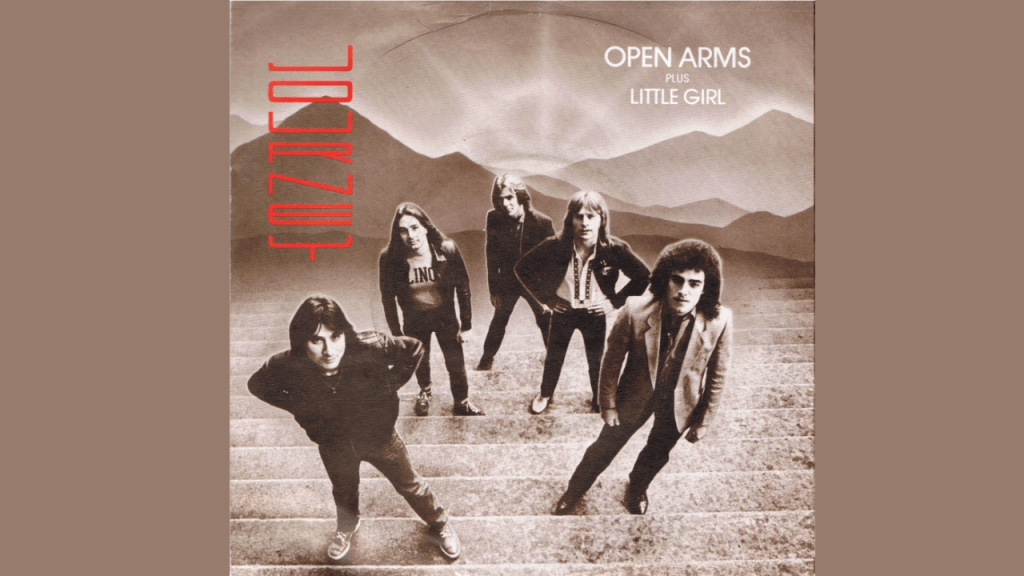
“We sailed on together and drifted apart / And here you are, by my side”
- Reached #2: February 27th, 1982
- Number of Weeks at #2: Six Weeks
- #1 Song At the Time: “Centerfold” – J. Geils Band (Three Weeks) and “I Love Rock N’ Roll” – Joan Jett and The Blackhearts
The Billboard Hot 100 is only one of many ways to measure success. Despite the mess it is now in the streaming era, it has always served a purpose as a means of being an industry standard that chronicles what songs were seeing success at a specific time, especially during a specific time when there was no technology that could be implemented to send you data like views and streaming numbers in real time. Even though this project is following what the Hot 100 says the number two song was at a specific moment, I know this is all just in good fun and I should not take the chart that seriously. Nobody should. But it’s too fun not to get caught up in it. It’s kinda fun to argue about stats and chart placements and accomplishments as a way to say “my fave is better than your fave.” Humans love arguing about numbers and things that don’t matter. Watch a couple of guys in their late twenties babble on and on about stats and numbers to argue which NFL quarterback is the best or which one deserved MVP the most. Talk smack on Taylor Swift and watch Swifties bring up every single number one she’s ever had and every accolade she’s ever received. My friend Joe can play a whole bunch of songs on guitar and I can’t play any, so that alone makes him a better guitar player than me. We love using numbers and quantifiable data in arguments about effectively pointless things in order to prove our arguments, because, in the words of legendary WWE wrestler and mathematician Scott Steiner: “The numbers don’t lie.” Even when we know that artists and labels have been fudging numbers and gaming the Hot 100 since the beginning, the numbers don’t lie. They’ve been etched into the stone.
This is all to say that chart success only tells one story. Sometimes, that one story is wrong and doesn’t reflect reality. Consider the rock band Journey. Their biggest hit is “Don’t Stop Believing,” the opening track from their ridiculously successful 1981 album, Escape (stylized as E5C4P3). There is no debating it. It’s the one that has been played more times on radio than any other Journey song. It’s the song everyone immediately thinks of when the Journey comes up in conversation. The song has appeared in countless television shows and movies. It is so well known that when most people explain what “The Four Chords of Pop” are to non-musicians, they immediately point to the beginning of the song as an easy example. Forbes reported in 2024 that the single had gone eighteen times platinum, making it one of the biggest songs of all time. If you were asked what Journey’s biggest hit is and you answer anything other than “Don’t Stop Believing,” people will tell you that you’re wrong.
However, as far as chart stats are concerned, none of that matters. “Don’t Stop Believing” is their biggest hit, but it’s not their biggest charting hit. “Don’t Stop Believing” only peaked at #9. Journey’s biggest charting hit was the single that came after that: “Open Arms,” the song that gave Journey their silver medal. If we’re only looking at chart positions, then “Open Arms” is, technically, Journey’s biggest hit. Luckily, the people’s court has decreed that chart positions don’t truly matter, meaning that “Open Arms” is not the biggest Journey hit or their defining song, which is great news for them, because “Open Arms” fucking sucks.
Journey were good at plenty of things, but being balladeers wasn’t one of them. It sucks every single time they try it. “Faithfully” is unbearable. I get nothing from “Send Her My Love.” “Who’s Crying Now” is fine, but it’s easily the weakest part of Escape’s first half and you could cut it. The only eighties band that could claim to be worse at turning the lights down and slowing the tempo was Mötley Crüe, a band that should not have ever tried to sound vulnerable. I have always found Journey’s inability to operate as balladeers, considering every single one of their peers were not only better at it, but more successful at it as well. “Open Arms” couldn’t get them to number one (no Journey song did, they’re only silver medalists), but Styx managed it (“Babe”), Foreigner did it (“I Want To Know What Love Is”), and REO Speedwagon somehow did it twice (“Keep On Loving You” and “Can’t Fight This Feeling”). All of those songs are miles better than “Open Arms” (yes, even “Babe,” which may be cheesy, but lovely and sincere enough that it always wins me over). Journey have a good number of hits I love, but “Open Arms” ain’t one of them. Nevertheless, it took Journey six years of blood, sweat, tears, and the right band members to come along before they finally scored the song that nabbed them a silver medal.
The story of Journey begins in the mid-seventies with former Santana road manager Herbie Herbert. He pictured a group called the Golden Gate Rhythm Section, a collective of musicians who could serve as backing musicians for San Francisco Bay Area artists, not dissimilar to the Wrecking Crew from the sixties or Toto (a group that will appear in this project soon). He recruited players from a couple different places. His first two recruits were guitarist Neal Schon (who will be Journey’s only original member to be present for every iteration) and keyboardist/vocalist Gregg Rolie, two Santana alumni who were part of the guitar player’s classic band. Rolie had been in Santana from the beginning, Schon joined as a fresh-faced seventeen year old in 1971 starting with Santana III. They both left in 1973 to form what would become Journey, as Santana was starting to shift gears into a more instrumental, progressive jazz fusion direction.
Along with Schon and Rolie, bassist Ross Valory and rhythm guitarist George Tickner were added, both of them previously having been in the band Frumious Bandersnatch (outstanding name.) They initially had Prairie Prince from the Tubes as their drummer, but Prince rejoined the Tubes, so they got former Frank Zappa/Mothers of Invention drummer Aynsley Dunbar as a permanent replacement. They played one show and abandoned the idea of being a backing group, choosing instead to develop their own style and become a full-on band. When nobody could come up with a name, roadie John Villanueva suggested “Journey.” That one stuck. They were off to the races after that.
They got to work quickly, with their self-titled debut being released in April 1975. Journey’s earliest incarnation is more of a progressive rock/jazz fusion outfit, completely different from the commercial, radio-friendly, stadium rock band that would become world-conquering. Their first album was not a success and Tickner left both the band and music as a whole to study medicine after getting burned out from their intense touring schedule, which was Herbert’s idea. He wanted them to be a concert draw since he knew people would have a tough time figuring out what to do with their album.
They released two more albums, Look to the Future in January 1976 and Next in February 1977. They were putting out decent work–songs like “On a Saturday Nite” and “She Makes Me (Feel Alright)” are good representatives of what they were doing at the time–but it wasn’t selling very well. To their credit, they were trying to make music that catered to both the prog/jazz fusion stuff they wanted to make and also appease Columbia Records, who were most likely looking for an AOR (album oriented rock) band that would move units, but just couldn’t seem to find the sweet spot between the two worlds that would get people interested in what they were doing. In 2026, I would classify the first three Journey albums as “curiosity listens.” There’s most likely a small niche of people that would call those albums “The real Journey” and everything else as a bunch of sellout junk. I get it. Personally, if Journey had stayed in the lane they had started in, they would’ve been done by the end of the seventies. They were making the kind of mid-seventies rock that somebody like Homer Simpson really loves, which is fine! But listening to those albums myself, they didn’t really excite me much. It mostly sounded like diet Grand Funk Railroad to me and if you want great jazz fusion made in the mid-seventies, bands like Dixie Dregs and Brand X are right there.
After Next continued a losing streak, Columbia was on the verge of dropping them unless something changed. Luckily, they did some soul searching, shifted musical direction, and figured out where to go next. Oh! They also found a new lead singer that gave them a distinguished character that set them apart from others, even though it took a bit to find him.
Columbia’s idea to help Journey was to first have them switch up musical styles. They were advised to stop doing all that weird jazz fusion shit and start sounding more like the kinds of rock bands that were making waves at the time, like Styx, Foreigner, and Boston. This change of direction would be heard immediately once 1978’s Infinity came out. Columbia also advised that the band should find a new lead singer, someone who could share lead vocal duties with Gregg Rolie and play frontman. Most times, record executives have dumb ideas and should not be listened to. This is one of those times where the suits made good suggestions and you can’t argue that those suggestions didn’t work out, considering the band is still playing stadium shows right now at the time of this writing. They took both of those suggestions. They hired a guy named Robert Fleischman to be their frontman, but he lasted only a few months before leaving (he and manager Herbie Herbert did not get along at all). Journey opened for a lot of weird bands that year: Black Sabbath, Judas Priest, Emerson, Lake & Palmer for some fucking reason. There is footage/audio of Fleischman’s very brief time with the band available on Youtube. He’s… fine, but there were a thousand guys in the seventies who sounded exactly like this. His only major contributions to the band’s history are the three songs he got co-writing credits for (“Wheel In the Sky,” “Anytime,” “Winds of March”). If Journey were gonna really succeed and become silver medalists someday, they needed to find a lead singer with some real character. Somebody who was distinct. Somebody who, when you heard him, you never had to ask what band was playing.
Enter a man named Steve Perry, someone who had been on Herbie Herbert’s radar for some time. An American born to Portuguese parents, Perry’s realization that music was the life for him was when he first heard “Cupid” by Sam Cooke on the radio in his mother’s car. After that, he knew being a singer was the dream. Perry took a lot of vocal cues and influence from guys like Cooke and former You Got The Silver subject Smokey Robinson. You can easily hear a lot of Perry’s vocal style in “Cupid.” Perry had spent a long time working in garage bands and projects that weren’t really going anywhere. It wasn’t until he formed a band called Alien Project (cool name) that he started getting attention from record labels, namely Columbia.
Herbie Herbert had heard the project’s demo tape and loved what he heard. There were talks about a record deal that never materialized, mostly due to Alien Project bassist Richard Michaels Haddad dying in a car accident. The whole band was distraught and the wind was knocked out of the sails. Perry himself was ready to call it quits and give up on the dream, but didn’t when he got a phone call telling him that Columbia and Herbert wanted Perry to become the new frontman for Journey. Perry decided to take the job. In a 2014 interview with Louder, Perry recalled what attracted him to join the band. “I had seen Journey come to town and play many times in LA and I knew that my voice with Neal Schon’s guitar would be like salt and pepper. I knew that if I could ever work with him that would be a dream. It was Neal who really attracted me to that set up.”
With the addition of Perry, Journey had finally found a frontman who gave the band a distinct musical identity and he ended up being a perfect fit for the more commercial rock direction they were beginning to head in. In January 1978, the band released Infinity, the album that started their ascent to popularity and the first album where they sound like Journey. The change in direction and the addition of Perry on lead vocals is immediately heard on the album opener, “Lights.” You can hear the soulful, Sam Cooke-inspired approach Perry brought to the band just from the opening chorus alone. Infinity is a really solid album.
The next few years saw more lineup changes and more successes. For starters, Aynsley Dunbar wasn’t thrilled with the direction the band was headed in and was replaced right after the Infinity tour was done. They finally scored their first Top 20 hit with “Lovin’, Touchin’, Squeezin’.” They scored a Top 30 hit with “Any Way You Want It.” Gregg Rolie left the band after 1980’s Departure to start a family and do solo projects. He suggested Jonathan Cain from British rock band The Babys (lame and stupid name) as his replacement and that’s who they got. Where Rolie was primarily an organ player, Cain was a combo of a pianist and synthesizer player, which ended up helping the band keep up with the more modern sounds Journey’s brand of commercial rock was headed towards. On July 17th, 1981, Journey released Escape, their most successful studio album and the one that contains their biggest and most enduring hits. If you had to listen to only one Journey album to try and understand why they were considered such a big deal, Escape would be the one. It has enough material you would already be familiar with (“Don’t Stop Believing,” “Stone In Love,” “Who’s Crying Now”) mixed with album cuts that showcase every strength the band had. It suffers a bit from the first side being front-loaded with the album’s singles, but the second side has plenty of highlights as well. The title track, “Dead Or Alive,” and “Mother, Father” are all great songs. My only major issue with Escape is that it ends with one of their worst songs, which is “Open Arms.”
“Open Arms” feels tacked on to the end of the album, like a lame and annoying little brother who desperately wants to play with his older brother and his friends; someone yearning to be accepted and be seen despite having nothing in common with them. Because bands like Journey were always adamant that an album needed ten songs on it, the nine other songs on Escape were told to bring “Open Arms” along and let it hang out with them. It’s allowed to! But it needs to keep its distance. Let it play last. I can understand why it ends the album. “Mother, Father” is this heartbreaking song about a family torn apart through dysfunction and alcoholism, with a desperate call to say it doesn’t have to be this way. “Open Arms” is all about a couple who had previously broken up with each other, but found their way back and decided something was still there. They decide to try and give their love a second shot. If you want to, the song can be heard as the good ending to “Mother, Father,” a song that ends that story and the whole album on a hopeful note. On its own, it’s a good song to have if you’re someone who had a second chance romance with the person you love more than anyone. I can understand the reasons why this song exists and why someone would seek it out. It’s just a shame that this song is terrible.
“Open Arms” is mostly Jonathan Cain’s fault. He co-wrote it with Steve Perry, but Cain is the genesis. He had the melody of the song written when he joined Journey. He had shown it to the Babys first, but it was rejected by vocalist and future Bad English member, John Waite. Waite rejected it by saying it was “too syrupy” and “sentimental rubbish,” two descriptors that I wholeheartedly agree with. Cain ended up showing Perry the song on a Wurlitzer keyboard and Perry immediately wanted to do it. The rest of the band members weren’t keen on the idea, especially Neal Schon. Despite some of the members being unsure, they went ahead and did the song anyway. Naturally, it ended up being their biggest charting hit.
I have sat with the song repeatedly trying to figure out exactly what it is that turns me away. It’s a well-crafted song. The melody is soft and romantic, the big and explosive chorus is the stuff that lighters and phone lights were meant to be turned on and waved to, and the song hits every mark needed to leap and hit the landing. And yet, I find it to be a very hollow and empty sounding song. It sounds big, but cut through all the noise and you will find there is no center; no cake under all the frosting. Jonathan Cain strikes me as a guy who was interested in writing hit songs and keeping a commercial streak going for the band. Of the fifteen songs on their 1988 Greatest Hits album, Cain has writing credits on eleven of them. He co-wrote every single on Escape. Perry was the vocalist that brought Journey to the big time, but I’d argue Cain’s contributions are what made Journey true blue hitmakers. This is all to say that “Open Arms” sounds hollow and empty because I can tell this wasn’t written from any kind of personal place. It was written and recorded because Perry and Cain knew they had a hit on their hands. Anything else that came along with it was extra.
On top of John Waite’s assessment of “Open Arms” being “too syrupy” and “sentimental rubbish,” I would like to add a third statement: “Open Arms” is cornball bullshit engineered for talent shows. I know this because of the staggering amount of talent shows this song has been featured on. Take your pick. Clay Aiken on season two of American Idol. Several performances on The Voice. Perhaps you would prefer The X Factor USA? Maybe America’s Got Talent? If you don’t want any of those, could I interest you in a performance done by the Crocodile (who is secretly Nick Carter from Backstreet Boys) on The Masked Singer? I would say this is an odd development, but the song has always sounded like this. That’s how Perry sang the original. He did it like he was winning a talent show to save a small town from being turned into a super highway or something. This is the kind of song that keeps those vocal coaches who make reaction videos on Youtube fed for ages.
Steve Perry was an incredible vocal talent, but that every great vocalist has a weak point, something that isn’t in their arsenal. Steve Perry’s weak point was that when he belted out the hits, he tended to lose any and all emotion he was trying to convey. “Open Arms” is where you can hear it the most. The chorus tries to be big and explosive, but it’s stilted and restrained and Perry’s voice can’t convey any emotion that really sells the song. He was always too interested in high-flying vocal theatrics to really just give a performance that’s really worth a damn. Incredibly talented, but talented in the way that I’m supposed to be impressed when I watch people do songs like this on talent shows. It’s the kind of song that’s meant to be difficult for good vocalists to pull off on a technical level, a way for a panel of judges to decide who really has that “it” factor.
Even though I find this to be one of Perry’s most hollow and lifeless performances, it’s not entirely his fault. The song itself is so fucking boring, stiff, and manufactured that anything it wants to do fails because it just becomes unbearable to sit through. It’s only three minutes and twenty seconds, but it can feel like an eternity. There’s NO exciting moment or change during the song. No interesting drum fills, no little flourishes or standout details that make the song engaging, no change during the final chorus to really make the song take off and lead to a big finish. There’s not even a guitar solo in it. If there’s not even that, what the fuck am I here for then?
Thinking about Perry’s vocal performance and the lyrics, I think the problem is that he just doesn’t sound desperate enough, which is what I think the song is (maybe?) calling for. The whole idea of going to someone you used to be with and standing before them with open arms is to throw down your defenses completely and lay it all on the line. It’s a desperation attack. It’s one final move before the game is truly over. It should sound like the musical equivalent of Conrad Fisher telling Belly Conklin that he fucked up, begging her with tears in his eyes and a voice that’s cracking to try again with him instead of going off and marrying his brother. “Open Arms” should have that same kind of almost pathetic desperation and pleading, but it doesn’t. In the end, it’s a song that conveys nothing. It’s not interested in selling emotion. It’s trying to be a catchy and romantic radio hit that showcases how good their new keyboardist is and how amazing their lead singer is. That’s it. It wasn’t manufactured to be anything other than that. It’s an empty, hollow, bland, forgettable nothing of a song that you can immediately see right through. It’s a corporate rock band interested in scoring another hit and adding another victory to their growing column of wins. I don’t find a single aspect of this song compelling and every terrible eighties power ballad that still lives on today is Jonathan Cain’s fault. “Open Arms” provided the blueprint for every power ballad that came after. Because it was such a hit, every band in the wake of Journey’s success believed that was the golden ticket to success and that they needed to make a power ballad of their own. If there are any power ballads that came out during the peak of hair metal that you despise, you can blame Journey for that. The power ballad eventually became so powerful that even John Waite, the first hater of “Open Arms,” relented and gave in. His biggest solo hit was the 1984 ballad “Missing You.” He and Cain eventually joined forces again when they were in Bad English together and scored a number one hit with “When I See You Smile,” a terribly lame Diane Warren-penned eighties ballad that was also possible through “Open Arms” having been such a hit. I’ll give Cain credit for this: he managed to tap into something really early that would only grow during the decade and become a thing every rock band did at least once. The eighties power ballad can arguably be traced back to him. The bad part is that it created a lot of eighties songs that absolutely suck.
“Open Arms” spent six weeks at the number two spot, blocked by two infinitely better songs. The first one was “Centerfold” by J. Geils Band, a monstrously catchy song capturing how loser men have always had conflicting feelings when it comes to finding out women they once knew now engage in sex work. Okay Google, define Madonna/Whore Complex. The opening riff of that song alone (“na, na, na-na-na-na, na-na-na-na, nananana”) is better than all of “Open Arms.” I’m sure somebody has been haunted by that repetitive melody for decades, but it never gets old for me. I can play it loud enough to kill. “Open Arms” stood no chance. After three weeks, it was blocked by Joan Jett and the Blackhearts’ “I Love Rock N’ Roll,” which is a rock song about how great rock n’ roll is, but have you considered that Joan Jett is still one of the coolest women to ever do it? That song is simple, but it still kills. If you’re with the right crowd and just buzzed enough, it can reach its greatest power and you will truly understand how good that one is. Joan Jett is welcome at all my parties, “Open Arms” wouldn’t even learn where my party is being held and I’d lie about the location if I really had to. I have absolutely no use for a song like “Open Arms.” It serves one purpose these days and that’s so talent show contestants can sing it well and go somewhat-viral on Facebook when all the judges have incredible reactions or press the gold buzzer or whatever the hell singing shows do these days.
Journey’s career after Escape is interesting, both in regards to where they went after that triumph and what their relationship with MTV and music video ended up becoming. In 1983, Journey released their album, Frontiers, an album that didn’t do as well as Escape did, but did continue their hot streak of success. The first single they released was “Separate Ways (Worlds Apart),” which peaked at #8 and is my brother’s favorite Journey song. It’s a really good one. I’d even go so far as to argue it’s their best. The song is one of the band’s most enduring hits, but I’d argue it’s more known for its video, which is often used as the prime example of a band from the seventies not making the transition to MTV very well. This isn’t one of those “Oh, c’mon, you guys are being mean” things. It really is a historically and hilariously awful video if you’ve never had the pleasure of seeing it. Everything about it is so special. Steve Perry’s awful haircut. The terrible directing and shots all throughout. All the guys in Journey air-banding for some damn reason (Jonathan Cain air-keyboarding is a special delight). The fact they filmed it at a shipping yard. A woman just randomly walking through who looks like she belongs on the set of a Duran Duran video rather than with any of the dudes in Journey. It’s a very special kind of bad. I’ve seen it a hundred times and it’s the gift that keeps on giving.
In I Want My MTV: The Uncensored Story of the Music Video Revolution–Rob Tenenbaum and Craig Marks’ excellent oral history about MTV’s golden age–Jonathan Cain cites Steve Perry as being very anti-video, his view being that they were performers and entertainers, but they were not actors. I can understand that view. He’s talked about not having fond memories of making the video for his 1984 solo hit “Oh Sherrie” and part of that video’s very concept is refusing to take part in the stupid idea the director has of playing a prince and saving the princess (Sherrie) and leaving, which then causes the real video to start. I fully buy that Perry was the kind of guy that didn’t think music videos were worth much, but I maintain that with the exception of “Separate Ways,” Journey had ways of playing the music video game in a way that they probably wouldn’t have hated. “Faithfully” (Cain’s attempt to make power ballad lightning strike twice and peaked at #12 on the Hot 100) had a music video that was just a behind the scenes look at Journey on tour. “Send Her My Love” was just a live performance with the studio track dubbed over it. I don’t like either of those songs, but those videos are far from bad! I think performance videos were the way to go. The band had done that for a bunch of clips during their later seventies run when Perry joined. Those are fine. When people say “Journey were bad at music videos” that’s not really true. Only the “Separate Ways” video is bad.
This talk about Journey and music videos is important because it directly informed their 1986 album, Raised On Radio. Would you like to take a wild guess at why they called it that? They called it that because by 1986, they refused to make music videos to promote it. In an interview with the radio show Rockline around the time the album came out, Jonathan Cain explained this choice. “One of the things we wanted to do was preserve the imagination … and not give the power to some director who we were introduced [to] for two hours and had to make life decisions about.” Steve Perry added to that, arguing that music video as a medium “destroys the ability for you to absolutely take that song and make it your own, no matter what that means to you. One song does not mean the same thing to two people, and as soon as you’ve seen a video, you have now got a burnt vision from that point on — when you hear that song on the radio, you’ll see the video in your mind.” This all makes sense to me and they weren’t the only rock band in 1986 refusing to play ball with MTV. Van Halen had made the same choice, but they were mostly doing that because they just made the switch from David Lee Roth to Sammy Hagar as lead vocalist and they didn’t want to have to compete with whatever wacky videos Diamond Dave was making. They weren’t crazy about music videos either, but they had more grace because they had been more successful at making them than Journey was. I’ve always suspected that one reason Journey didn’t want to make them was because they were afraid they were going to embarrass themselves again and make something similar to “Separate Ways.” I don’t think they ever wanted to admit they were bad at making them, so they decided to try and spin it so it seemed like music videos as a whole were worthless, rather than admit they didn’t like it because they failed at it.
Regardless, Raised On Radio is easily the best album they ever did. I really love it. The whole “music videos suck and we should all go back to the magic of radio” idea is honestly kind of a cool concept and I kinda wish they had leaned more into that idea. I’m thinking something similar to how The Who Sell Out plays like a pirate radio station broadcast. It’s the poppiest-sounding album they made and that’s probably because Steve Perry called the shots for most of the making of it (he produced the album). Bassist Ross Valory and drummer Steve Smith didn’t like Perry taking more control, feeling like it was becoming less of a group effort. The two of them were fired during the making of the album (though Smith is still present on three tracks) and replaced with Randy Jackson (the American Idol judge, not Michael’s brother) and Larrie London (in live performances it was Mike Baird that took over). It did not do nearly as well as Escape or Frontiers did, but I really recommend listening to it. It’s a really great album for summer nights when you’re driving on the highway right as the sun is starting to set. Most of the singles were Top 20 hits: “Be Good To Yourself,” “Suzanne,” “Girl Can’t Help It,” and “I’ll Be Alright Without You,” my favorite Journey deep cut. The final minute of the song is the most wonderful guitar playing Neal Schon ever laid to tape.
After the tour for Raised On Radio ended in 1987, tensions between Perry, the band, and manager Herbie Herbert had reached a breaking point. Perry had reached a breaking point and wanted out of Journey. He had lost the passion for music, was getting tired of touring, and he started to feel like his vocal quality had been taking a hit. That last one is evident, because he sounds a bit fried and burned out on Raised On Radio. He still sounds great! But you can tell he was getting tired of the whole thing and needed to stop. So, the band went on hiatus for the next eight years. Schon and Cain ended up joining forces with John Waite and Ricky Phillips to form the supergroup Bad English for a while. Perry, meanwhile, completely disappeared from the public eye until the mid-nineties.
Journey reunited in 1995 when Perry decided to start things up again. His demand was that Herbie Herbert no longer be their manager, so the band brought in Irving Azoff, longtime Eagles manager and the guy who played a prominent role in the TicketMaster/Live Nation merger (thanks for that one, asshole!) Steve Smith and Ross Valory returned and the band immediately got to work on what would become their comeback album, Trial By Fire, released in 1996. They scored a late career hit with “When You Love a Woman,” which peaked at #12 on the Hot 100. I can’t imagine anyone asking for more Journey in the year of 1996, but evidently somebody had a hankerin’ for it.
There were three more singles after that one that didn’t go anywhere. The only one that really stuck out to me was “Message Of Love,” which I only found interesting because of the one part in the middle of the song where Jonathan Cain is playing a keyboard riff that’s so fucking close to being the opening of “Separate Ways” that I can’t tell if he’s doing it on purpose as a call-back or he’s self-plagiarizing and it’s super distracting to me. Also, it’s crazy enough that Journey put out an album in the nineties, but even crazier to me that this is the album cover for it:
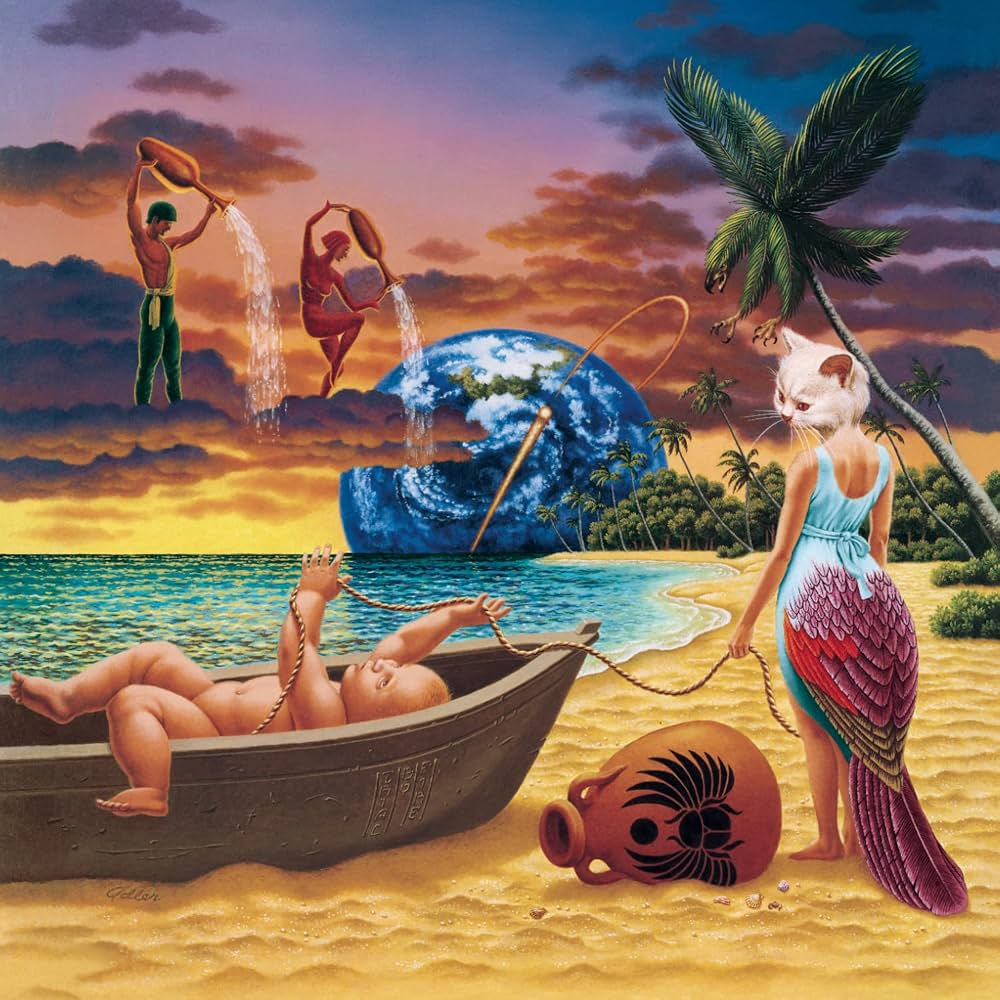
This!? For a JOURNEY album!? This goes way too hard for the guys in Journey, of all bands, to be allowed to use this. This is crazy work.
Anyway, the band initially planned a reunion tour in support of the album, but that never materialized due to Steve Perry learning he had a degenerative bone condition and could not perform without getting a hip replacement. He had other physical issues that prevented him from being a road warrior. In 1998, Perry left Journey for good, entered semi-retirement, and disappeared from the public eye again for a while. The only time he’s been seen with Journey in the twenty-first century was when they were inducted into the Rock and Roll Hall of Fame in 2017. He gave a speech, but declined to perform with the band.
Journey has pretty much been a nostalgia circuit touring act since they returned to touring in 1998. They’ve released four albums (the latest one being Freedom in 2022, which is what Raised On Radio was almost called), a couple of live records, gone through lineup changes, petty lawsuits, the usual stuff that oldhead bands get up to. “Don’t Stop Believing” got a big bump in the 2000s when it was the final song played during the shocking and divisive finale to The Sopranos (RIP to Big Pussy). Other than that, they’ve lived the life of a nostalgia act and have done fine for themselves. They’re currently touring at the time of this writing and supposedly this is gonna be the farewell tour, dubbed “The Final Frontier” tour. From what I’ve read, it doesn’t sound like any of them are having much fun, so maybe this really is Journey’s curtain call. Who’s to say? Regardless, Journey will obviously not return in this project. We will eventually see the power ballad make a return, but that won’t be for a long, long time. We are moving on to other frontiers now…
Oh! There’s one more thing I learned while researching and writing this that’s worth reporting. Jonathan Cain’s wife (who he married in 2015) is Paula White-Cain, Donald Trump’s personal minister and spiritual advisor. She’s been working for him during both of his presidencies and currently serves as the leader of Trump’s White House Faith Office, whatever the hell that is. She’s the woman who runs a megachurch dedicated to spiritual warfare, speaking in tongues, modern prophecy, the whole list of insane bullshit. She made headlines earlier this year when she compared Donald Trump to Jesus Christ on Easter. And if you’re curious, yes, Jonathan Cain is a diehard Christian, conservative MAGA guy. Last month he appeared on some stupid podcast and said he thinks Bruce Springsteen (who will eventually appear in this project) is an “annoying, bitter old man” and should shut up and stop doing political rants at concerts, arguing concerts are not the place for political grandstanding on either side of the aisle and saying that he used to be a Springsteen fan but now he isn’t. You know this dance. I didn’t know what the keyboard player from Journey thought about the current political climate, nor who he was married to before writing this. Now I wish I didn’t. To all of that, I have this to say: Fuck you and fuck your stupid idiot wife too. I don’t like your fucking boring, stupid, lame, toothless, limp-dick power ballad and now I don’t have to write about Journey anymore! I’m ready to embrace the sweet release and newfound freedom with open arms.
Bonus Silver
There are a lot of damn covers of this song and most of them are not notable enough to really stand out from the Journey original. If there’s one thing I’ve learned from listening to cover versions, it’s that there isn’t much you can really do with this song. Still, here are three that are worth sharing.
Mariah Carey took a crack at it in 1995 when she recorded a version of it for the Daydream album. It was a perfect song for nineties Mariah to do. It’s actually the version most people in the U.K. would likely recognize first (it peaked at #4 in the U.K.) Check it out here.
In 2009, Boyz II Men recorded a version of the song. Show the Boyz some love here.
In 2023, Dolly Parton released Rockstar, an album of Dolly doing a bunch of beloved classic rock songs. One of them was “Open Arms” and hers is distinct because she managed to get Steve Perry to do it with her as a duet. It kinda works as one and at least she tried something different than most renditions. Check it out here.


Leave a Reply