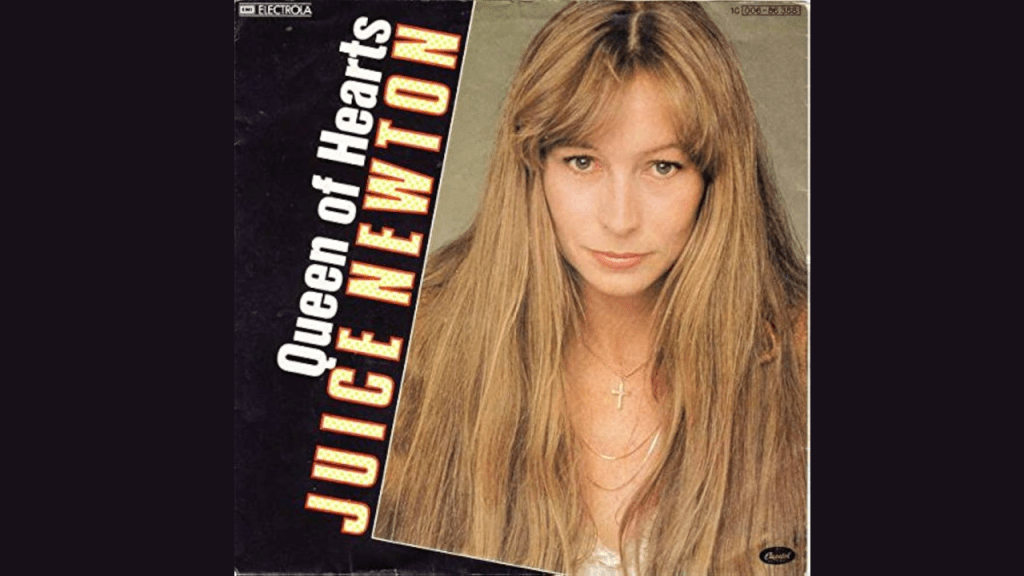
“Playing with the Queen of Hearts / Knowing it ain’t really smart / The Joker ain’t the only fool / Who’ll do anything for you”
- Reached #2: September 19th, 1981
- Number of Weeks at #2: Two Weeks
- #1 Song At the Time: “Endless Love” – Diana Ross and Lionel Richie
Country music exists in its own isolated world. It plays by its own rules. It has stars, a songwriting machine, a personal Mecca for artists with dreams (Nashville), and an ecosystem unique to that world. For most people who reside in the land of mainstream pop music, it is a world that you can happily ignore if you really want to. Country music has always had points of intersection with pop music, but you can also find plenty of moments where country has worked against pop. We are currently in that rare moment when country music is flirting with the Billboard Hot 100 again. At the time of this writing, Ella Langley’s “Choosin’ Texas” is back at the number one spot for a second week. The last time a woman in the country music world scored a solo Hot 100 number one was Dolly Parton with “9 to 5” in 1981. There’s a reason for this.
I would consider 1981 the last big year for country music on the Hot 100. Country music would still be popular (it still is now!) but it spent the eighties and beyond closing itself off from the mainstream pop world and entering isolation. R&B jams were enjoying a moment in 1981 and country music was as well, with songs that were in conversation with the current pop moment. Beyond “9 to 5,” Eddie Rabbitt also hit number one with “I Love a Rainy Night” (“Step By Step” was also a hit). Kenny Rogers was scoring big hits. Ronnie Milsap had “(There’s) No Gettin’ Over Me” and Rosanne Cash was trying to cure a “Seven Year Ache” that year. Kirsty MacColl unleashed “There’s a Guy Works Down the Chip Shop Swears He’s Elvis” that year, the textbook definition of a barnstormer. In the middle of all this hootin’ and hollerin’, a young woman who had gone years without success finally had her breakthrough with a song that could have given a Welshman a second American hit, but ended up making a young country-pop singer a silver medalist.
Her name really is “Juice,” by the way. She legally changed it in 1978 because that nickname just stuck. But before she was Juice, she was Judith Kay Newton, born in Lakehurst, New Jersey on February 18th, 1952. Though born in New Jersey, she grew up in Virginia Beach. Newton knew early that she wanted to be an entertainer and she was attracted to folk-rock and singer/songwriters. With a clear passion for music, her mother bought her a guitar when she was thirteen and taught herself how to play. She moved to Los Altos Hills in California after graduating high school in the early seventies, attending Foothill College but also playing in coffeehouses in the local area. The usual grind. It was during this time that she met guitarist and songwriter Otha Young, the guy who would write a good number of Newton’s original songs, play in her band, manage her career, and be a friend to her until his death in 2009. They started playing together and eventually formed a short-lived folk-rock band called Dixie Peach. That group only lasted a year, but it gave them a start. They formed Juice Newton & Silver Spur after that, which leaned a little more into country music and got signed by RCA Records.
Juice Newton & Silver Spur released their debut album in September 1975. It’s pretty damn solid. I really liked “Catwillow River” and “Roll On, Truckers” got a good “yeehaw” out of me. There’s also the original recording of “The Sweetest Thing (I’ve Ever Known),” which wasn’t a hit upon release, but would eventually become a Country number one when Newton re-recorded it in 1981. Silver Spur never had much in the way of mainstream success. They scored a placement on Billboard’s Country Chart when “Love Is a Word” hit #88, but other than that, nada.
Despite a lack of success, they kept trying! They released their second album, After the Dust Settles, in 1976. It was supported by the single “If I Ever,” which went nowhere. They were dropped by RCA after that, but they got a deal with Capitol and tried a third time with Come to Me in 1977. That one was also ignored and suffered the same fate as the first two. After that, Silver Spur disbanded, but Juice still had a deal with Capitol and decided to soldier on as a solo act. She and Otha kept working together and stayed determined to make her big break. Her 1979 album Take Heart was supported by five singles. None of them charted on the Hot 100, but she was starting to make small dents in the lower ends of the Country Chart. The closest she got was with the song “Sunshine,” which peaked at #35. She was making progress and before too long, she would have a breakthrough that would make her a lil darlin’ in both the mainstream pop and country worlds. You can hear the way she dances with both on “Sunshine.” Country enough that nobody complains and cries foul, but poppy enough so the people who usually shy away from country don’t roll their eyes and walk away. She would eventually have to choose which world had the stronger hold, but she had the luck of starting to break through at a time when she could hang out with both pop and country and appease both.
As luck would have it, Juice leaned into the country part of herself at the perfect time, as country-pop crossovers were about to have a big moment, thanks to Urban Cowboy, the 1980 western romance film starring John Travolta. That film did serious box-office business and so did its soundtrack. That was nothing new for a film starring Travolta. Between Saturday Night Fever, Grease, Urban Cowboy, Pulp Fiction, and the 2008 remake of Hairspray, Travolta just had a special power to star in movies with great soundtracks that influence popular music in some way. Hell, he was so powerful that the theme song to Welcome Back, Kotter (the TV show that was his breakout role) was a number one hit the year it started airing. Urban Cowboy was another slam dunk for the guy and for the Country Chart. It was a gateway for the masses to get interested in the intersections between country and pop music. Since Juice was good at playing both sides, she couldn’t have hit at a better time. She released her self-titled album Juice in 1981 and it went platinum. For a woman who had never found much in the way of success, she finally arrived. She went from the lower ends of the Hot 100 to shooting up to #4 with her version of “Angel of the Morning,” a Chip Taylor-penned tune that first became a hit when done by Merrilee Rush in 1968. Juice Newton is far from the first woman to ever sing it, but most people immediately recognize her version before thinking of anyone else’s. You definitely know this one if you’ve watched the opening credits to Deadpool.
Newton would have the biggest hit of her pop career right after “Angel of the Morning” took off when she followed it up with “Queen Of Hearts,” the song that got her the silver medal. “Queen of Hearts” has a good deal of history to it. It existed for about two years and was recorded by at least two other guys before Newton put her definitive stamp on it and turned it into a bonafide smash. We’ve covered Newton’s story, so now we’re gonna cover the song’s story and how it eventually found its way to her.
The story of “Queen Of Hearts” begins with musician and songwriter Hank DeVito. DeVito was primarily known for being the pedal steel guitarist in Emmylou Harris’ backing band, The Hot Band. I don’t know if he ever showed this one to Emmylou or not, but it fell into the lap of Welsh singer Dave Edmunds, a guy who had crossed over to American shores in 1970 with a version of “I Hear You Knocking,” first recorded by Smiley Lewis in 1955 and also done by countless others. That version became a #4 hit on the Hot 100, but Edmunds never scored a second American hit. He really wanted a second one though and when he was recording his 1979 album Repeat When Necessary, he was looking for the song that would give it to him. I don’t know how exactly he came across “Queen of Hearts,” but somehow he did and he was the first guy to record it. He was certain the song could be a big hit in America. He would be right, but not in the way he wanted to be.
The song hit #11 in the U.K. and Edmunds was certain the song could cross over and become an American smash. However, Swan Song, the record label founded by Led Zeppelin and the one Edmunds was on, didn’t agree with him and refused to release the song in the U.S. For a moment, that’s where the story of the song ended. In 1980, Rodney Crowell, a country songwriter as well as a member of Harris’ Hot Band, recorded the song for his album But What Will the Neighbors Think (DeVito played guitar on it). It wasn’t released as a single, but I imagine that recording is probably how Juice Newton first heard the song. Newton herself stated in a 2011 interview that she didn’t hear Edmunds’ version until long after she recorded the song for herself. Regardless, Newton liked the song and played it as part of her live set for about a year before she started work on the Juice album.
For 1981’s Juice, Newton linked up with producer Richard Landis, the guy who would help bring Newton her breakthrough and who would eventually become well known in the country music world, going on to work with artists such as Kenny Rogers, Poco, and Vince Gill. Newton and Landis ended up working together a bunch of times during the eighties. Landis was skeptical about “Queen of Hearts” being a single, but Newton stood her ground and believed in it. It was her favorite track from the album and Landis eventually decided to give her what she wanted. Newton ended up being right and after “Angel of the Morning” hit the Top 5, “Queen Of Hearts” came along and gave Newton another slam dunk.
“Queen Of Hearts” is a song about falling for a lover who will only hurt you, but you just can’t resist going back to them. You’re gonna go for it, all while knowin’ it ain’t really smart to do so. It gets so bad that she thinks she’s gonna have to commit a crime and land herself in jail or live on the run just to prevent herself from being able to go back to this person. The person she’s going back to is nothing more than a regular Don Juan that won’t commit to her, evidenced by the line, “’Cause it’s a-hard to be a lover when you say you’re only in it for fun.”
The cards and gambling metaphors used during the chorus probably reminded some people of Kenny Rogers’ classic track “The Gambler,” a similar country crossover song about the dangers of making foolish bets, which had only come out a few years prior. I think another part of the appeal and a reason why this song might have been a hit is that it just makes more sense to have a woman sing it. In cartomancy (the art of fortune-telling via playing cards) the queen of hearts typically represents a nurturing, romantic figure, which is what Newton would naturally be referring to herself as. The song is all about a toxic lover who is only playing games and hurting her, but she knows she’s just gonna keep going back (“the joker ain’t the only fool who’ll do anything for you”). She’ll never win because she’ll keep getting hurt and her lover will never win because they’re gonna keep playing around and never change their ways. It ain’t really smart. Not one bit.
Musically, it’s very easy to understand why it was Newton’s version that became a hit. A big part of it is what Juice herself brings to the song as a performer, but another part of it is what Landis does with the production of the song. Newton made the smart move of stripping any and all rockabilly from Edmunds’ original, turning it into a full on country-pop song. Also, her voice is just lovely. She’s a much better singer than Crowell is and she’s also not Edmunds, who delivers the chorus in a bad Tom Petty impression. That southern drawl she has just adds some extra spice to the song and she uses it well. She gives the song a smoother melody throughout and doesn’t draw out any of the lines more than she has to. She doesn’t deliver it awkwardly like the other two.
Landis’ production also helps. It’s clean and polished and a lot better than the versions that came before. I don’t know why Edmunds insisted on producing the song like he was recording it in a giant empty warehouse. The amount of echo on his original is crazy and it sounds cheap as hell. There’s also nothing about the production that makes it dynamic like Newton’s version. In Newton’s, it’s doing the classic pop music play of having Newton’s voice on the verses be produced tight and focused and closed in, then having the chorus explode and having her vocals echo out. It makes the chorus all the more catchy and dynamic because you hear that change immediately and it gets you to start bouncing along with it. When she launches into the chorus, you feel it and you enjoy it. Plenty of pop songs, both past and present, do this trick, but this song is a really obvious one to point to when talking about it. You can also tell she played this song live for a while before recording it because of the moment at 2:33, when the instruments cut out and she sings the first two lines of the chorus unaccompanied. It’s a fun moment and I imagine she did that when playing the song live, having the crowd sing along with her. She probably did the song that way enough times that it was just ingrained in the arrangement when she recorded it. No other version has that moment and the other versions would have benefited from having it.
Speaking of the other versions, Dave Edmunds was pissed when this song became a hit for Newton, mostly because it proved him right. The song had the potential to become a hit in America and it became one… for someone else. He was unhappy that people only recognized it as a Juice Newton song to the point where he stopped playing it live for a while after her version eclipsed his because he was tired of people thinking he was doing her song when it was actually his first. He accused her of pinching his arrangement note-for-note and making an identical version in Creem Magazine, which I disagree with. The basic structure of the song remains the same, but she performs it in her own unique style (country instead of rockabilly) and there are production choices made by Landis that make it distinct from Edmunds’ original. He eventually got over it and made peace with it, understanding that American audiences shouldn’t be expected to know the original version of a song if it never got released to them. I imagine he was probably more pissed at Swan Song than he was at Newton. But that’s the music business for you! It’s a roll of the dice.
Here’s something neat about the song that I find fascinating: it doesn’t really have a drum beat. At least, not a conventional one. It has a rim click running through the entire song, which provides a beat and adds to the country elements, but the standard “kick drum + snare hit” you hear in a lot of songs isn’t here. Every song we’ve covered so far before this one has had that. “Queen Of Hearts” doesn’t. That rim click remains consistent. The only thing that gets added to it is the handclapping that comes in during the chorus. It’s a strange choice, but it provides a cool texture and I really love it. It reminds me a little bit of the kind of strange percussion Lindsey Buckingham was doing on Fleetwood Mac’s “Second Hand News,” where he’s tapping on a chair and having it mix with Mick Fleetwood’s kick drum + snare hit. That percussive choice is uncommon, but that adds a unique flavor to Newton’s version that you don’t find on the other two. It’s understated in the mix too, so it never grates on you. It took me a few listens myself to really hone in on that.
There was a music video made for this song, which might also have helped it become a hit during the early days of that newfangled television channel known as MTV. When MTV started, they were practically begging for any video they could get their hands on to fill time on the air, so I imagine it most likely aired on the channel at some point during its earliest days. I first heard the song through seeing the video for it on VH1 Classic when I was growing up. A lot of early music videos at the start of the MTV generation are hilariously bad nowadays, but “Queen Of Hearts” isn’t one of them. Half of it is Newton and her band miming the song, half of it is B-roll of playing cards and Newton acting out parts of the song, like riding away on a little train (“I’m a-waiting on the 1205 / Hoping it’ll take me just a little farther down the line”) and committing crimes like killing a man or holding one at gunpoint to land herself in jail (“thinking about a life of crime”). The parts of Newton and the band playing are very beautifully shot and Newton looks absolutely gorgeous. Her bright eyes, red lips, flowing hair, and the way she bounces around through the whole song is captivating. She looks like she’s having a lot of fun. The parts of her landing in jail are cheesy and silly, but she has an adorable humor that works really well. It’s utterly delightful. She looks comfortable in front of the camera. Considering there were a good number of musicians in MTV’s early days who weren’t good at being on video, Newton knowing how to play the new game in town deserves some praise. She wouldn’t play it for long–the country music world wanted nothing to do with MTV and eventually made CMT (Country Music Television) in 1983 so they wouldn’t have to deal with them–but when she did play ball and make music videos, she was pretty darn good at it.
Even without the music video, “Queen Of Hearts” was still a song that served the interests of the mainstream public at the right moment. People liked Urban Cowboy’s soundtrack (it’s triple platinum as of 2018) and were finding country pop crossovers over the next year that they enjoyed. Juice just happened to have the right song and right blend of both country and pop sensibilities to give the people what they were looking for. Timing is often a big factor in how a song becomes a hit. You just happen to have the right thing at the right moment. “Endless Love,” the Lionel Richie and Diana Ross duet for the film Endless Love, was still at the top when “Queen Of Hearts” peaked. “Endless Love” is a very boring love ballad from a movie that sucks complete ass. It’s one of those songs where you hear it and ask yourself this: “How the fuck was this song a number one hit for nine weeks straight? I don’t have a great answer. The moment of “Endless Love” is boring to wonder about. But “Queen Of Hearts” shooting up the charts and becoming a hit in the time right before country music retreated and pretty much walled itself off from pop for a long time? Now that’s a moment. Especially when you’re Juice Newton and have to choose which side you want to be on.
Newton played the pop game for a little bit longer after “Queen Of Hearts” became a big hit and was rewarded for it. Newton followed it up with a re-recording of “The Sweetest Thing (I’ve Ever Known),” a song she did during her old Silver Spur days. It wasn’t released as a single in the mid-seventies, but it became a big hit after she broke through with “Angel Of The Morning” and “Queen Of Hearts.” It was her first number one hit on the Billboard Country Chart, a number one on the Adult Contemporary Chart, and peaked at #7 on the Hot 100. She peaked at #7 on the Hot 100 again when she released “Love’s Been a Little Bit Hard On Me,” the lead single from her 1982 album, Quiet Lies. It’s probably my favorite Juice Newton track. The video for it has the same adorable humor that “Queen Of Hearts” had. She also scored a #2 Country Chart hit (and peaked at #11 on the Hot 100) with “Break It To Me Gently.” She won the Grammy for Best Country Vocal Performance, Female for it (which pissed off Rosanne Cash, who lost to her and wrote the song “I Don’t Know Why Don’t Want Me” about it).
1983’s Dirty Looks is where you can hear the balance between her country and pop sides start to break. Capitol Records started pushing her more into the pop market and it didn’t really work. Dirty Looks is a strange album. A good number of the songs play to her strengths, but the singles don’t. The title track is super dated and doesn’t really fit what came before. To show you how rough that era was, her final Top 30 hit on the Hot 100 was a cover of the 1965 Zombies track “Tell Her No,” which would be fine if it didn’t immediately hit you with some of the worst blaring synths I’ve heard in a long time. Yeesh. By 1985, she had left the pop world behind, moved from Capitol to RCA, and retreated into the country music world, fully embracing that side of herself. That was a really smart move. The pop music world was changing, so she pivoted to the world where she knew she would thrive. It matched her style and that pivot into the country world was well rewarded. She released Old Flame in 1985 and that album sounds a lot more like the Newton that made Juice and Quiet Lies. That album also had hits out the wazoo. She scored two Country number ones back-to-back with “You Make Me Want To Make You Mine” and “Hurt.” “Old Flame” peaked at #5 and the songs “Cheap Love” and “What Can I Do With My Heart” were both Top 10 Country hits. It also has a solid cover of the old Steeler’s Wheel track, “Stuck in the Middle With You.” Old Flame is a damn good album. Even when Juice pivoted into full-on country, she never fully lost the things that made her appealing as a pop artist.
In 1986, she scored her final Country number one when she teamed up with Eddie Rabbitt for “Both to Each Other (Friends and Lovers),” a song that will eventually be covered in this project, though not Rabbitt and Newton’s version. Her final Country Top 10 was “Tell Me True,” a song from her 1987 album Emotion. Her final charting song and final Top 40 song was “When Love Comes Around the Bend” in 1989. After that, she spent most of the nineties away from the music world, focusing on family life and touring sporadically. Her website tells me that outside of music, she became an accomplished equestrian and is still super into horses. If Juice Newton looks like a woman with obvious horse girl energy, please leave a comment and tell me if there are any obvious signs or mannerisms that give it away.
She returned to music at the end of the nineties and released two albums, The Trouble With Angels and American Girl in 1997 and 1998. Her final two releases in the twenty-first century have been a christmas album in 2007 and an album of duets with her favorite artists, released in 2010. She kept touring until 2020 and her website states she has retired from touring and enjoys living with her family and hanging with her horses in San Diego, California. She’s seventy-four now and her retirement is well-earned. Everything I’ve read about Ms. Newton suggests she’s a fine, upstanding country woman (leave a comment if you know some dirt that I didn’t find).
Juice Newton will not return in this project and neither will country music. We’ll see shades of country music appear again, but nothing quite like Juice and “Queen Of Hearts.” Juice is our lone star ambassador for country music here on You Got the Silver and she’s a damn fine one. She had the right song at the right moment. She laid down her cards and she won the silver. Even if it ain’t really smart, I won’t get tired of playing with the Queen of Hearts anytime soon.
Bonus Silver
In 1982, Alvin and the Chipmunks performed Newton’s version of the song as part of Chipmunk Rock. Do you think Juice Newton heard this version? If she did, do you think she liked it? Maybe you will! Listen to that here.
Also in 1982, an Austrian guy named Nickerbocker released a version of the song called “Puppe (du bist a moderne Hex’)” [Translation: “Doll (You’re a Modern Witch)”] The lyrics are all completely changed to be about having mind blowing sex. Check it out.
Punk supergroup and cover band Me First and the Gimme Gimmes once recorded a version of the song. Solid stuff. Listen to it here.


Leave a Reply