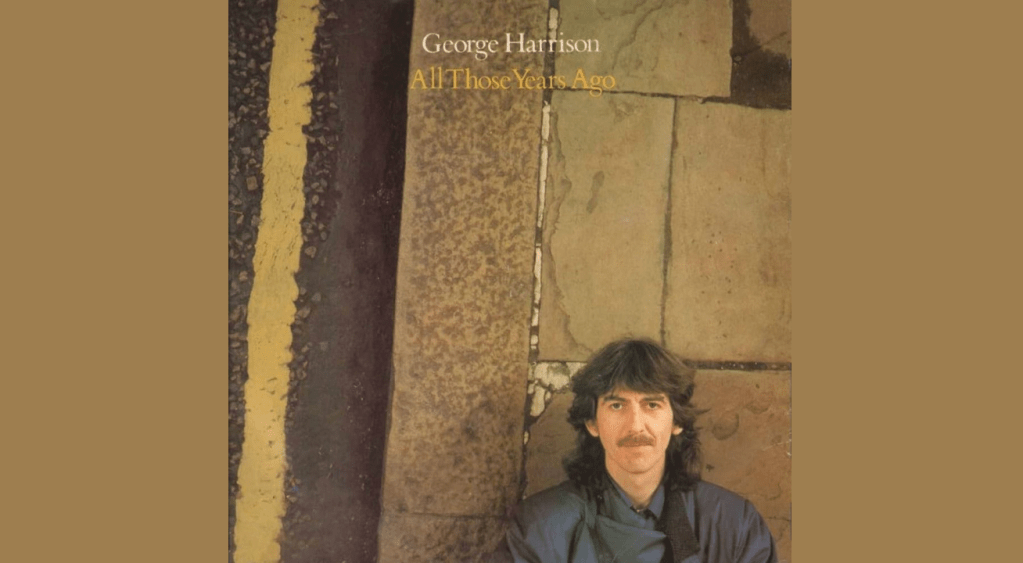
“You were the one who imagined it all / All those years ago”
- Reached #2: July 4th, 1981
- Number of Weeks at #2: Three Weeks
- #1 Song At the Time: “Bette Davis Eyes” – Kim Carnes
The music world wasn’t done mourning the death of John Lennon yet. All through the early eighties, there were plenty of famous musicians producing tributes to the lost Beatle in remembrance of the tragedy of his murder. When Lennon died, all eyes turned to the surviving Beatles to see how they would react to the tragedy. None of them had any major comments at the time, because how the fuck do you react to one of your bandmates getting shot in the back four times on a random night in December? Nobody knew how to react in the moment. Paul McCartney, Lennon’s old songwriting partner, was in so much shock from the news that it didn’t fully hit him until later. Because of his special connection and more intimate relationship with Lennon, as well as being the Beatle who was in the public eye the most, a lot of people were expecting a profound reaction from him when the press asked for comment. That’s not what they got. McCartney was asked a lot of stupid questions in the moment and the big quote the press ultimately ran with was when he said, “It’s a drag, isn’t it?” He spoke on that moment a few years later and explained that he was still in disbelief and it was too much of a shock to give the press anything they really wanted other than the first thing that came to mind. McCartney would later eulogize Lennon and come up with something when he released his 1982 track “Here Today,” but it was George Harrison who was the first Beatle to eulogize Lennon in song. “All Those Years Ago” didn’t begin as a tribute to Lennon, but that’s what it eventually morphed into, with a little help from his old friends.
Long time ago, when he was fab, George Harrison was one of the Beatles, often known as “the quiet beatle” because of his reserved demeanor (and because he had strep throat during the Beatles first visit to America, so John and Paul did the bulk of the talking). Harrison was the lead guitarist of the group as well as a songwriter in his own right. The Lennon/McCartney partnership dominated the catalog, but Harrison often had at least two of his own songs on Beatles albums starting around 1965. One of George’s first major contributions was “I Need You,” from 1965’s Help! Harrison really started evolving as a songwriter starting with 1966’s Revolver, when songs like “Taxman” and “I Want To Tell You” showed up. After that, the Harrison songs that started appearing on Beatles albums were rivalling what Lennon/McCartney were doing, to the point where Sinatra mistakenly spent most of the seventies thinking “Something,” one of Harrison’s best Beatles songs, was written by them. Other highlights from Harrison’s Beatle days include: “Within You, Without You,” “While My Guitar Gently Weeps,” “Here Comes the Sun,” “I Me Mine,” and “For You Blue.” My father’s favorite Beatle was George and listening to these songs back-to-back, it’s not hard to hear why.
We covered the Beatles backstory a bit when we talked about “Woman.” I don’t think we need to dwell on it much longer, but we’ll cover a few George-centric things that we’ll see when we start talking about “All Those Years Ago.” When the Beatles got interested in Transcendental Meditation in 1967 and traveled to India to study with the Maharishi, it was Harrison who initiated it. Of the four Beatles, it stuck with Harrison the most, to the point where he developed an association with the Hare Krishna movement in the seventies. He was the most spiritual of the Fab Four and the reason you started hearing sitar on Beatles albums. Harrison’s spirituality and faith pop up all over his solo work and will play into the lyrics of “All Those Years Ago.”
When the Beatles broke up in 1970, Harrison wasted no time carrying on as a solo act (like Lennon, he had released solo material prior to the Beatles breakup). His first post-Beatles release, All Things Must Pass in November 1970, was a triple album monster and the most essential Harrison solo album. Because he had been playing a supporting role in the Beatles for so long (and because Lennon/McCartney songs took up the bulk of Beatles albums), he had no shortage of good material to work with. A lot of Harrison’s classic material shows up on that first post-Beatles album. The stunning album opener “I’d Have You Anytime,” “Beware of Darkness,” the incredible title track, the wonderful “Isn’t It a Pity,” and the song the number one hit “My Sweet Lord.” If you want to argue for Harrison making the best first impression in a post-Beatles world, All Things Must Pass gives you plenty of ammo.
In 1971, Harrison organized the Concert For Bangladesh, a charity event at Madison Square Garden that was basically the Live Aid of the seventies. It raised money for displaced Bengali refugees who were affected by the Bangladesh Liberation War. A whole bunch of Harrison’s friends showed up for that event and created an all-star lineup. Bob Dylan, Leon Russell, Ringo Starr, Billy Preston, Eric Clapton, Indian sitarist and composer Ravi Shankar, every member of Badfinger, and more.
Following that, Harrison co-wrote Ringo’s number one hit, “Photograph” off Ringo’s self-titled album in 1973. Also that year, Harrison released Living In the Material World, which is my personal favorite Harrison album and the one I argue is his best. If you’re an admirer of Harrison’s guitar playing, that’s the one to check out. Some highlights include the killer “Sue Me, Sue You Blues” (all about the legal issues surrounding the Beatles breakup in the early seventies and McCartney filing to have the band legally dissolved), “The Light That Has Lighted the World,” “Don’t Make Me Wait Too Long,” and the album opener, “Give Me Love (Give Me Peace on Earth),” my favorite song Harrison ever did.
1974 was a bad year to be George Harrison. Good Thing: The legal battle over the Beatles record company Apple Corps. and their legal partnership had been officially dissolved. The Beatles were legally and officially done forever. Bad Thing: He was drinking heavily and involved in drug use that he hadn’t been on since the sixties, which was causing strain on his first marriage to Patti Boyd. Good Thing: He was finally able to launch his own record label (Dark Horse) and sign acts he wanted to promote. Bad Thing: It was taking focus away from his own musical work. Good Things: He released the Dark Horse album and became the first solo Beatle to tour North America. Bad Things: Most of it is about Harrison’s marriage falling apart, which it super did. Boyd ended up leaving him for his good friend Eric Clapton. Harrison also contracted laryngitis for most of the tour, the shows heavily featured Ravi Shankar playing Indian music that left American audiences scratching their heads, and he reworked the lyrics to old Beatles songs to reflect his spiritual and religious views (for example, he changed the words on “In My Life” from “In my life / I love you more” to “In my life / I love god more”). It was a bizarre time. At the very least, the title track was a Top 20 hit.
In 1976, Harrison released Thirty-Three & 1/3, Harrison’s first official release on his Dark Horse record label. I mostly know it for the hit single “Crackerbox Palace,” a fun, silly, and surreal song with a very wacky video directed by Eric Idle of Monty Python fame. Harrison had become friends with the Monty Python guys by this point and the video is very Python. I love this video and if you ask me to think of Harrison, this is what usually comes to my mind first.
In 1978, when the Monty Python crew lost their funding to make Life of Brian, Harrison stepped in and personally financed the project (he mortgaged part of his house to do it). So, because of George Harrison, we have the entire Biggus Dickus scene, everybody throwing stones as soon as Jehovah is mentioned, and the classic “Always Look On the Bright Side of Life.” Thanks George. The following year, Harrison released a self-titled album and was doing well. He married his second wife, Olivia, and welcomed the birth of his son, Dhani Harrison, who looks so much like his father it could be argued George genuinely found a way to clone himself. The single “Blow Away” became a Top 20 hit on the Hot 100, but at this point, Harrison was beginning to retreat from the music industry. He would pull a Lennon and disappear from music for five years, but that didn’t happen until after “All Those Years Ago.”
In 1981, Harrison released Somewhere In England, his ninth studio album and the album that contained “All Those Years Ago.” It came out of a period of frustration for Harrison, who was in conflict with Warner Bros. Records, the distributor for all of Harrison’s Dark Horse stuff. Harrison recorded Somewhere in England during most of 1980, but Warner Bros. felt most of the album was too laid back and not commercial enough (age old story). Don’t take it from me, Harrison opens the album pissed off at Warner Bros. with the song “Blood From a Clone,” where he flat out says he should try beating his head on a brick wall. Harrison went back a month before Lennon’s death in December and started reworking the album, which finally saw release on June 1st, 1981. “All Those Years Ago” had been written and recorded prior to Lennon’s death.
Originally, Harrison was giving the song to Ringo Starr, who was planning to record it to possibly use for his 1981 album Stop and Smell the Roses. Harrison and Starr recorded the song, but Starr felt the song was out of his vocal range and didn’t like the original lyrics much. So, the two decided to shelve it and move on to other things. When Lennon died, Harrison took the song back and reworked it, rewriting the lyrics as a tribute to Lennon and recording a new lead vocal track for it. The instrumental remained, so Ringo is playing drums on this song, but he was not present when Harrison was reworking the song. Paul McCartney, Linda McCartney, and Wings bandmate Denny Laine ended up visiting Harrison and provided backing vocals to the song. So, through a whole series of events and overdubs, this song that was originally meant to be a Ringo solo track ended up becoming a Beatles joint credited as a George Harrison track (and was marketed as such). Did you get all that?
You can tell what Harrison’s fellow Beatles bring to the track immediately. Ringo’s drumming has a certain sound and style that is always easy to clock if you know how he plays. If you suspect it’s him, chances are good that you’re right. On this, you can hear it really well through that constant backbeat and all the little flourishes and fills he does between verses before locking back in. It’s classic Ringo. The best example of what I mean is what he does when George is singing the lines “By someone, the devil’s best friend / Someone who offended all!” It’s little touches, but Ringo was always good at those little details that stick. There’s those little extra snare hits he does right before George hits the bridge and sings “Deep in the darkest night…” Doesn’t seem like anything out of this world, but it’s a little thing I always notice. Ringo had a way of playing that always left his personal touch on a track and it’s not the same when you hear someone else do it. Listen to the studio version and then compare it to the live performance on Harrison’s Live in Japan album. All those little details Ringo places are gone and it doesn’t hit nearly the same. Drummers are certainly allowed to make different choices when playing songs, but it’s important to understand that people are serious when they tell you Ringo was special. This song is another example in a catalog full of moments that prove it.
The backing vocals are also special. They’re wonderful and they give the track more warmth and love than if they weren’t there at all. The McCartneys and Laine always knew how to provide backing vocals that really fill out a song and give it something beautiful. Paul, Linda, and Denny were a fantastic trio when it came to backing vocals and it’s one of the qualities that still sets Wings apart from the Beatles and gives that band its own distinct identity. I’ve listened to so much Wings over the years that I can easily tell it’s the three of them. They blended so well together and that really shines on this track. It doesn’t seem like it adds much, but it really does. You wish it was other circumstances that brought Harrison, Starr, and McCartney back together on a track, but the loss of Lennon is as good a reason as any to get back (heh heh) and collaborate again.
There are plenty of people who don’t like this song. I don’t think it’s the strongest Harrison track, nor do I think it’s the strongest Lennon tribute, but most people who don’t like this song tend to point to the early eighties production of the song, namely the keyboard work and how out-of-character it seems for Harrison. I went and listened to all of Somewhere in England because I wanted to know if “All Those Years Ago” really stuck out compared to the rest of the album. Honestly? It really doesn’t. Songs like “Blood From a Clone,” “Teardrops,” and “Hong Kong Blues” all kinda play with a similar early eighties production that “All Those Years Ago” operates on. I guess I get it. It’s jaunty and upbeat in a way where you can tell this is a song that began as a “Ringo song” that Harrison later turned into his own. Most people who don’t like it tend to point towards Al Cooper’s electric piano work, which I don’t think is bad. It reminds me of an early eighties version of the sound Billy Preston was playing with when he was sitting in with the Beatles during the Let It Be era. I think it fits fine. I’ll admit that the little synth solos in the middle feel uncharacteristic. I think that’s what people have trouble with when it comes to this song. George and John were the “artists” of the Beatles. They were musical curmudgeons who were stuck in their ways and weren’t really too interested in what the current sounds and trends were, so when Harrison tries to catch up here, it sounds a little strange. Even if you end up finding the piano and synths weird and not great, I think Harrison’s guitar playing more than makes up for it. It’s stunning and sounds incredible. The guitar parts during the instrumental break in the middle are gorgeous and that’s the thing that really sells it as a Harrison track. The guitar work on Somewhere In England might be some of the best sounding work of the second half of his solo career. The whole production of the song sounds fantastic. Bloody brilliant, you might even say.
The track has a lot of great moments and it’s a really solid entry in George’s catalog of hits, but it wasn’t the music alone that got peoples’ attention. It was the fact that the lyrics were about Lennon and that it was a fellow Beatle mourning him. Harrison was one of the first major musicians to produce a song addressing Lennon’s death (but certainly not the last), so people definitely wanted to hear what Harrison had to say.
Harrison’s words are very sweet. If people have a lot of love for this song, that’s probably the biggest reason why. The song is jaunty and upbeat, but I get the feeling Harrison wanted to celebrate Lennon’s life and eulogize it joyfully rather than make something downtrodden and sad. Harrison was in a place in his life where he could look back at Lennon and the whole Beatles thing in a happier light. He focuses on why Lennon mattered and what he understood to be true about the man while also wrestling with the tragedy itself. Harrison was far from the only person who felt we were “living in a bad dream” after Lennon’s death.
He references two Lennon songs in particular: “All You Need is Love“ (“But you point the way to the truth when you say / All You Need is Love”) and “Imagine.” There’s such a sweetness and love in Harrison’s voice, which gets amplified by the backing vocals, when he sings “You were the one who imagined it all.” That same sweetness and love comes through when you hear him say “Living with good and bad / I always looked up to you.” It’s confirmation that regardless of how the Beatles ended and how Harrison and Lennon’s lives played out after the fact, that love and connection that brought them together in that little band from Liverpool was always there. He goes on to reference Lennon’s public treatment during his more outlandish moments and defending him with the opening lines “I’m shoutin’ all about love / While they treated you like a dog / When you were the one who had made it so clear,” “You were the one they backed up to the wall,” and “You were the one that they said was so weird,” recognizing the good intentions even when Lennon wasn’t always thinking clearly. The Beatles probably were bigger than Jesus at one point (I don’t know, I wasn’t there). If you were 1/4th of the band that ushered in the British Invasion and conquered America before you were twenty-five, why the fuck wouldn’t you be saying shit like that? Was he wrong? We covered the imperfections of Lennon when we talked about “Woman” and this song gets that. Harrison is eulogizing his old friend and bandmate, warts and all, rather than eulogizing “John Lennon.”
There’s one particular bridge and verse of the song that tends to bother some people. It’s the part of the song when Harrison starts referencing and inserting stuff about God. It starts off well enough and I like how the bridge starts: “Deep in the darkest night / I send out a prayer to you.” Regardless of how you feel about religion and/or spirituality, that’s always a very kind gesture. It’s sweet. The part where it loses people comes right after: Now in the world of light / Where the spirit free of the lies / All else that we despised! / They’ve forgotten all about God / He’s the only reason we exist.” That last line tends to bug people. Some people find it shitty that Harrison still found a way to sermonize about faith even when eulogizing someone close to him, while others, myself included, find it a bit funny to preach about God real quick in a song about John Lennon, considering his most famous line about the Big Man Upstairs is still, “God is a concept by which measures our pain.” I doubt Lennon and Harrison would really see eye-to-eye and have much to talk about in regards to religion and spirituality. It’s easily ignored (which is something you just kinda have to do with most of George’s solo stuff) but it still sticks out as a strange moment that doesn’t feel like it fits (and might cause an eyeroll or two). Regardless, the song remains a sweet and glowing tribute for its entire runtime.
There’s a music video for this song. It’s a nostalgic clipshow featuring Lennon, Harrison, and their time together in the Beatles. It’s nothing out of this world, but if you’re a big Beatles fan, it’s easy to get swept up in it all. It’s a reminder that before the breakup and before the four grew apart and went their separate ways, they were just four friends making wonderful art together. You can watch it and think, if only for a moment, those four blokes really were fab, weren’t they? It’s a celebration of Lennon’s legacy, but also another sad reminder that somebody thought it was a good idea to shoot him.
At the number one spot, “Bette Davis Eyes” was still enjoying its nine week stay at the top when Harrison’s tribute song peaked. That makes sense to me. The music world was moving on and looking ahead to its future, because it has to. It can’t turn back for too long. But Harrison, the other two Beatles, and many other people were still looking back and mourning the loss of Lennon. To a lot of those people still mourning Lennon, it was symbolic and another reminder that the late sixties, a time full of hope, optimism, and the “peace and love” movement, were fully dead and gone. A madman shot the guy who sang “Give Peace a Chance” and was staunchly anti-war for God’s sake. How do you find hope in the days after that? In the wake of Lennon’s death, McCartney and Harrison were terrified! Paul thought he was next in line and the killing reaffirmed George’s longtime fear of stalkers, which he had every right to have in his later life (more on that soon).
After “All Those Years Ago” and Somewhere in England, Harrison had become increasingly uninterested in the music scene of the early eighties. In 1982, with one album left to complete his record contract, he released Gone Troppo, which is honestly an underrated album in his catalogue. There’s a lot of songs I love. Harrison refused to make music videos or really promote the album, but some songs have stuck around. I like “Dream Away,” which was the theme to the fantastic 1981 Terry Gilliam film Time Bandits, which was financed by Harrison’s film production company, HandMade Films. Once again, I thank George Harrison for his contributions to ensure Gilliam got to make a fantastical trip of a movie. I really dig the mostly instrumental tune “Greece” and “That’s The Way It Goes” is probably my favorite song from George’s later career. Gone Troppo isn’t his best album, but there’s definitely tracks that deserve more love.
Between 1982 and 1986, Harrison was mostly out of the music game. He popped up in a couple of odd places, but he wouldn’t reappear with a new album until 1987. During those wilderness years, he provided slide guitar on tracks like Gary Booker’s 1982 track “Mineral Man” and Alvin Lee’s “Talk Don’t Bother Me.” He recorded a Bob Dylan cover for the soundtrack to 1985’s Porky’s Revenge (I swear I’m not making that up). He served as executive producer on a bunch of British films I’ve never seen, but there is one that I definitely have seen. That one is Shanghai Surprise, the awful 1986 Sean Penn and Madonna adventure team-up. Harrison made a cameo in that one and contributed five songs to the film’s soundtrack. Madonna will eventually appear in this project and, unfortunately, her film career will also eventually appear in this project. But that won’t be for a while.
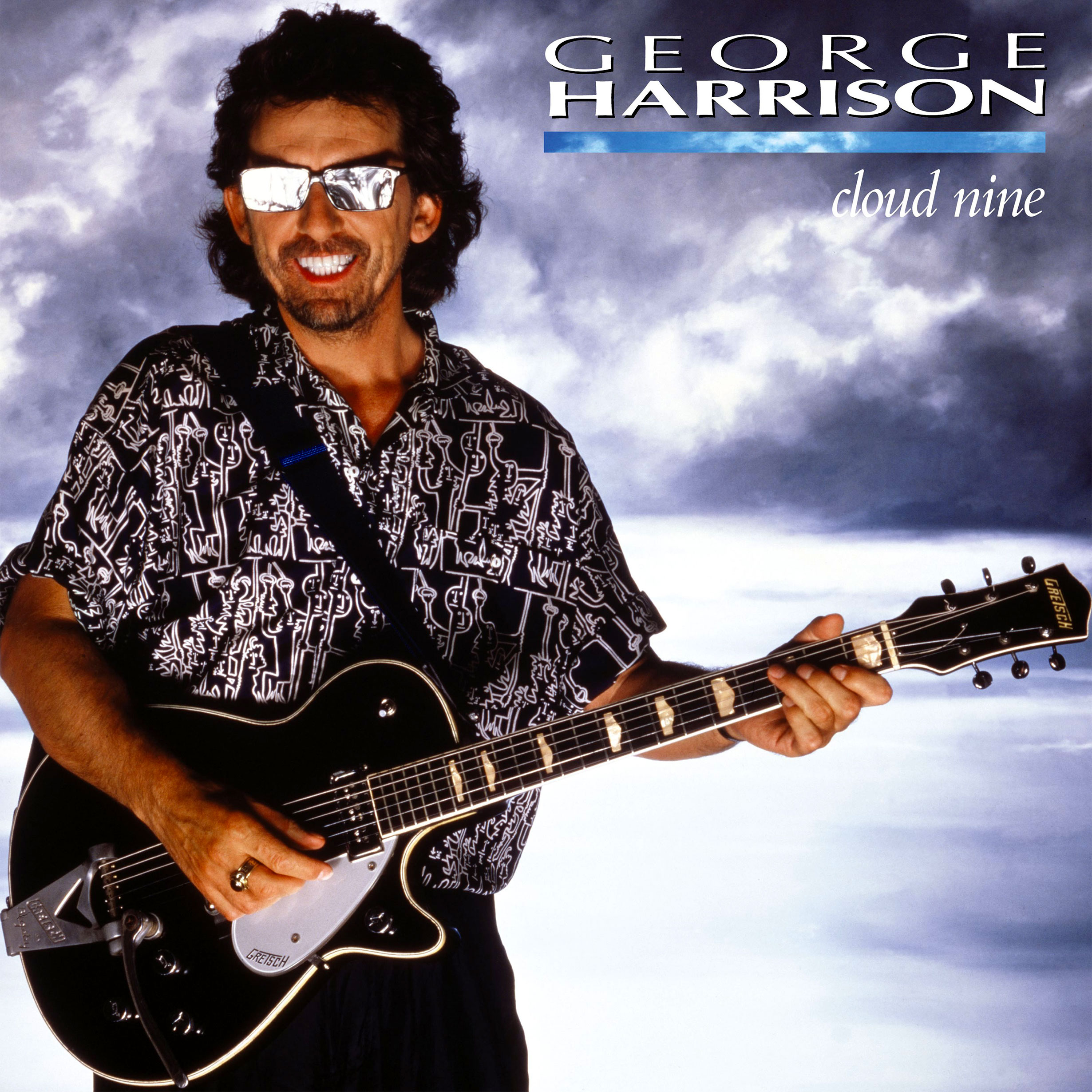
In 1987, Harrison made a major comeback when he teamed up with Jeff Lynne (right after dissolving Electric Light Orchestra) to produce Cloud Nine, which features probably the most cursed photo of Harrison ever taken. Harrison scored a number one hit with a cover of the old James Ray hit, “Got My Mind Set On You” (is that song six words long or seven words long? Weird Al didn’t give me a straight answer). Harrison also scored his last Top 40 hit as a solo artist with “When We Was Fab,” a song where Harrison reflected on the Beatles phenomenon in the wake of Beatlemania Wave Two.
Harrison made more waves in 1988 and ‘89, when he teamed up with Lynne, Bob Dylan, Tom Petty, and Roy Orbison to form the Traveling Wilburys, one of the greatest supergroups of the last fifty years. Together, those five gave us “Handle With Care” and “End of the Line,” all-time heaters that have gone quintuple platinum in my home.
Harrison toured one final time before his death in 2001, joining forces with Eric Clapton for a tour of Japan in December 1991. That tour got captured on 1992’s Live in Japan, which became the final release Harrison lived to see. In 1994, he reunited with Paul McCartney and Ringo Starr to finish two song demos left behind by John, “Free As a Bird” and “Real Love.” After that, Harrison appeared here and there at events for the rest of the nineties, but was mostly retired.
In 1997, Harrison was diagnosed with throat cancer. Years of constant smoking will do that to you (and Harrison publicly cited that as the reason for why he got it). He underwent treatment and it appeared as though he was in remission. On December 30th, 1999, a paranoid schizophrenic man (Michael Abram) broke into Harrison’s home and stabbed him repeatedly. Thankfully, Harrison survived, but not for much longer. Sadly, his cancer would resurface, spread to his brain, and cause his death on November 27th, 2001. He was fifty-eight. Gotta say, it’s crazy that Harrison could get stabbed and live just fine, but it was the cancer that got him. So it goes. After his death, Jeff Lynne and Harrison’s son Dhani would finish and compile a collection of recordings he had done between 1988 and 2001, releasing it as the album Brainwashed, just shy of the one year anniversary of his death.
A tribute concert, Concert For George, was held and recorded on the one year anniversary of his death. My father loved that album to death and so did I, to the point where it was treated with the same weight and respect as The Last Waltz. Every musician that had been an important player in George’s story was there and the performances are absolutely incredible. It’s still one of the greatest celebrations of a life I’ve ever seen. There’s too many great parts of it to link here, so all I can say is go check that shit out sometime, you won’t regret it.
George Harrison will not return in this project, but he is not the last Beatle we will see (Paul McCartney will eventually appear in this project). Like Lennon, Harrison is still a very beloved figure and his songs are still everywhere. All Things Must Pass and Living In the Material World got special super deluxe boxes when they turned fifty. Late last year, Stranger Things star and big George Harrison fan Finn Wolfhard directed a really cool and lovely stop-motion video for “Give Me Love (Give Me Peace On Earth).” Even twenty-five years after Harrison’s death, he’s still around in little ways. If you’re ever looking for him, you can find him in the music.
The saying is true: “In the end, the love you take is equal to the love you make,” and Harrison, along with his fellow Beatles, made a lot of love in the world. Rest easy, George.
Bonus Silver
This Bonus Silver is going to be different. There aren’t a lot of covers of “All Those Years Ago” and it’s not the kind of song that shows up in a ton of places in pop culture. So, this time, the Bonus Silver section will be dedicated to other notable songs that pay tribute to John Lennon in some way.
Stevie Nicks’ 1981 classic, “Edge of Seventeen,” was written about Stevie grieving two deaths: the death of her Uncle Jon and the death of John Lennon, which she was very shaken up by.
Jeff Lynne paid tribute to Lennon in two ways: ELO’s “21st Century Man,” a perfect pastiche of Lennon’s style of vocals and songwriting. Lennon considered ELO the “Son of Beatles” and I think he would’ve loved this. ELO also paid tribute to Lennon in concert during their 1981-82 Time Tour, where the band would do a medley of Lennon’s songs: “Imagine”, “Nowhere Man”, “Across the Universe” (and as much of a Beatles fanboy Lynne is, he constantly got the words wrong), and “A Day in the Life.” Check those out here:
Paul McCartney finally wrote a proper tribute to Lennon in 1982, with “Here Today.” It’s a lovely one and it took him longer than George because Paul had a closer and more complicated relationship with the guy. Good job, Paul. Check it out here.
Queen paid tribute to Lennon with “Life Is Real (Song For Lennon)” on their still divisive 1982 album, Hot Space. Listen to that one here.
Elton John, who was friends with Lennon and collaborated with him in the mid-seventies, grieving his loss on his 1982 deep cut “Empty Garden (Hey Hey Johnny).” Listen here.
Paul Simon wrote a song honoring three late great guys named John. Simon’s “The Late Great Johnny Ace” pays tribute to R&B singer Johnny Ace, Former President John F. Kennedy, and John Lennon, all three of which died due to gun violence (although Ace’s death was via self-inflicted gunshot). Solid Simon track. Listen to it here.
Before we’re done here, let’s get a few in for ol’ George.
In 2003, Ringo Starr, with a little help from mutual friend Eric Clapton, paid tribute to him through “Never Without You.” It’s Ringo at his absolute sweetest. Like “All Those Years Ago,” Ringo works in little references to George, from lyrics like “Here Comes the Sun is about you,” to quoting “Within You, Without You” and the opening riff to “Handle With Care.” They don’t call him Ringo Starr for nothing. Give it a listen here.
In 2005, Paul McCartney felt the spirit of George Harrison worked through him to write the song, “Friends to Go,” and proceeded to dedicate it to him. It’s one of the finest tracks on Chaos and Creation in the Backyard. Check it out here.
Concert For George ends with English musician, ukulele player, and longtime friend of Harrison, Joe Brown, playing one of Harrison’s favorite standards: “I’ll See You In My Dreams.” It’s beautiful, stunning, and there was no better way to end a tribute concert for 1/4th of the most important musicians in pop music.
 You Got The Silver
Leave a comment