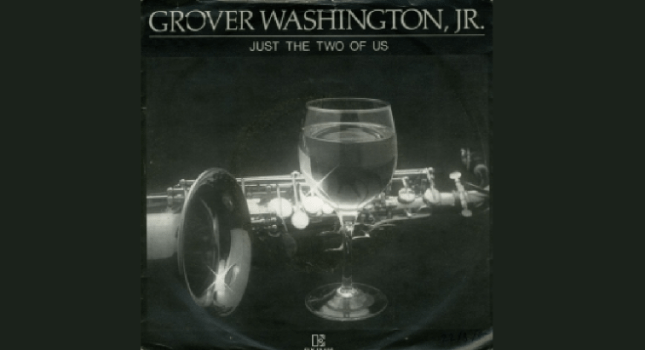
“Just the two of us / Building them castles in the sky / Just the two of us / You and I”
- Reached #2: May 2nd, 1981
- Number of Weeks at #2: Three Weeks
- #1 Song At the Time: Morning Train (Nine to Five) – Sheena Easton (Two Weeks) and “Bette Davis Eyes” – Kim Carnes (One Week)
Sometimes the pop charts can really surprise you. Just when you think you know how the game is played, something comes along to provide a shake up. You still see it sometimes on the Hot 100 and it’s a beautiful thing when it happens. Shake ups are fun. That’s when things get interesting. In 1981, the number two spot of the Hot 100, which had been mostly dominated by white easy-listening schlock, got a shake up when saxophonist Grover Washington, Jr., a jazz man who had never had a Top 40 hit in his entire career and never would again, became a silver medalist when he teamed up with R&B/soul singer Bill Withers to make one monster of a smooth jazz/R&B crossover hit. Move over, Fogelberg! This is the kind of love song that should be played at your wedding.
Jazz songs, even smooth jazz songs, crossing over to the Hot 100 is a strange thing. Jazz has spent roughly the last five or six decades existing in its own isolated world. If you want to ignore it, it’s very easy to do, especially now. There were a couple of jazz songs that charted high in the sixties. Dave Brubeck’s classic sleeper hit “Take Five” peaked at #25 in 1961. Louis Armstrong’s “Hello, Dolly!” had been a number one in 1964. The Stan Getz/Astrud Gilberto collab “The Girl From Ipanema” and Ramsey Lewis Trio’s “The ‘In’ Crowd” were both #5 hits in the mid sixties. But before Washington and Withers teamed up for “Just The Two Of Us,” the last time a bonafide jazz song had charted high was Chuck Mangione’s 1977 hit and Mega-Lo Mart slogan, “Feels So Good.” That song peaked at #4. My younger brother doesn’t listen to jazz, but he can hum every note of that song. Every now and again a song comes along that can move in both jazz and pop circles. That’s what Washington and Withers managed to do. “Just The Two Of Us” is a perfect blend. It fits in line with the smooth jazz Washington was already making, but enough of an R&B/pop tune to connect with a mainstream audience. Withers’ vocals and lyrics helped with that.
The single was initially only credited to Washington (later pressings of the single indicated that Withers was the featured vocalist and he has a feature credit now), so we’ll cover him first. Grover Washington, Jr. came to us from Buffalo, New York. His mother sang in church choirs, his father was a collector of jazz 78s as well as a saxophone player. He gave the young Washington his first saxophone at age ten. Within two years, he was playing and working in clubs. He graduated high school at sixteen and later left Buffalo for the midwest to form a group called the Four Clefs. Running from 1959 to 1963, that’s where he got his first touring experience.
Washington was drafted into the army for a few years, where he was sent to Fort Dix, New Jersey. There, he was accepted into the Nineteenth Army Band and made an important musical connection: he met drummer Billy Cobham, one hell of a player and the guy who introduced Washington to a lot of New York musicians once their service time was over. He freelanced around New York before moving to Philadelphia in 1967. He spent the next few years playing in Philadelphia jazz pianist Charles Earland’s band and being a sideman on records for the CTI and Prestige record labels. In 1971, Washington recorded what would establish him as a real force to be reckoned with when he played on Johnny “Hammond” Smith’s Breakout album.
One person who was impressed was Hammond’s producer, CTI head Creed Taylor. He signed Washington to a contract as band leader and his first album was Inner City Blues in 1972. That whole album is full of solid jazz funk that fits well into the jazz fusion era that was already well underway by the time. It was a success that started him on a successful run up the jazz charts.
Even on that first album, he was working with jazz heavy hitters, like famous pianist and arranger Bob James, guitarist Eric Gale, bassist Ron Carter, Dave Grusin, and more. You can pick any album Washington made in the seventies and have a great time. He had a very soulful and sophisticated sound and he’s easy to get into because a lot of the songs he often covered were well-known songs. They always start in a place of familiarity (“Oh! I know this one!”) and then he starts going off and taking the song in new directions. That place of familiarity is important for people who want to get into jazz but get scared off by all the pieces being really long and starting from a place where you don’t even know what song they’re supposed to be playing. A really great example of this is Washington’s rendition of Stevie Wonder’s “You Are the Sunshine of My Life.” Like Coltrane doing “My Favorite Things,” the song starts by doing the main vocal melody of the song (“Oh! I know this one!”) and then trailing off into places the original recording was never going to go. But since that familiarity was already established, it makes it easier to wander with the players because you started from a place you already know. If you find it hard to “get” jazz, jazz renditions of pop songs and showtunes helps a lot! Helps new people ease in and eventually get to the more challenging stuff.
I mentioned “jazz fusion” earlier. There are so many great players during that era of music and Washington was and still is an unsung hero within it. If you’re unfamiliar, “fusion” was the name given to a lot of the stuff that was coming out in the late sixties and early seventies. Guitarist Larry Coryell is often considered the godfather of that era, but I would argue that most people point to what Miles Davis was doing as a clearer and more obvious example of what fusion was. Davis and his entire circle of musicians are the pioneers and make up the entire inner web of jazz fusion. There’s the stuff Davis was making with In a Silent Way and Bitches Brew. There’s guitarist John McLaughlin and everything Mahvishnu Orchestra was doing. Herbie Hancock was putting out Head Hunters and Thrust. Keyboardist Joe Zawinul and saxophonist Wayne Shorter formed Weather Report. Keyboardist Chick Corea formed Return to Forever. Drummer Tony Williams was doing cool stuff with The Tony Williams Lifetime. All of that stuff is the essential jazz fusion web, but there were others putting out stuff of a similar quality as well. That era from 1968-76 is unmatched. Washington was a part of that era and Mister Magic, released in 1975, is an all-timer. If you haven’t listened to it, fix that. You’ll be glad you did!
Washington spent the entire seventies on a really solid run, with his albums charting high on the R&B album charts as well as having seven albums in a row (from 1972’s All The King’s Horses through 1978’s Reed Seed) hit the top of the Jazz Albums chart. The best was yet to come. In 1980, Washington released Winelight, the album that contained “Just The Two Of Us” and is easily my favorite of his albums. It sounds like wandering around the city by yourself on a Friday night and just taking in everything the city has going on. It sounds like a late night drive heading to a party. It sounds like being in love and having tender moments with your dream partner. It sounds like how it feels to get swept up and lost in memories. It’s one of the smoothest jazz albums I can think of. I adore it. Washington made great fusion records, but he also made a lot of great smooth jazz I love as well, to the point where Washington practically defined what we still recognize as smooth jazz now.
“Just The Two Of Us” is both a great introduction to Winelight and also the worst introduction, because one might be fooled into thinking Bill Withers (or someone else) is singing on every song, but that’s not the case. “Just The Two Of Us” is the only time you will hear vocals on the entire album. It’s a strange curveball if you listen to the album knowing nothing, because you’re not expecting to suddenly hear Withers singing after having heard four tracks of smooth, soulful jazz.
We should get up to speed on Withers before diving into the song. Let’s do that. Bill Withers: a smooth-voiced baritone singer who was the owner of one of the brightest smiles I’ve ever seen. He was born a few years before Washington (Withers was born 1938, Washington in 1943) and came from the very small town of Slab Fork, West Virginia (Population: 202). The son of a maid and a miner and the youngest of six, he was raised in coal mining country by his mother’s family after his parents split up when he was three. His father died when he was thirteen.
Withers’ ticket out of West Virginia came in the form of enlisting in the Navy when he was seventeen. He served for nine years and it was in the Navy where he became interested in music. He left the Navy in 1965, relocating to Los Angeles in 1967 to try and make it as a singer/songwriter. He worked in mechanical assembly for a few companies while saving money to finance his demos. One humorous job he talked about was building the toilets for 747s. He would work, shop his demos around, and play clubs at night. He couldn’t find anyone interested in his songs until he met Clarence Avant, the head of Sussex Records. He enjoyed what he heard and the unique subjects of his songs and gave him his break. Everybody has a grandmother, but not everybody writes a song about it.
Withers was signed and Avant assigned Booker T. Jones (of Booker T. and the M.G.s fame) to produce his first album. That album was Just As I Am, which is a hell of a debut. The album cover is a photo of Withers at his job at Weber Aircraft, holding his lunchbox. There’s some really great songs on it, like the aforementioned “Grandma’s Hands” and “Harlem,” two great covers in “Everybody’s Talkin’” and “Let It Be,” and of course, the classic track “Ain’t No Sunshine,” which hit #3 on the Hot 100 in 1971.
Before “Ain’t No Sunshine” became a hit, Withers had been laid off from his job at Weber. The legend goes that when the song became a hit in October 1971, Withers got two letters in the same day. One was from Weber, offering him his job back and saying he could return to work. The other one was an offer to appear on The Tonight Show With Johnny Carson. I’ll let you guess which one he picked.
He followed up his debut with Still Bill in 1972, becoming a silver medalist with “Use Me,” one of the funkiest, grooviest tracks ever made and scored a number one hit with “Lean On Me,” one of the warmest and uplifting songs about friendship ever made. Fuck, he was so damn good.
After that, he didn’t have a ton of Hot 100 hits for a while, but he was still doing good as far as the R&B Chart was concerned, scoring hits with songs like “The Same Love That Made Me Laugh,” “You,” “Heartbreak Road,” and “Make Love To Your Mind,” which were all Top 20 hits. In 1975, Sussex Records closed down and Withers moved to Columbia. He made his grand return to the Top 40 of the Hot 100 when he scored a #30 hit with 1977’s “Lovely Day,” which is pop music at its finest. For lack of a better word, it’s absolutely lovely.
After recording 1979’s ‘Bout Love, Withers started having problems with Columbia, butting heads with record executives over contract disputes and A&R control (he had no interest in chasing trends, which is what Columbia wanted for him). That headache went on for six years, so in the meantime, Withers decided to just hop on collabs and play the role of guest star, which is how he ended up being able to hop on “Just The Two Of Us.”
“Just The Two Of Us” was written by Washington’s longtime collaborators Bill Salter and Ralph McDonald, the latter also serving as producer along with Washington. The song was being worked on, but McDonald felt it wasn’t working with the saxophone as the lead. It needed a singer. He had known Withers and called him up, asking if he’d be willing to do the job and sing the song. Withers agreed, but requested that he be able to change and improve the lyrics of the verses. The chorus had already been written and stayed the same. The track had been recorded by the time Withers got involved. All he had to do was sing on it.
Here’s something interesting I learned during the research process: Before this song, Washington and Withers had never met, but they knew of each other. Washington had been an admirer of Withers’ music, being the first guy to cover “Ain’t No Sunshine” (which Withers liked) and also doing a version of “Lean On Me.” Knowing that, McDonald probably thought the two would be a perfect match. He was right.
“Just The Two Of Us” is such a great track. It’s one of those tracks that can be cut up and edited without fully losing what makes it work. The original track on Winelight is seven and a half minutes long, while the single version, which is the one that became the hit, clocks in at four. The song practically shifts genres depending on which version you listen to. If you listen to the single version, it’s undeniably an R&B track with most of the smooth jazz elements left on the cutting room floor. But listening to the full version on Winelight gives you a longer ride and it’s more of an R&B/jazz fusion. In its full form, Grover takes the entire middle part of the song and solos over it, there’s more of a tropical sound since McDonald’s percussion gets more time to shine, and there’s great steel drum parts (courtesy of Robert Greenidge, who also did the steel drum part for John Lennon’s “Beautiful Boy” from Double Fantasy). The whole song gets to stretch out more and breathe, but it wouldn’t have been a big hit in 1981, mostly because the average Top 40 listener wouldn’t be willing to sit through all of it. It needed an edit that enhanced something that was already there. It needed to become a tightened up pop/R&B hit, which is what the edit pulls off.
That Fender Rhodes keyboard playing throughout sounds like a warm cup of coffee and a beautiful night when you can see every star in the sky. That’s where the song gets a lot of its beauty from. If you want to make romantic songs that feel like a warm hug, a Fender Rhodes keyboard will get the job done every goddamn time. Bass player extraordinaire Marcus Miller and drummer Steve Gadd both lock in and give the song its unstoppable bump and groove during the chorus. The clicking and clonking percussion during the final chorus makes me want to dance in a song already designed to make someone want to do that. It all comes together and rides like a dream and Bill’s vocals just glides over it all. In the edit, since Grover’s playing gets cut down, his solos stand out more and become undeniable earworms. I have friends who do not listen to jazz, but know the main sax solo to this song. It shows up in the middle of the song and works so well you’d never know he keeps going for a while if you’ve never heard the full version. He only shows up again towards the end during the moments of the song where it just takes off and starts building them castles in the sky. It’s bliss.
I think you need the full album version to get the full scope of the song, but I can’t deny how well the single edit works. The way its cut makes it a very tight and well-constructed pop song. Even when it’s trimmed down for radio, Withers and Washington sound like a balanced team. Washington’s playing is melodic and soulful in the same ways Withers’ is. Nothing is lost, it just tightens it up and emphasizes the more pop and R&B elements of it.
We should talk about Bill’s lyrics for the verses. They’re poetic and stunning, but still to the point and romantic. Unlike “Longer,” a song full of empty platitudes and lyrics so universal that they have no real meaning to anyone, “Just The Two Of Us” is about spending time with your partner, working together to build something beautiful, and the affirmation that this is a partnership that can do anything. Take the third verse as an example:
I hear the crystal raindrops fall / On the window down the hall / And it becomes the morning dew / And darling when the morning comes / And I see the morning sun / I wanna be the one with you
It’s poetic, but still expresses a simple yet beautiful sentiment: I hear what’s going on outside. The view outside my window is gorgeous and it makes me think of how much I want to be with you. Have you ever woken up early on a bright and sunny day, looked over at your partner who is still asleep, and thought, “I love you so damn much and I’m so happy I get to wake up next to you”? That’s what this song is after. It’s looking to capture those little moments between couples where they feel like they’re in a world all their own. When this song plays, everyone else goes away. It’s just the two of us.
I never thought about it until really listening to the song to write this, but maybe Bill is singing this as reassurance to someone who doesn’t think the relationship can fully last. I had never thought about the “we can make it if we try” line before. That line of thought also made me think about the beginning of the second verse: “We look for love, no time for tears / Wasted water’s all that is.” Maybe the whole song is meant to reassure a partner who isn’t fully convinced about the strength of the relationship and “just the two of us, you and I” is meant to argue against those doubts. If that was the intent at all, the song is all the better for it. Who the hell wouldn’t want to hear someone lovingly and optimistically say “we can make it if we try?” If you sound like Bill Withers (and only if you sound like him), I think you could feasibly walk up to a woman and ask if she would want to build castles in the sky. Bill’s lyrics in the verses are fantastic and capture what makes a romantic partnership beautiful. It’s the story that you and your significant other build together. Nobody else matters except the two of you. Hell, if you’re in a polycule, just change the number and change every use of the word “you” to the popular Philadelphian phrase, “youse guys.” “To make those rainbows in my mind / When I think of youse guys sometime / And I wanna spend some time with youse guys.” It just barely fits, but you could do it. Washington was basically a Philadelphian (became a big part of the city from 1967 until his death in 1999), so he would approve of this change. Great music can adapt to any new moment.
Another aspect that makes the song is the maturity of the people involved in making it. Washington and Withers were not young bucks making this song. Washington was thirty-seven, Withers was forty-two. Washington was deep in a genre that had been written off by the mainstream public as “art music for snobs” and Withers was a good bit older than a lot of the biggest stars at the moment. But that age and maturity helps this song in the same way “Me & Mrs. Jones” benefits from having an at-the-time middle-aged Billy Paul deliver it. Withers has a warmth and smoothness to his vocals that sounds like he knows what he’s talking about. It makes this advice he offers in the song more impactful because it sounds like he’s singing with experience: “Good things might come to those who wait / Not for those who wait too late / We gotta go for all we know.” If a teen idol sang this song, it would sound childishly naive, like he’s singing to a high school sweetheart. Withers doesn’t sound that way delivering it. He sounds like a guy who knows what partnership means and who is really about it. It’s two smooth and sophisticated guys who are maximizing their joint slay. It’s pure magic. If you don’t hear this at the next wedding you go to, be the change you want to see in the world. Request this one and dance with your sweetie while this plays. You’ll be glad you did. This is timeless stuff and it only sounds sweeter with time.
After “Just The Two Of Us,” Washington did attempt to make lightning strike twice when he released the single “Be Mine (Tonight)” from his 1981 album Come Morning. That one traded Bill Withers for jazz singer Grady Tate (who I only know through his contributions to Schoolhouse Rock!) “Be Mine (Tonight)” is a solid song, but it peaked at #92 and was the last time Washington ever graced the Hot 100 (it was a #13 hit on the R&B Chart though). He had one more major hit in 1983 when he teamed up with Patti LaBelle for “The Best Is Yet To Come,” which charted at #14 on the R&B Chart. It’s a stunning and lovely song. You can’t go wrong with a little jazz and a little bit of Patti in your soul.
In the mid-eighties, Washington was featured heavily on the soundtrack to The Cosby Show. That soundtrack album was unfortunately titled, A House Full of Love: Music From the Cosby Show. I’ll take “Things That Have Aged Like Milk Left In the Sun For 20 Days” for $1,000, Ken.
Washington kept recording and playing live through the eighties and nineties up until his death on December 17th, 1999, six days after his fifty-sixth birthday. He suffered a major heart attack while in the green room after performing four songs for CBS’ The Saturday Early Show. So it goes. His final album, Aria, was released posthumously in 2000.
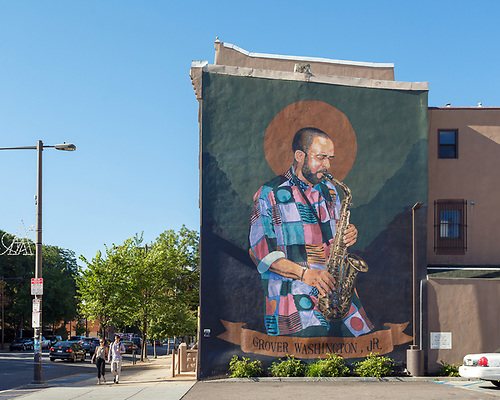
Washington, Jr. is still a beloved jazz man, especially in Philly. There’s a lot of full concerts of him playing in Philly venues you can find on Youtube (worth the watch!). There’s a middle school named after him. He was inducted into the Philly Walk of Fame in 1992. There’s a mural dedicated to him on Broad Street that got restored in 2015. Famous novelist Terry Pratchett said it best: “No one is finally dead until the ripples they cause in the world die away.”
Bill Withers’ post-”Just The Two Of Us” story is quick to tell. He spent the first half of the eighties fighting with Columbia Records and their parent company, CBS Records. He kept writing and recording songs, they kept rejecting them, feeling they weren’t marketable. This back and forth prevented him from releasing an album between 1979 and 1985. Withers got pissed enough that he once said he wanted to explode a bomb in Columbia’s headquarters, if that’s any indication. In 1984, Ralph McDonald had Withers write lyrics for another Winelight track, “In the Name Of Love.” Washington’s saxophone parts were removed and some of the song was rearranged to turn it into a solo Withers track. It became a Top 20 hit on the R&B and Adult Contemporary Charts.
He finally released what would be his final album, Watching You, Watching Me in May 1985. Lead single “Oh Yeah!” peaked at #22 on the R&B Chart and “Something That Turns You On” peaked at #46. He promoted the album upon release, but he had been burned so bad by that point that he really didn’t give a fuck and just wanted out of the whole thing. Watching You, Watching Me is a solid album, but you can hear that his heart wasn’t in it anymore and the game was vastly different than when he had entered it. He retired towards the end of 1985 and never looked back. Honestly, good for him!
Withers spent the rest of his life in blissful retirement. He did contribute two songs, ”Simply Complicated” and ”Playin’ The Loser Again” (which he featured on) to Jimmy Buffett’s 2004 album… License to Chill (ugh). Go find those on your own, if you dare. I have absolutely no patience for that stupid fucking parrothead, so I’m moving on. In 2005, Withers was inducted into the Songwriters Hall of Fame. He was the subject of a great 2009 documentary called Still Bill, which explores what made him walk away from music and gives a good glimpse of Withers’ bitterness at how it all played out and how justified he was to walk away when he did. Bill Withers is still one of the coolest motherfuckers to ever do it and his catalogue still holds the fuck up. Why do you think we made so many compilation discs for him in the nineties through the 2010s? There were SEVEN of them made! He hadn’t recorded for years by that point! That’s how much those old songs hold up. His was a cool that never goes out of style.
These two cats pulled off the impossible: a high charting jazz/R&B hit on the Hot 100 in 1981. The fact that it even became a number two is a strange thing. But that’s the fun thing about pop music and timing. Sometimes something arrives and it just captures the public’s attention. There’s no way to know when and how it’s gonna do it, but it just does. Pop music in May 1981 was still a free-for-all, but a hit like “Just The Two Of Us” is still odd to see when compared to what we’ve covered so far. The top spot at the start of this song’s run was “Morning Train (9 to 5)” by Sheena Easton (a woman who will eventually appear in this project), who was born in 1959, when both Washington and Withers were already old enough to be in the military. The other song that hit the top spot was Kim Carnes’ “Bette Davis Eyes,” a new wave pop hit I do not like at all and a song I do not really have anything nice to say about. Regardless, those are both songs that are playing to the pop moments of the day and played with new tricks and sounds that people were enjoying. Washington and Withers were old cats who were trapped in their own time, yet somehow made something that just hit with people and caught attention at just the right moment. It was a fluke hit, but it’s a damn good one to have.
Grover Washington, Jr. and Bill Withers will not return in this project, but their one-time collaboration continues to endure long after both men have passed on to the next stage. Their song is still bringing lovers together and still building them castles in the sky.
Bonus Silver
Jack Jones, who you most likely recognize as the guy who sang The Love Boat theme and voiced Greg’s frog in Over The Garden Wall, recorded a version of the song in 1982. It’s a very cruise ship version of the song, but still solid. Give it a listen here.
In 1987, Bronx rapper T La Rock was one of the first guys to sample the song for his track “Scratch Monopoly.” Check it out here.
In 1996, Japanese singer Toshinobu Kubota and British singer Caron Wheeler recorded a funky nineties version of the song. People really loved covering this one in the nineties for some reason. It sounds like it should be on the soundtrack to a kids movie, but I don’t think it ever was. Shoutout to Kubota for taking Washington’s solo and both a keyboard and sax do it. Cool combo. Listen to that one here.
Will Smith famously covered the song in 1997 for Big Willie Style. He changed the verses to be about him and the birth of his son, legendary Twitter philosopher and Neo Yokio star Jaden Smith. Maybe it’s because I’m writing this in a post-Oscars Slap Willie world, but this version is lame in that unique way that a lot of his music is. No wonder Eminem made fun of him so hard.
In 1999, Austin Powers: The Spy Who Shagged Me featured Will Smith’s version of the song, where Dr. Evil sings about his love for his small clone, Mini Me. I have watched Spy countless times, but this is the first time it ever clicked that the scene is explicitly parodying Will’s version of the song, right down to Dr. Evil saying the corny line little Jaden says at the start: “This is a very sensitive subject.” View that scene here.
Last year, an online rapper by the name of Tockyy uploaded a bad song called “troy bolton,” which curiously has the solo of “Just The Two Of Us” played very badly and implanted into his song. I swear it’s Grover’s original recording but he somehow made it sound like Squidward playing it. It became a meme for a bit and inspired sax players to do the solo themselves. He just jumped the band director and got a brand new saxophone… but did anyone teach him how to play it? Listen here:
Olivia Dean interpolated the melody of the song (along with bits and pieces of “Bless the Telephone” by Labi Siffre and “In My Life” by The Beatles) for her song “I’ve Seen It.” I like her a lot and The Art of Loving is a very good album. Check it out here.
Keith Urban just released a cover of this song shortly before I wrote this. Apparently he just made a whole album of yacht rock covers. The music nerd in me would be quick to tell you that this song isn’t a fucking yacht rock song, but whatever. Dudes like Urban will just do whatever they want. It’s… fine(?) I don’t love it. Also, the sax solo sounds like ass. If you’re curious about it, here it is.
 You Got The Silver
Leave a comment