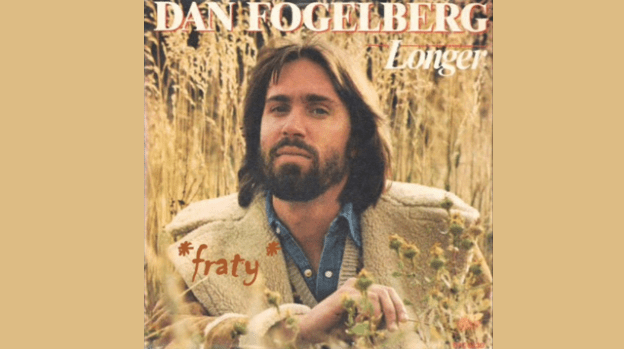
“Longer than there’ve been stars up in the heavens / I’ve been in love with you”
- Reached #2: March 22nd 1980
- Number of Weeks at #2: One Week
- #1 Songs At the Time: “Crazy Little Thing Called Love” by Queen (One Week) “Another Brick in the Wall (Part 2)” by Pink Floyd (One Week)
In February 2025, former Hype House member and TikTok star Alex Warren released a song called “Ordinary.” By June, it had become a number one hit on the Hot 100, where it would stay for an astonishing sixteen weeks. I remember the hatred it got when it first blew up. It was the kind of bad hit song that generates all kinds of takes, ranging from talking about how bad the song is, to a wide array of internet buzzwords representative of typical music snobbery. I heard the phrase “coworker music” be used to describe it a lot, a term I personally find very ugly. I also saw plenty of people online call it “tradpop.” The most outlandish takes I saw had to do with the idea that the song’s lyrical undertones of Christianity represents conservatives officially winning the culture war, which I then saw Christians disagree with because they stopped liking it once they realized it’s not explicitly about God or worship. That’s a lot to put onto a song, especially since there’s a much easier explanation for why “Ordinary” got so popular, one that got missed within all that noise: It’s a wedding song that got successful and played a lot during wedding season. Warren himself knew that, to the point where a Wedding Version of the song exists (he just removed the percussion.) Smart move! Warren isn’t even the first guy to find big success with a boring and unremarkable wedding song! Dan Fogelberg pulled that off decades before him back in 1980!
I have never been able to get a decisive read on Fogelberg, both as a musician and where he fits into the greater conversation of music history. The best I can come up with is that he’s your guy if you like sensitive singer/songwriters and/or you think James Taylor is too much of a self-destructive asshole to really love. Or maybe he’s the guy you turn to if you like the Eagles, but only the Eagles before they made Hotel California. I don’t fully know. He’s hard to place. I’ve seen some people argue he should be considered yacht rock, but I don’t agree with that. I think they only say that because of a few major songs of his that only mildly fit that vibe. He also looks like what you would get if Loggins and Messina fused into one man, so that probably also helps. Best I can tell you is that if you like a lot of the music coming out of California in the early seventies, odds are good you like him. Let’s talk about Fogelberg’s story a bit.
Dan Fogelberg comes to us from Peoria, Illinois, born to a musical family. His mother was a music teacher and classically trained pianist, father was a high school band director. Presumably, he learned how to play piano from his mother. He also learned how to play a Hawaiian slide guitar after receiving one from his grandfather, which means there’s a non-zero chance he could’ve known how to play “88 Fingers Eddward,” if requested.
At fourteen, he joined a band with a truly horrible name. It was called–I swear to God I’m not kidding—The Clan. Luckily for him, that band didn’t last long and it’s now a small, ugly footnote in his story. After that, he was in a second band with a much better name, The Coachmen. This band cut one single, “Don’t Want to Lose Her,” in 1968. The B-side is more relevant to us because that’s where a young Fogelberg recorded one of his earliest songs, “Maybe Time Will Let Me Forget.”
“Don’t Want to Lose Her” fits in line with a lot of the garage rock that was popular at the time, while Fogelberg’s song stands out more because I don’t know of a lot of American bands at the time that were taking a lot of cues from what the Moody Blues were doing. Even at this earliest, there’s a lot of elements in it that would become trademarks of Fogelberg’s music. Lush and soft vocals, pastoral writing and poetics, catchy vocal melodies with a lot of layered harmony, and a combination of acoustic guitar and piano. You get a real sense that he always knew who he was and what music he wanted to make.
After high school, he was a theater major at the University of Illinois but quickly changed to painting instead. While he was in university, he started playing at coffeehouses around the state, eventually getting successful enough to merit dropping out of school to pursue music full time.
In 1971, Fogelberg started getting managed by fellow University of Illinois dropout, future music mogul, and the man responsible for the Live Nation/Ticketmaster monopoly, Irving Azoff. Azoff was only at the beginning of his rise to power in 1971, so at this point he was just the manager of REO Speedwagon, a band that was just starting to get the wheels turnin’ at that time. Fogelberg and Azoff moved to Los Angeles. Azoff has a long and proud history of being cutthroat and fighting for the things that he wants, so he secured a record deal for Fogelberg. Fogelberg’s first album, Home Free, appeared in 1972. During the early seventies, Fogelberg worked as a session musician out in L.A. while trying to get his own career going. He got around a bit in 1974. He’s part of the harmony vocals you hear on Jackson Browne’s Late For the Sky album. That’s him singing and playing acoustic guitar on the Joe Walsh deep cut “All Night Laundry Mat Blues” He’s part of the session musicians that made up Roger McGuinn’s Peace On You album. Fogelberg developed a friendship with some of the members of the Eagles (most likely through the common connection of both parties being managed by Azoff). Joe Walsh produced Fogelberg’s second album, Souvenirs, released in October 1974, scoring his first Top 40 hit with the album’s opener, “Part of the Plan.”
He found he wasn’t crazy about the L.A. lifestyle, so he ended up moving back to the midwest, but still remained connected to some of the artists in the L.A. scene. In addition to being a session musician, he opened for Van Morrison in the early seventies and toured with the Eagles in the mid seventies. His next major hit came in 1978, when he teamed up with jazz flutist Tim Weisberg on the collaborative album Twin Sons of Different Mothers, which spawned the Top 40 hit “The Power of Gold.” 1979 saw the release of Phoenix, the album that gave us “Longer,” a surprise runaway hit which became Fogelberg’s first and only number two hit on the Hot 100.
I’ll be honest, Fogelberg is a tough guy to write about because a lot of his music is pretty middle-of-the-road to my ears. Most of his popular songs don’t leave much to really dig into. He’s made music I like! I really dig “Hearts Hotel.” I like a good chunk of The Innocent Age, especially “Hard to Say” and “Stolen Moments.” On the other hand, he’s made a lot of songs that I find boring as hell. The worst is undoubtedly “Same Old Auld Lang Syne,” a song so fucking corny, lame, and terrible that I point and laugh at it like I’m Nelson from The Simpsons. A lot of people love that song, and that’s great, but it’s such a ridiculous kind of bad to me that I’ll never understand that love.
“Longer” is in the category of Fogelberg songs I find boring as hell (with shades of lame), but I can easily understand its popularity and why it still endures. It’s a very good choice for a wedding song, which is what most people use it for. It’s soft, romantic, and sentimental. Fogelberg has a very soft and honey-smooth voice that makes a song like this effective. It’s a very simply constructed song: It’s an acoustic guitar, some lovely orchestration, a nice little flugelhorn solo, and Fogelberg’s layered vocals. Fogelberg’s lyrics are not specific in any way, which is good for mass appeal, but bad because the message is hollow and empty. That might be the worst thing about it besides being musically uninteresting.
The message of “Longer” is a very simple one. Fogelberg sings of love everlasting and love that transcends the current moment. He’s loved you longer than there have been fish in the ocean. Longer than there have been birds in the sky. Even longer than the stars up in the heavens! That’s a long time! That’s dedication!
Every line is an empty platitude that says absolutely nothing at all. You could find a Hallmark love card in the theme of every single line in this song. This whole thing sounds like it’s being sung from the perspective of a self-proclaimed “sensitive guy” who can immediately turn heel and say misogynistic things you didn’t even think were possible if you piss him off. There’s probably been dudes who think themselves sensitive dandies that have played this song for the girl of their dreams in public and then get confused when she looks horrified and embarrassed. This is something Nick Andopolis would play for Lindsey Weir on Freaks and Geeks if he was more lame and had really bad taste.
It’s a man writing something shallow and selling it as something deeply profound and we all sit in confusion when it somehow works and gets popular. There’s nothing profound with this. A sensitive-sounding guy with a guitar can go very far. It reads like you’re taking a poetry writing class and you have to read your first piece to the class, but since you’re a songwriter goddammit, you insist that your poetry assignment must be in song form! And then this is what you present to the class. It’s total amateur hour. I think that’s what bothers me the most about it. I think that’s what bothered people about “Ordinary” too. There’s a hollowness to the whole song that just makes it sound like nothing. It’s boring, it’s empty, it says nothing new or interesting about a love everlasting. If weddings are supposed to be a unique special day for you and your partner to celebrate your love, why would you want a song that celebrates any and all love? Where’s the joy in that?
Apparently, Fogelberg wrote this song about a specific person, that person being his girlfriend and later wife (until they split in 1985), Maggie Slaymaker. Despite being connected to a famous musician, there’s not much I’m able to tell you about her. Pattie Boyd, she is not. The most I can tell you for sure is that she was a dancer in Nashville at some point and married to Dan Fogelberg for a few years, and I’m not even 100% confident in that first part. Public information on her is very limited. But maybe it’s fitting that a mystery woman nobody seems to know anything about inspired an empty song full of vague, generic musings on love everlasting.
I’ve spent most of this column linking this song to weddings and marriage. Fogelberg seemed to be aware that this song was a hit as a song choice for newlywed first dances. In a 1981 radio interview, Fogelberg said about “Longer” that, “Every songwriter always dreams of writing a classic love song that will be up there with the Cole Porter songs and ‘Yesterday’ and that stuff. That’s the stuff that’s gonna last. People are gonna sing them at weddings and really mean it, for a long time, and that’s wonderful.” I’m not gonna argue with him. There’s nothing wrong with a wedding song. People are always in need of one and Fogelberg supplied that. But I also came across a burial and cremation service that argued this song tends to get sung and played at funerals as well, for the same reason it gets played at weddings: it’s a song about love everlasting, even after someone is dead and gone.
Tranquility Cremation Services in Toronto and Mississauga, Canada, has this to say about why “Longer” works as a song for funerals:
I’m sure this song is lovely during a funeral service and provides comfort to those grieving the loss of a loved one. That said, if I somehow figure out this song is playing at my funeral, I’m busting out of the casket and doing something about it. My funeral and the attendees of my funeral deserve a better soundtrack. The last thing I need in death is having my casket lowered while the flugelhorn solo of “Longer” plays. My remains don’t have to endure that.
“Longer” shot up to #2 during the same moment that “Yes, I’m Ready” found itself in: when adult contemporary hits were able to get attention and shoot up the charts in the days after disco was driven off the charts. Prior to disco, singer/songwriter hits like this one ruled the early-to-mid seventies and suddenly found a second wind at the start of the eighties. We will see a few more songs in a similar vein to this one before we leave the early eighties, but they will be dead and gone once we really start moving through the years. For now, we are still working through songs released in 1979 that were getting their moment in the sun during 1980. This is seventies backwash at its finest and it could have only gotten big on the Hot 100 during the period where no major shakeups were happening. This wasn’t a number one because “Crazy Little Thing Called Love” still had the top spot for a week. Then, Pink Floyd’s “Another Brick in the Wall (Part 2)” became a surprise number one. This song didn’t become a number one and I can say that it’s probably due to the fact that a soft and pillowy wedding song doesn’t quite have the sauce that a song like “Crazy Little Thing Called Love” has. It also doesn’t have David Gilmour playing a ripping guitar solo either, so why would I choose “Longer” over either of those things? Even before the eighties really got going, there were interesting things happening at the number one spot.
I’ve seen the argument in a few places that “Longer” might have ruined Dan Fogelberg, in the sense that because the song was such a hit, he eventually pivoted hard to the adult contemporary world and made a killing there. He only scored two more Top 10 hits on the Hot 100 (“Hard to Say” and “Leader of the Band,” both in 1981) but enjoyed a good number of hits on Billboard’s Adult Contemporary Chart for most of the eighties. I personally think there was nothing to really “ruin” because he wasn’t that great to begin with, but it also doesn’t shock me that he made that pivot. That’s where a good chunk of his contemporaries from the seventies wound up as they got older, so it feels like a natural progression to me.
Fogelberg kept recording and putting out music on a consistent basis into the 2000s. In 2004, Fogelberg was diagnosed with advanced prostate cancer. He went into remission in 2005, but it came back and he eventually passed away on December 16th, 2007 at age fifty-six. So it goes.
I don’t love “Longer.” It’s okay, but it’s not something I have much use for outside of having to hear it at someone’s wedding (or, God forbid, a funeral). That tends to be the fate of boring love songs like these. They work well in a certain setting and situation, but I would never be in the mood to just throw this on randomly. I don’t even know if big Fogelberg fans would.
Fogelberg won’t appear again in this project, but he hasn’t faded away from the memory of people that have affection for him and his music. In 2010, Fogelberg got a street named after him, Fogelberg Parkway, in his hometown of Peoria, IL (you can also find the specific grocery store he sings about in “Same Old Auld Lang Syne” in Peoria as well, if you care). His third wife, Jean Fogelberg, has put together a few posthumous releases in the time after his death that helps keep his memory alive. These releases include the 2009 studio album Love in Time, 2017’s Live at Carnegie Hall (capturing a show from 1979), and a tribute album featuring Fogelberg’s longtime friends and musical collaborators, released later that year. My Morning Jacket frontman Jim James and Garth Brooks are big fans and have cited him as an influence.
At this rate, love for him seems to be everlasting. Time will tell if it lasts longer than all the stars up in the heavens.
Bonus Silver
“Longer” appeared in a commercial for the Nissan Gloria Y31, because why the hell not? When you think of luxury cars, doesn’t the music of Dan Fogelberg immediately spring to mind? View that here.
R&B legend Babyface once recorded a cover of this version in 2007 for a cover album. Check that out here.


Leave a Reply